
 Home
 About
 Product
 News
 Media channels
 Guide
Are you about to return home after a period of studying or working in Japan? Don’t forget an important financial benefit that many people often overlook – residence tax refund. If you leave Japan before the tax calculation date of the new fiscal year, you can completely get a refund of part or all of the resident tax you paid. In this article, let's find out with T-Connect what resident tax is, when it can be refunded, and how to get a refund of resident tax in Japan through 5 simple, easy-to-understand steps that anyone can do, even when you have returned to your home country.
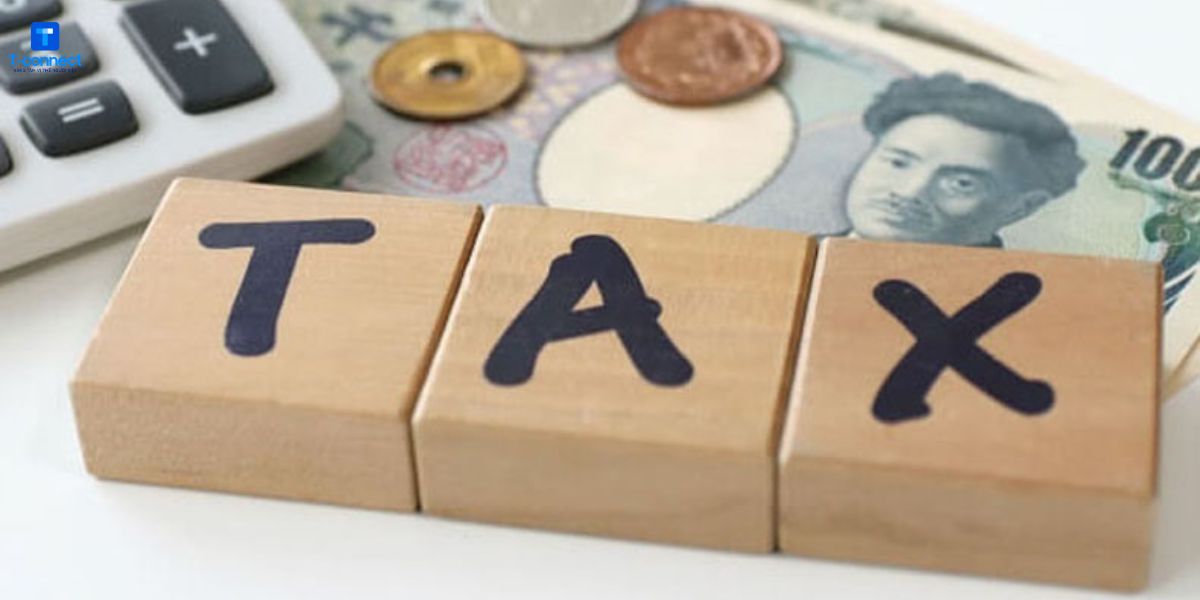
What is residence tax in Japan?
Japanese resident tax (住民税 – Juminzei) is a local tax imposed on people living in Japan (including foreigners) and collected by the prefectural and municipal governments where you reside. This tax is calculated based on your income earned in the previous fiscal year, not the current one.
For example, your 2025 residence tax is calculated based on your income in 2024.
Characteristics of residence tax:
- Start calculating and collecting from June every year and last until May of the following year.
- Employees are usually deducted directly from their monthly salary (if the company is registered), or must pay by invoice if they have left the job.
- Even if you have left Japan, if the fiscal year has not ended, you are still obliged to pay the full resident tax unless you have completed the proper procedures for declaring your departure from Japan.
Distinguishing between residence tax refund and income tax refund
Many people often confuse resident tax and income tax (所得税 – Shotokuzei), as both are related to income and can be refunded. However, these are two completely different taxes, with different calculation methods and refund timing:
| Criteria | Residence tax refund | Income tax refund |
|---|---|---|
| Type of tax | Local taxes (district, province) | National tax |
| Based on annual income | Last year | Current year |
| How to deduct | Monthly, starting from June | Monthly salary deduction |
| When will it be completed? | When leaving Japan before collecting enough | When tax is over deducted |
| Where to submit | At Shiyakusho (administrative office) | At the tax office (税務署 – Zeimusho) |
When can I get a refund of my residence tax in Japan?
Not everyone who leaves Japan is eligible for a refund of their resident tax. Whether or not you are eligible depends on when you left Japan, your resident status at the time of tax calculation, and whether you have previously paid resident tax. Here are some common situations where you may be eligible for a refund of your resident tax in Japan:
- You leave Japan before January 1st of the new year: If you are no longer a resident of Japan on January 1, the day the government determines who is liable to pay resident tax for the year, you do not need to pay tax for that year. If you have already paid, you can apply for a refund.
- You have paid your resident tax for the whole year but quit your job or returned home halfway.: Many people pay their residency tax in half-yearly installments. If you do not stay for the entire period, the overpayment will be refunded if the correct procedures are followed.
- You have someone authorized to do the procedures in Japan after returning home.: If you have left Japan, you can still file your tax refund remotely, as long as you have a valid power of attorney for a relative, friend or representative in Japan to file on your behalf.
- You have declared your move to the local authorities.: The moving out declaration (転出届) helps confirm that you are no longer a resident of Japan at the time of tax assessment. If you do not do this, you may be taxed as someone who is still living in Japan.

5 detailed steps on how to get your resident tax back in Japan
Getting a refund of resident tax in Japan is not complicated if you know the steps. Below are 5 simple but extremely important steps to get a refund of resident tax in Japan so you can get back the excess tax before leaving Japan.
Step 1: Check your residential tax information where you live
Before leaving Japan, you should go to the Shiyakusho (市役所 – ward/city administrative office) where you are residing to check:
- Total resident tax you must pay for the current year.
- The amount you have paid, is still due or has a balance.
- Payment method: one-time payment, multiple installments or salary deduction?
Step 2: Prepare complete tax refund documents
This is the most important step in the process. You need to prepare the following documents:
- Residence card (Zairyu card) , and passport (valid)
- Certificate of departure from Japan or plane ticket (if returned home).
- Tax refund application (Can be applied directly at Shiyakusho).
- Power of attorney (委任状 – ininjou) If you ask someone else to do the procedure for you.
- Bank account infomation to receive refund (can be Japanese or foreign bank - depending on local acceptance).
If you have returned to your home country, you should scan all documents and send notarized copies to the authorized person.
Step 3: Submit application at Shiyakusho or send by post
Depending on the situation, you can choose to submit your application as follows:
- If you are still in Japan: Go directly to Shiyakusho to submit the application and receive further instructions if there are any deficiencies.
- If you have returned home: Ask a representative in Japan to submit the application or send the application by international post (EMS) to the correct Shiyakusho where you reside.
Step 4: Wait for confirmation from local authorities
Once the application is submitted, Shiyakusho will proceed to:
- Confirm all documents.
- Check tax status and determine tax refund.
- Contact us if documents are missing or additional information is needed.
Bước 5: Nhận tiền hoàn thuế
Once your application is approved, your refund will be transferred to the bank account you registered in your application.
- If it's a Japanese account, you usually receive money faster, without fees.
- If it is a foreign account, it may take several weeks and incur international transfer fees.
Some important notes when getting a refund of residence tax in Japan
Once you understand the process and how to get your resident tax refund in Japan, you need to keep in mind the following notes to avoid difficulties when processing your application:
- It is recommended to start the procedure at least 2-4 weeks before leaving Japan.: This gives you enough time to check taxes, prepare documents and work directly with Shiyakusho – saving a lot compared to processing from overseas.
- Moving out declaration (転出届) is required at Shiyakusho.: This is a step to confirm that you are no longer a resident of Japan after leaving. If you do not declare it, you will still be considered a resident and may be subject to tax for the following year even though you have left Japan.
- Refundable only if you leave Japan before January 1st: This is the date when the government determines who must pay resident tax for the following year. If you leave Japan after this date, you will still have to pay tax for the entire year, without any exemption or refund.
- If you have returned to your home country, you must have a representative with a valid power of attorney.: You cannot handle it directly if you are outside Japan. The power of attorney must clearly state the full name, address, and content of the authorization, and must be signed by both parties (a personal seal – 印鑑 may be required).
- Each locality has different regulations.: Procedures, application forms and transfer methods may vary depending on the city/district where you used to live. Please contact Shiyakusho directly for specific instructions.
- Keep all invoices, statements, and tax-related correspondence: This is the basis for you to check if there is any confusion about the amount or processing time. Especially if you have someone else do it for you, keeping clear documents is very necessary.
- Refunds may be subject to international transfer fees. (if you receive via a foreign account). You should prioritize using a Japanese bank account if it is still available, to avoid fees and receive money faster.

Understanding and properly implementing the method of getting your resident tax refund in Japan not only helps you protect your financial rights before returning home, but is also the final step to ending your journey of living and working in Japan in a complete way. Don't let the money you have worked hard to earn be forgotten just because of lack of information or not being prepared in time!
And if you need a companion to support you during your stay in Japan, from keeping in touch, guiding you through administrative procedures in Vietnamese, to consulting on telecommunication services, don't forget T-Connect – the first telecommunications application exclusively for Vietnamese people in Japan. With T-Connect, you can not only communicate easily but also quickly update useful information about taxes, residence, health care, employment… and more!

T-connect & DCOM signed a cooperation agreement to enhance digital experiences for the Vietnamese user community in Japan.
On November 17, 2025, T-connect & DCOM officially signed a [...]
ANSWERS TO FREQUENTLY ASKED QUESTIONS WHEN PAYING FOR MY T-CONNECT WITH DCOMPAY
T-Connect officially cooperates with DCOM, launching DCOMPay payment method [...]
T-CONNECT CUP 2025 FOOTBALL TOURNAMENT REGULATIONS – CELEBRATION OF T-CONNECT'S 6TH ANNIVERSARY
The T-connect Cup 2025 football tournament is one of the sporting events [...]
Should I stay in Japan or return to Vietnam? 5 perspectives to help you make the right choice
After many years of studying and working in Japan, many people [...]
Which apps should Vietnamese people in Japan download? 15 essential apps when in Japan
Living, studying or working in Japan always comes with many [...]
5 tips to ship goods from Vietnam to Japan cheaply and safely
The demand for shipping goods from Vietnam to Japan is increasing, especially [...]
What do you need to prepare when converting your Japanese driver's license to Vietnam's? 7 important documents
While living and studying in Japan, many Vietnamese people have [...]
How does Japan handle waste? 5 waste treatment technologies in Japan that surprise the world
Japan is known as a country with a waste management system [...]