
 Home
Home About
About Product
 News
News  Media channels
 Guide
GuideLiving in Japan but do you really know How to use washing machine in Japan yet? Although it seems simple, if you don't know how, you may encounter small problems in your daily life. Japanese domestic washing machines with a series of Japanese buttons and complex functions often give many foreigners a "headache". However, once you have mastered how to use a washing machine in Japan, doing laundry will become easier and more efficient than ever.
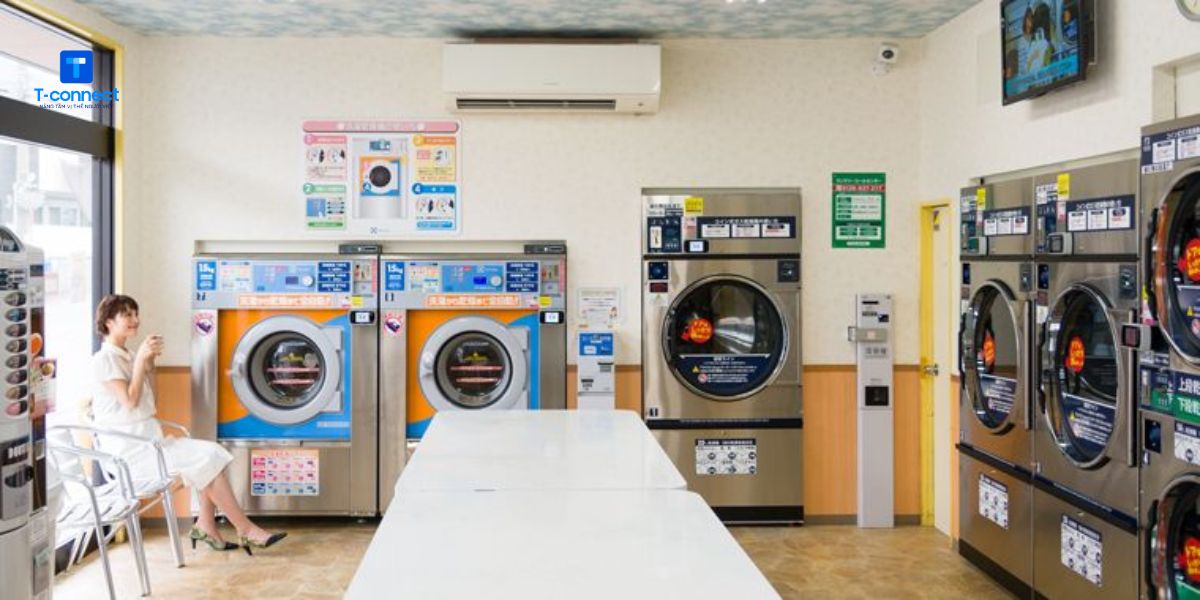
Types of Japanese domestic washing machines
There are many types of washing machines in Japan, but the two most common are: top-loading washing machines (縦型洗濯機) and front-loading washing machines (ドラム式洗濯機).
Top-loading washing machines are usually simple, cheap and easy to use, suitable for students or workers. The machine works by swirling water from top to bottom, suitable for normal washing clothes.
Front-loading washing machines have a more modern design, use less water and save electricity. Some models also have a built-in drying function (乾燥機能), suitable for winter or when there is no place to dry clothes.
In addition, some Japanese washing machines also have automatic washing - rinsing - spinning - drying functions, making the laundry process extremely convenient.
Decoding the common function buttons on Japanese washing machines
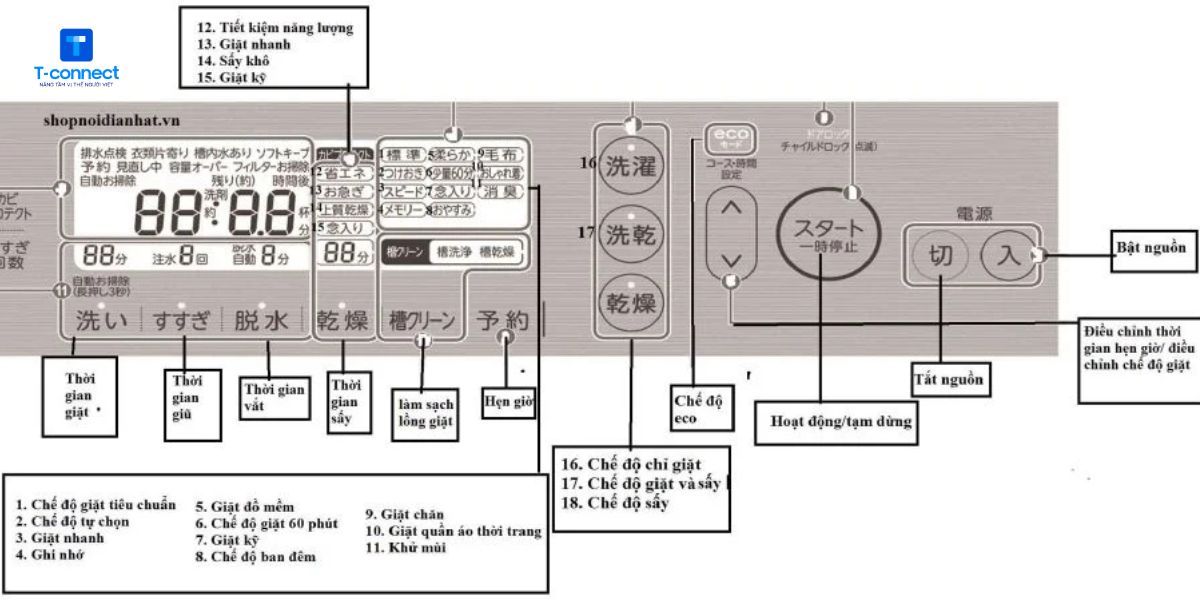
Before you start learning how to use a washing machine in Japan, you need to know what the buttons on the control panel say. This is the most important step if the machine does not have English.
The power button (電源) is usually represented by the symbol ○/I or the Kanji 電源. This is the first button you need to press to start the washing machine.
The wash mode selector button usually has options such as:
- Hyōjun (hyōjun): Standard wash mode
- 念入り (nen'iri): Strong wash mode for very dirty clothes
- Quick wash mode (supīdo): Quick wash mode
- Dorai (dorai): Dry cleaning mode for delicate fabrics
- 毛布 (mōfu): Blanket washing mode
The water level knob allows you to select the amount of water appropriate to the load. The levels are usually marked from 1-7 or with the symbols 低 (low), 中 (medium), 高 (high).
The timer button (予約) allows you to set the start time of the wash, which is convenient when you want your clothes to be washed at the desired time.
Laundry detergents and fabric softeners
To get the best results from your Japanese washing machine, choosing the right detergent is extremely important.
Washing powder
Regular laundry detergent (粉末洗剤) has strong cleaning power, is suitable for heavily soiled clothes, and is cheap. However, it can leave residue if it does not dissolve completely in cold water.
Liquid detergent (液体洗剤) dissolves easily in water, leaves little residue, and is suitable for cold water washing machines. It is usually more expensive than powder detergent, but is more convenient and effective.
Laundry tablets (ジェルボール) are tablets containing both detergent and fabric softener, very convenient to use. You just need to put 1-2 tablets into the washing machine with the clothes.
Fabric Softener
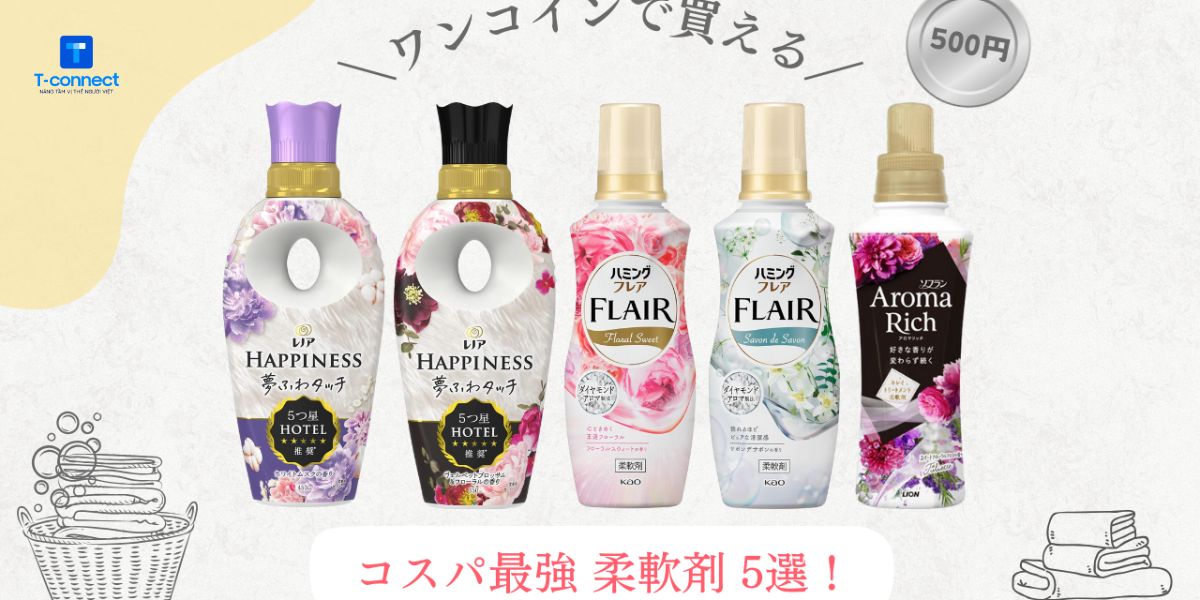
Fabric softener (柔軟剤) makes clothes soft, fragrant, and reduces static. In Japan, there are many different scents from cherry blossoms to lavender to other unique scents. Knowing how to add fabric softener to your washing machine in Japan will help keep your clothes soft and fragrant.
Detergent for gentle wash
Delicate Fabric Detergent (おしゃれ着洗剂) is specially designed for sensitive fabrics such as wool, silk, or clothes with special colors. This detergent has a neutral pH, does not damage the fabric fibers, and keeps the colors fresh for a long time.
How to use washing machine in Japan
This is the most important part – step-by-step instructions on how to use a washing machine in Japan properly and effectively.
Step 1: Prepare clothes
Sort clothes by color (white, light, dark) and material. Check pockets for small items. Very dirty clothes should be soaked before washing.
Step 2: Put clothes in the washing machine
For top-loading washing machines, open the lid and place the clothes evenly in the drum. Do not overcrowd the drum so that water and detergent can circulate freely. The amount of clothes should not exceed 80% of the machine's capacity.
Step 3: Add detergent or washing liquid
- For top-loading machines: open the lid and pour detergent directly into the drum.
- For front-loading machines: pour into the tray marked 洗剤 or 本洗い.
The recommended amount of detergent is usually printed on the packaging, ranging from 30-50ml for a normal wash.
Step 4: Select washing mode
Depending on the type of fabric and the time you have, choose the appropriate mode. You can use the お急ぎ mode if you need a quick wash.
Step 5: Click Start (スタート) to begin
Washing time usually ranges from 30-60 minutes depending on the selected mode. Don't forget to check if the machine door is closed or not.
How to use fabric softener for washing machines in Japan
The way to use fabric softener for top-loading or front-loading washing machines in Japan is a little different, but basically there is a separate compartment for the softener – marked as 柔軟剤 (じゅうなんざい) or “Softener”.
With top load machine:
- Pour the fabric softener into the small tray inside or in the corner of the machine (usually clearly marked).
- Do not pour directly onto clothing.
With horizontal door machine:
- Pour into the tray marked 柔軟剤 at the beginning.
- The machine will automatically apply the rinse water at the end of the rinse cycle.
If the machine doesn't have a drain pan, you'll need to time the machine to start the drain cycle and empty it manually – a bit inconvenient but still workable.
Some important notes when using washing machines in Japan
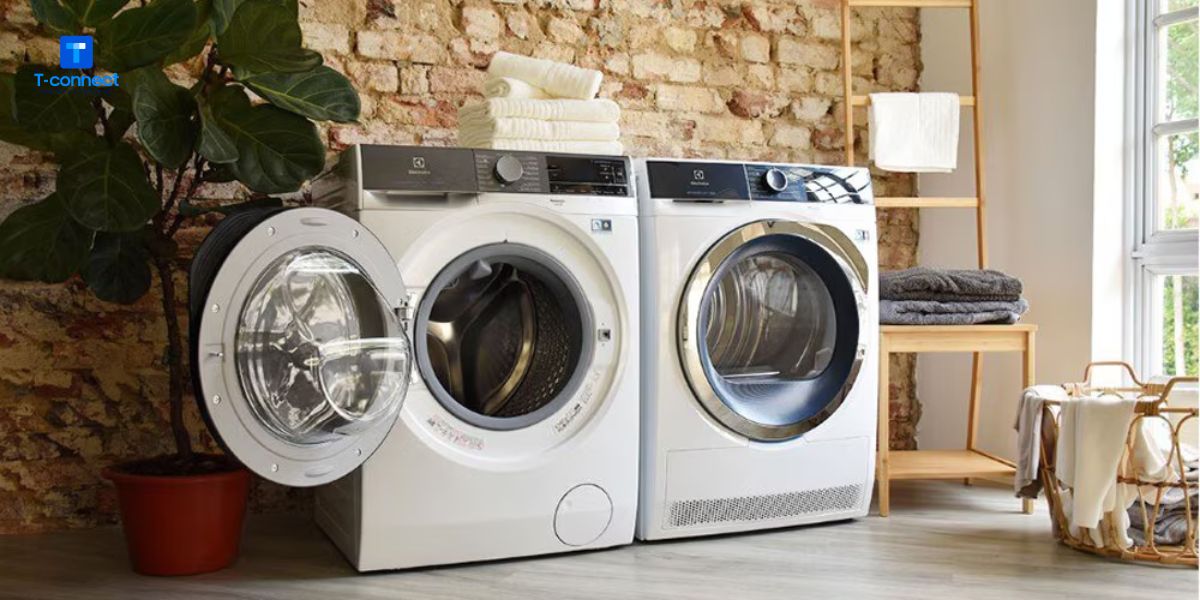
To use washing machines in Japan most effectively and prolong their life, please note the following:
- Do not use Vietnamese detergent If there are no clear instructions, it may create too much foam and damage the machine.
- Do not overload: This reduces cleaning efficiency and causes the machine to break down quickly.
- Cleaning recurrent: You should run the washing machine cleaning cycle 1-2 times/month to deodorize and disinfect.
- Do not use the wrong mode: Washing wool in normal mode will cause the fabric to shrink.
- Be careful when using the drying mode.: Some items are flammable or may shrink if overheated.
- About washing time: In Japan, especially in apartments, it is best to do laundry from 8am to 8pm to avoid making noise and disturbing the neighbors.
Doing laundry seems simple but it is not easy when you live in Japan. If you have ever wondered how to put fabric softener in the washing machine in Japan, now you must have a detailed and easy-to-understand answer. Apply it boldly to make laundry a light part of your daily life!
Not only do we help you understand how to use washing machines in Japan, we also want to introduce you to T-connect – a telecommunications brand friendly to the Vietnamese community. T-connect offers convenient phone, 4G sim and internet packages at reasonable prices, along with dedicated Vietnamese support. Whether you are an international student, intern or worker, T-connect is always ready to accompany and help you connect easily in Japan.

T-connect & DCOM signed a cooperation agreement to enhance digital experiences for the Vietnamese user community in Japan.
On November 17, 2025, T-connect & DCOM officially signed a [...]
ANSWERS TO FREQUENTLY ASKED QUESTIONS WHEN PAYING FOR MY T-CONNECT WITH DCOMPAY
T-Connect officially cooperates with DCOM, launching DCOMPay payment method [...]
T-CONNECT CUP 2025 FOOTBALL TOURNAMENT REGULATIONS – CELEBRATION OF T-CONNECT'S 6TH ANNIVERSARY
The T-connect Cup 2025 football tournament is one of the sporting events [...]
Should I stay in Japan or return to Vietnam? 5 perspectives to help you make the right choice
After many years of studying and working in Japan, many people [...]
Which apps should Vietnamese people in Japan download? 15 essential apps when in Japan
Living, studying or working in Japan always comes with many [...]
5 tips to ship goods from Vietnam to Japan cheaply and safely
The demand for shipping goods from Vietnam to Japan is increasing, especially [...]
What do you need to prepare when converting your Japanese driver's license to Vietnam's? 7 important documents
While living and studying in Japan, many Vietnamese people have [...]
How does Japan handle waste? 5 waste treatment technologies in Japan that surprise the world
Japan is known as a country with a waste management system [...]