
 Home
Home About
About Product
 News
News  Media channels
 Guide
GuideIt is no coincidence that Japanese children always make the world admire for their politeness, discipline and self-awareness from a young age. So what is the secret behind those well-behaved children? Let's explore. Japanese way of teaching children to understand why this educational method is praised worldwide.
How is the Japanese way of raising children different?
Before going into details of how Japanese people raise their children, we need to clearly understand the characteristics that make the difference in the educational methods of the land of cherry blossoms.
The Japanese educational philosophy is based on the principle that “people are part of a group”. Unlike the West, which emphasizes individuality, Japanese parenting focuses on the role of the individual in the community. Children are taught how to live in harmony with those around them from a very early age.
The golden principles in Japanese parenting include:
- Absolute respect: Children are treated with due respect, as independent human beings with their own worth.
- Nurturing independence: Children are encouraged to do everything they can for themselves, from housework to self-care.
- Team orientation: Educate children to put collective interests above personal interests.
- Practice patience: Children learn to control their emotions and respond calmly.
- Discipline without punishment: Discipline is exercised through reason and example, not through corporal punishment.
Japanese children are known for their discipline and politeness because they are taught how their behavior affects others. Responsibility and a sense of community are core values in Japanese parenting.
3 stages in Japanese parenting method
The Japanese way of raising children is divided according to each stage of the child's psychological development. Each stage has its own method, helping children develop harmoniously both physically and mentally.
Japanese style parenting from 0 to 6 months old
During infancy, the Japanese focus on creating a strong bond between mother and child. They believe that love and a sense of security are important foundations for children's intellectual and emotional development.
The Japanese believe that the first 6 months of life are the “out of the womb” period – when the baby still needs to be cared for as if it were in the womb. Japanese parents often hold their babies, talk to them, breastfeed them, and create a quiet, cozy environment. During this period, the baby does not need to learn anything specific, but only needs to be loved unconditionally. This is an important first step in forming trust and security in the child’s soul.
Japanese style parenting from 1 to 3 years old
From 1 to 3 years old, children begin to form awareness and desire to explore the world around them. Japanese parenting during this period focuses on helping children recognize right and wrong behaviors through observing adults:
- Teach children how to greet, thank you, and apologize
- Teach children personal hygiene habits
- Encourage children to eat and dress themselves as much as possible.
- Teach children to put away toys after playing.
- Form a regular living habit
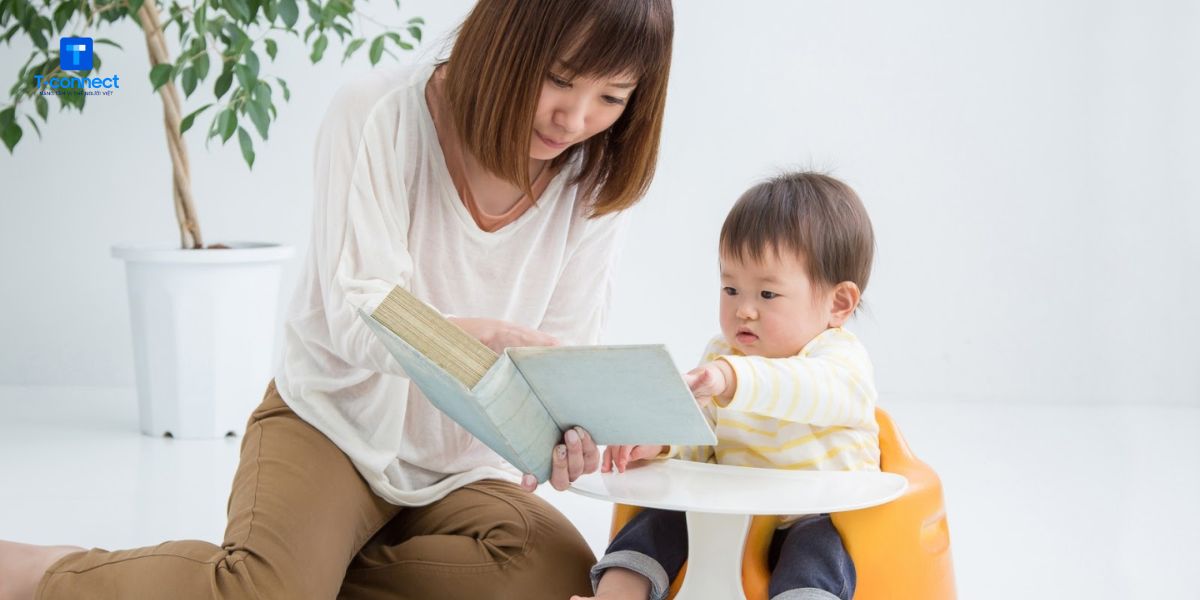
The Japanese believe that the first three years of life form the foundation for a child's lifelong character. Therefore, they place great emphasis on building a trusting relationship between parents and children, and gradually teaching children the basic rules of society.
Japanese style parenting from 3 to 6 years old
The period from 3 to 6 years old is the time when children form a sense of community and begin to learn how to live responsibly. This is also the golden period to teach children social skills.
- Give children simple chores
- Teach children how to interact with others, especially older adults
- Encourage children to participate in group activities
- Practice problem solving skills
- Start teaching children to control negative emotions
In particular, Japanese children are encouraged to go to school and come home by themselves from kindergarten age, which is rare in other countries. This trains children to be independent and responsible from a very early age.
10 Japanese ways of raising children – Raising polite and disciplined children from a young age
To better understand the Japanese way of raising children, let's delve into 10 specific methods that Japanese parents often apply to raise polite and disciplined children.
Encourage children to be independent from an early age
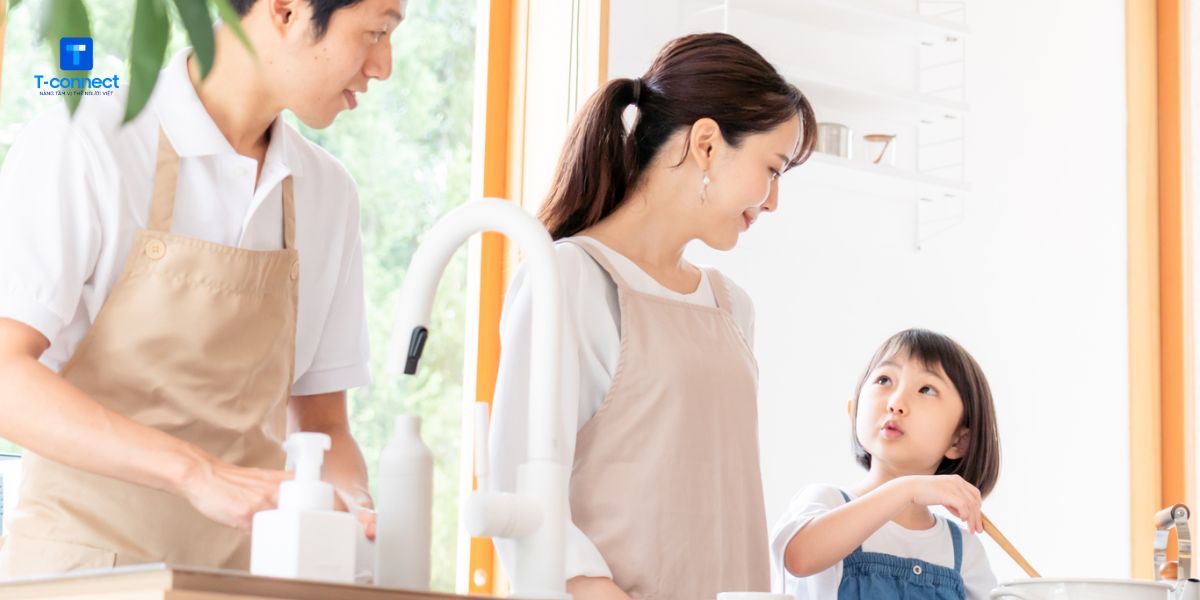
One of the outstanding features of Japanese parenting is encouraging independence from a very early age. Japanese children are given age-appropriate responsibilities:
- 2-3 years old: put away toys, wear simple clothes
- From 4-5 years old: go to the toilet by yourself, wash your hands, help set the table
- From 6 years old: go to school by yourself, do some simple housework
Japanese parents believe that when children are trusted with tasks, they develop responsibility and self-esteem. They patiently wait for their children to complete the work, even if it may take them longer than adults.
Teach children discipline
The Japanese way of raising children always puts discipline first, but not by whipping but by daily training. Children are guided to follow rules, maintain order in public places and line up while waiting.
Japanese kindergartens create a disciplined but stress-free environment so that children understand why they need to follow the rules, not just because they are afraid of being punished.
Teach children to be independent
Unlike pampering or giving orders, the Japanese cultivate self-discipline by creating habits from a young age. They do not require children to do things immediately, but rather inspire them to see the benefits and meaning of self-discipline.
For example, instead of ordering, “Clean up your toys,” Japanese parents can say, “It’s sad when your toys break. Let’s clean them up together so we can play with them again next time.” Through this, children learn to be proactive and self-motivated without being forced.
Teach children team spirit and respect for the collective
From kindergarten, Japanese children learn to cooperate with friends, share work, and not disturb others. They emphasize the spirit of the collective over the individual.
In the classroom, children clean the classroom together every day and help each other with activities. Through this, children understand that they are part of a group and need to share responsibility.
Education by exemplary adult actions
In the Japanese way of raising children, adults always act as role models for children to follow. They understand that children do not learn from empty words, but from real actions.
If you want your children to be polite, you must also be polite to others. If you want your children to be hygienic, adults must also practice it every day. Living by example is the most effective “lesson” for children.

Do not use material rewards or punishments
Japanese parenting does not encourage rewards such as candy, money, or physical punishment. Instead, they teach children through encouragement, recognition, and explanation of consequences.
For example, when children do well, parents will say: “You tried very hard, I am proud of you.” And when children do wrong, they will ask: “How did you feel when you did that? What should we do differently next time?” This helps children develop an internal sense of self rather than depending on rewards.
Don't compare children
One of the important principles in the Japanese way of raising children is to never compare their children with others. They understand that each child is a unique individual with their own talents and weaknesses, and that a general standard of evaluation cannot be applied to all.
Instead of looking at other people's achievements, Japanese parents focus on their children's own progress, comparing their children's present with their past instead of with their friends or siblings. This helps children feel motivated to improve without feeling pressured.
Education of gratitude and humility
Gratitude and humility are core values in Japanese culture, taught from a young age. Children learn to say “thank you” and “sorry” naturally.
At school, children are encouraged to say thank you when they are helped and apologize when they upset others. This is what makes Japanese society civilized and kind.
Organize family trips
Japanese families often take their children on excursions, trips, or outdoor activities. This is not only a time to relax, but also an opportunity for children to observe life, learn from nature, and practice life skills.
Through these activities, children understand the wider world, appreciate life and become more attached to their families.
Emphasize emotional management
A notable point in the Japanese way of raising children is to encourage children to recognize and name their emotions. Japanese parents often encourage their children to recognize and name their emotions, helping them understand what is going on inside instead of just reacting instinctively. They spend time teaching their children how to express their emotions appropriately to the situation, not completely suppressing them but also not expressing them too much to affect others. When conflicts arise, Japanese children are guided to solve problems with words and compromise, avoiding violent behavior.
Notes when applying Japanese parenting methods to Vietnamese children
Although the Japanese way of raising children has many points worth learning, applying it to the Vietnamese context requires appropriate adjustments:
- Consider safety factors: Vietnam has different traffic and security conditions than Japan, so letting children go to school by themselves from a young age needs careful consideration.
- Taking into account cultural characteristics: Vietnamese culture has its own characteristics, not all Japanese methods are suitable.
- Adjust to family circumstances: Each family has different circumstances in terms of time, living space and economy.
- Combine the advantages of many methods: Don't be rigid with one method, but be flexible in combining them.
- Respect children's individuality: Each child has different personalities and needs, so methods need to be adjusted accordingly.
When applying Japanese parenting style, Vietnamese parents should learn the core spirit and philosophy rather than copying specific methods.
The Japanese way of raising children is not only an educational method but also an art of nurturing personality and emotions. With values such as independence, discipline, gratitude and responsibility, the Japanese way of raising children has become a model that many modern parents learn from.
However, to apply it successfully, each family needs to clearly understand the nature of the method, flexibly adjust it to each situation, and most importantly, accompany their children with love and understanding.
If you are living in Japan and need a reliable telecommunication service, T-connect is the perfect choice for you! With a 100% Vietnamese team, we are always ready to support and bring special offers, including free shipping nationwide.
T-connect offers flexible mobile and internet packages, making it easy for you to stay in touch with family and friends back home. We are committed to providing dedicated and professional service, so that you always feel close and comfortable, no matter how far away. Come to T-connect to experience meaningful connection in your life!

T-connect & DCOM signed a cooperation agreement to enhance digital experiences for the Vietnamese user community in Japan.
On November 17, 2025, T-connect & DCOM officially signed a [...]
ANSWERS TO FREQUENTLY ASKED QUESTIONS WHEN PAYING FOR MY T-CONNECT WITH DCOMPAY
T-Connect officially cooperates with DCOM, launching DCOMPay payment method [...]
T-CONNECT CUP 2025 FOOTBALL TOURNAMENT REGULATIONS – CELEBRATION OF T-CONNECT'S 6TH ANNIVERSARY
The T-connect Cup 2025 football tournament is one of the sporting events [...]
Should I stay in Japan or return to Vietnam? 5 perspectives to help you make the right choice
After many years of studying and working in Japan, many people [...]
Which apps should Vietnamese people in Japan download? 15 essential apps when in Japan
Living, studying or working in Japan always comes with many [...]
5 tips to ship goods from Vietnam to Japan cheaply and safely
The demand for shipping goods from Vietnam to Japan is increasing, especially [...]
What do you need to prepare when converting your Japanese driver's license to Vietnam's? 7 important documents
While living and studying in Japan, many Vietnamese people have [...]
How does Japan handle waste? 5 waste treatment technologies in Japan that surprise the world
Japan is known as a country with a waste management system [...]