
 Home
 About
 Product
 News
 Media channels
 Guide
Japan – the land of cherry blossoms is famous not only for its unique culture but also for its disciplined and modern lifestyle. For foreigners, especially Vietnamese people who first set foot in the land of the rising sun, adapting to a new living environment is not simple. If you are looking for practical information about life here, this article will summarize Things to know when living in Japan help you prepare the best mindset for the long journey ahead.

Overview of life in Japan
Life in Japan offers unique and different experiences compared to many other countries in the world. This is a country where tradition and modernity blend perfectly, creating a society that is orderly, disciplined but no less warm and friendly.
Japan is famous for its modern public transportation system, excellent customer service, and professional work culture. However, to be able to live and work effectively here, the things to know when living in Japan are important and necessary for every new foreigner.
The Japanese have a habit of living in a very orderly manner and respecting social rules. They value punctuality, politeness in communication, and always care about the surrounding community. This creates a safe, clean, and civilized living environment that few countries can match.
Top 5 things to know when living in Japan
To be able to adapt quickly to your new life, here are the top 5 things to know when living in Japan that anyone should master before setting foot in this country.
How to find a house in Japan
Finding suitable accommodation is one of the biggest challenges when first arriving in Japan. Most rental apartments in Japan require tenants to pay a deposit (shikikin) and a landlord's gratitude money (reikin) up front. Shikikin is usually 1-2 months' rent and is refundable at the end of the contract, while reikin is a non-refundable deposit, usually 1-2 months' rent.
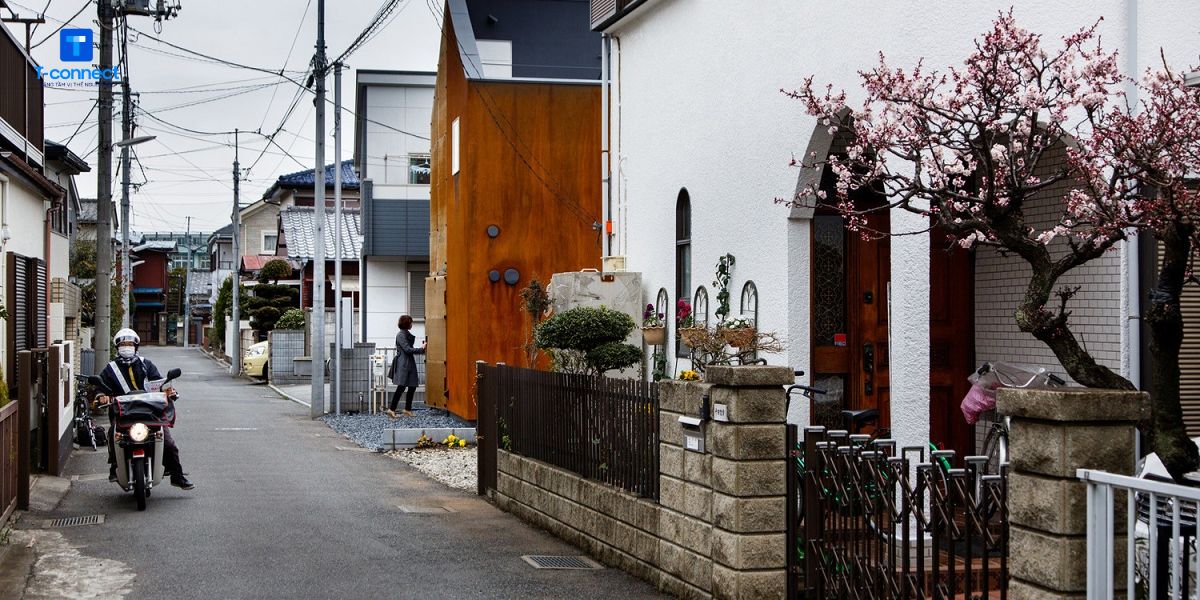
In addition, you will also need to prepare brokerage fees (chukai ryou) for the real estate company, usually equal to 1 month's rent. Another important thing is to find a guarantor (hoshoujin) - usually a Japanese person or you can use the service of a guarantor company for a monthly fee.
To find a home effectively, you can use websites like Suumo, Homes, or Athome. However, having a Japanese person with you will make the process much smoother.
Make a residence card and register your address
Immediately after entering the country, making a residence card (zairyu card) and registering your address are mandatory and extremely important procedures in the things you need to know when living in Japan.
A residence card will be issued at the airport or local immigration office within 14 days of entering Japan. This card is your official identification in Japan and must be carried with you whenever you go out.
Once you have a permanent address, you must register your address (jumin touroku) at the ward office (kuyakusho) where you live within 14 days. This procedure is free and requires you to bring your residence card, rental contract or other proof of address.
Transport
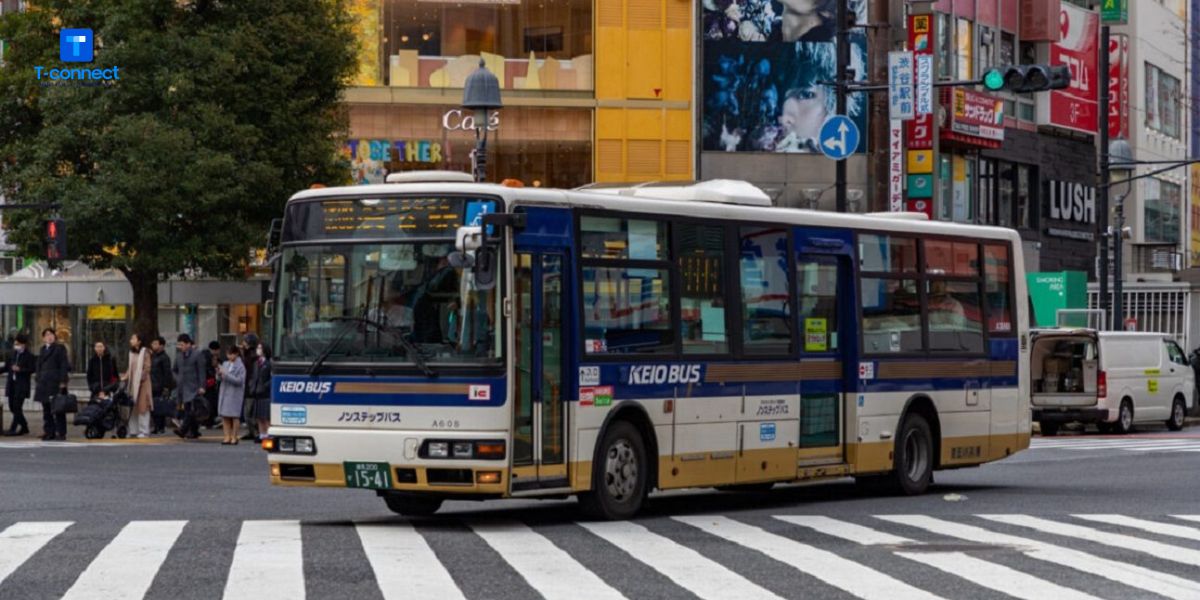
Trains are the main form of transportation in major cities like Tokyo, Osaka, and Kyoto. The train system is punctual, clean, and safe. To save money, you should buy an IC card like Suica or Pasmo, which can be used on both trains and buses.
Buses are also a good option, especially in suburban areas. Most buses have announcements in English and screens showing the names of the stops.
Grocery store
Convenience stores are an integral part of everyday life in Japan. They are open 24/7 and offer a wide range of useful services.
In addition to selling food, drinks, and basic household items, combini also provide services such as photocopying, printing, bill payment, concert ticket purchase, shipping, and even ATM withdrawals. Some popular combini chains such as 7-Eleven, Lawson, and FamilyMart are ubiquitous.
Culture of life
The Japanese place great importance on quiet and not disturbing others. In residential areas, keeping quiet after 22pm is an unwritten rule. Noise from televisions, music, or loud voices can be annoying to neighbors. Garbage separation is also very strict with different types and specific collection days.
When using public transportation, Japanese people usually keep quiet, do not talk on the phone, and always line up in an orderly manner. The culture of “reading the air” (kuuki wo yomu) – understanding and feeling the surrounding atmosphere – is an important part of social communication.
Things to do when living in Japan
Besides mastering the basics, there are some things to do when living in Japan that will help you have a better experience and avoid unnecessary trouble.
Always carry your identification and health insurance
Under Japanese law, foreigners are required to carry their residence card (zairyu card) at all times when going out. Failure to have identification when checked by the police can lead to serious consequences.
National Health Insurance (Kokumin Kenko Hoken) is also mandatory for all residents in Japan. This insurance card provides a 70% reduction in medical expenses and should be carried along with your residence card.
Respect culture and public regulations
Respecting and following cultural norms is one of the most important things to do when living in Japan to gain respect from the local community.
Greeting culture
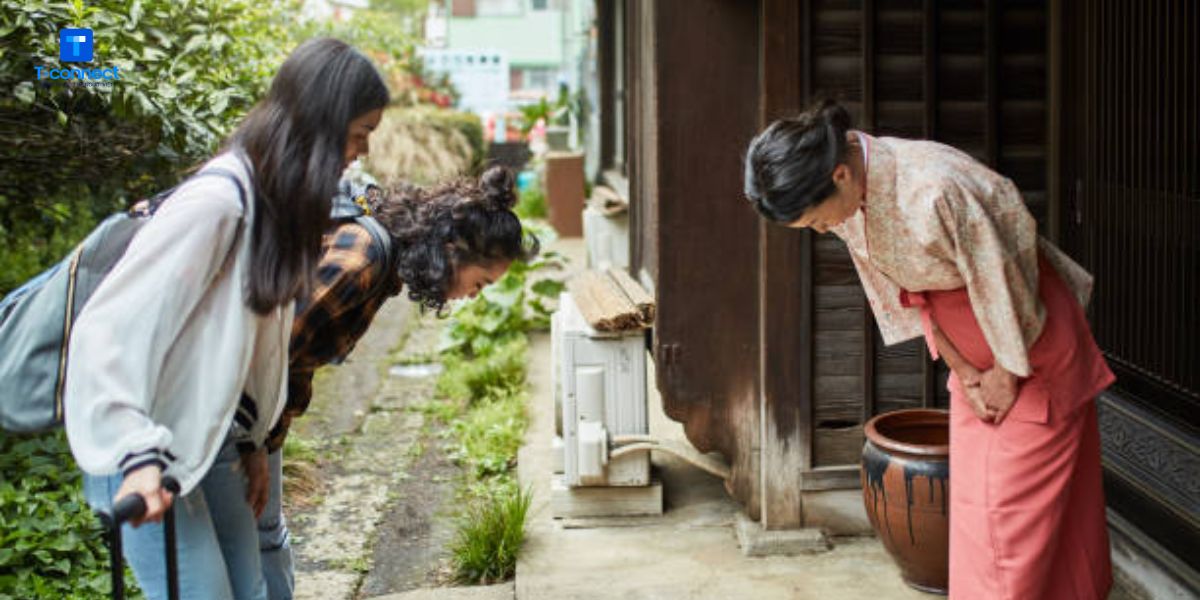
Bowing (ojigi) is an important part of Japanese culture. The degree of bowing shows respect and politeness, from a slight nod when meeting a colleague to a deep bow when meeting a superior or customer.
When entering a home, it is mandatory to say “Ojama shimasu” (excuse me) and take off your shoes. Similarly, when leaving, saying “Ojama shimashita” (thank you for your permission) shows politeness and gratitude.
Queuing culture
The Japanese have a culture of lining up in an orderly and patient manner wherever they are, such as when waiting for a train, buying food, or using an elevator. When riding a train, wait for passengers to get off before boarding. On escalators, stand on the left and leave the right for those who want to walk (the opposite is true in Osaka).
Eating principles
When eating, there are many cultural rules to keep in mind. Saying “Itadakimasu” before eating and “Gochisousama” after eating shows gratitude. Never leave chopsticks stuck straight into a bowl of rice as this is reminiscent of funeral rites.
When drinking beer or sake with colleagues, pour for others before pouring for yourself. This shows consideration and mutual respect in social relationships.
Good forums about life in Japan
To get more useful information and connect with the Vietnamese community in Japan, it is highly recommended to join good forums about life in Japan. Some good forums about life in Japan include:
Life in Japan Forum:
- Foreigners in Japan Forum: http://forum.gaijinpot.com/
Train ticket search website:
- Yahoo! Japan: http://transit.loco.yahoo.co.jp/
- Ekitan: http://ekitan.com/
Job search website:
- https://job.rikunabi.com/2022/
- https://jp.indeed.com/?r=us
- https://www.mpken.jp/
Electronic newspaper in Japan:
- https://www.nikkeibp.co.jp/
- https://www.asahi.com/
- https://news.tbs.co.jp/
Important note for new residents in Japan
There are some important notes that newcomers need to pay special attention to in order to avoid unnecessary trouble in the process of adapting to a new life.
- Learn Japanese as soon as possible, especially daily communication vocabulary.
- Don't be too subjective with administrative procedures, always be on time and have all the documents.
- Learn about insurance, taxes, and residency regulations to avoid fines or loss of benefits.
- Join your local Vietnamese community for support when needed.
- Sign up for health insurance as soon as you have a residential address and learn about medical facilities near your home.
Adapting to a new living environment in Japan is not easy, but it is not too difficult if you are well prepared in terms of knowledge and mentality. Hopefully, through this article, you have grasped the things you need to know when living in Japan, as well as the things you should do to better integrate into life here.
T-Connect T-Connect is not only a provider of telecommunications services - cheap SIM cards, convenient phone cards for Vietnamese people in Japan, but also a reliable companion in the journey to stabilize life in a foreign land. With a friendly Vietnamese consulting team, flexible and convenient service packages such as online payment support, money transfer, visa consulting, ... T-Connect always strives to help the Vietnamese community in Japan live more comfortably and securely every day.

T-connect & DCOM signed a cooperation agreement to enhance digital experiences for the Vietnamese user community in Japan.
On November 17, 2025, T-connect & DCOM officially signed a [...]
ANSWERS TO FREQUENTLY ASKED QUESTIONS WHEN PAYING FOR MY T-CONNECT WITH DCOMPAY
T-Connect officially cooperates with DCOM, launching DCOMPay payment method [...]
T-CONNECT CUP 2025 FOOTBALL TOURNAMENT REGULATIONS – CELEBRATION OF T-CONNECT'S 6TH ANNIVERSARY
The T-connect Cup 2025 football tournament is one of the sporting events [...]
Should I stay in Japan or return to Vietnam? 5 perspectives to help you make the right choice
After many years of studying and working in Japan, many people [...]
Which apps should Vietnamese people in Japan download? 15 essential apps when in Japan
Living, studying or working in Japan always comes with many [...]
5 tips to ship goods from Vietnam to Japan cheaply and safely
The demand for shipping goods from Vietnam to Japan is increasing, especially [...]
What do you need to prepare when converting your Japanese driver's license to Vietnam's? 7 important documents
While living and studying in Japan, many Vietnamese people have [...]
How does Japan handle waste? 5 waste treatment technologies in Japan that surprise the world
Japan is known as a country with a waste management system [...]