
 Home
 About
 Product
 News
 Media channels
 Guide
From a young age, Japanese children are taught to be independent, to smile more, to be grateful when receiving help, and especially to exercise to become stronger and more resilient in life. We often only see that Japanese people are very good, with high work efficiency and a strong will to be self-reliant and self-reliant. However, very few people know that in Japan, children receive a very special education, which is what makes children learn many useful things, and become steadfast with the knowledge and life skills equipped from an early age.
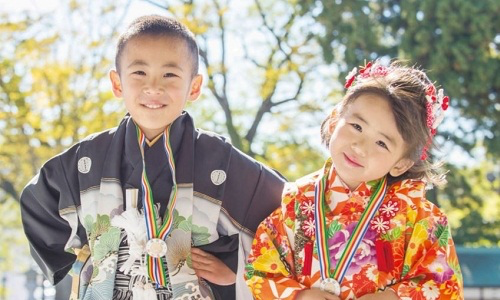
Japanese education is considered the foundation for the comprehensive development of the human being. There, schools pay special attention to the natural development of the individual, so there are a variety of gifted subjects in the school to guide children.
First, Japanese children are very self-disciplined.
In Japan, children carry many different types of bags to school: a school bag, an outer bag, a lunch bag, a lunch box, a clothes bag, a change of clothes bag, a change of clothes bag, and a shoe bag. Then bag A must be a certain length, bag B must be a certain width, bag C must fit inside bag D, and bag E must fit inside bag F.
Carrying bags with them makes children always aware of classifying their belongings and even classifying trash. The discipline of Japanese children is trained in a methodical and strict manner.

Anyone who sees Japanese parents taking their children to school is surprised because the children often carry their own bags to school without any help from their parents or accompanying adults. Children are aware that it is their job, and when they finish playing with their toys, they often put them away neatly in bags or boxes without being reminded or scolded by their parents. At school, children change clothes constantly, which also makes them no longer feel confused about personal tasks without their mothers' help. Japanese children learn to be independent from the time they are only 2,3 or XNUMX years old.
Second, children are trained in integration skills and self-confidence.

When children are less than 1 year old, they compete in sports activities. Parents in Japan strongly encourage their children to participate in outdoor extracurricular activities. For them, the first thing to teach their children is boldness and bravery, not knowledge. Children participate in competitions, performances and show great bravery when standing in front of a crowd. Even 3-4 year old girls participate in the girls' soccer team... That helps children become more active and lively. At 3:30 pm, the whole kindergarten will go to the playground together, group games are always prioritized to help children integrate and have a team spirit. There are 2 things that any kindergarten teaches children: saying "thank you" and smiling. Children often share toys with each other and have a great sense of community. When playing with each other, children are even closer than siblings, which makes them integrate quickly and behave very politely towards others. In Japan, children are taught manners quite a lot, instead of learning Math or foreign languages. Learning foreign languages in Japan is not as restrictive as in some countries. Teachers guide children on what to avoid in order to speak English correctly, some quick mental calculation methods, etc., helping children no longer feel afraid of learning, while promoting their creativity and self-learning ability.
In a Japanese kindergarten, children do not bring any books or notebooks. Instead, they choose the subjects they like, and do what they feel interested in. Therefore, children do not feel afraid of studying, or pressured about grades. Children are often asked by their parents about their schoolwork, and are free to express their own thoughts. Children in this country always have very useful extracurricular activities such as participating in baking, going to sports days, performing at community events, participating in overnight festivals, going to exchange meetings, temples, exhibitions, etc.

Children are even allowed by their parents to attend overnight camping trips organized by the school. This helps them develop confidence and courage from an early age. During such extracurricular activities, children show great interest and this leaves a deep impression on them.

T-connect & DCOM signed a cooperation agreement to enhance digital experiences for the Vietnamese user community in Japan.
On November 17, 2025, T-connect & DCOM officially signed a [...]
ANSWERS TO FREQUENTLY ASKED QUESTIONS WHEN PAYING FOR MY T-CONNECT WITH DCOMPAY
T-Connect officially cooperates with DCOM, launching DCOMPay payment method [...]
T-CONNECT CUP 2025 FOOTBALL TOURNAMENT REGULATIONS – CELEBRATION OF T-CONNECT'S 6TH ANNIVERSARY
The T-connect Cup 2025 football tournament is one of the sporting events [...]
Should I stay in Japan or return to Vietnam? 5 perspectives to help you make the right choice
After many years of studying and working in Japan, many people [...]
Which apps should Vietnamese people in Japan download? 15 essential apps when in Japan
Living, studying or working in Japan always comes with many [...]
5 tips to ship goods from Vietnam to Japan cheaply and safely
The demand for shipping goods from Vietnam to Japan is increasing, especially [...]
What do you need to prepare when converting your Japanese driver's license to Vietnam's? 7 important documents
While living and studying in Japan, many Vietnamese people have [...]
How does Japan handle waste? 5 waste treatment technologies in Japan that surprise the world
Japan is known as a country with a waste management system [...]