
 Home
Home About
About Product
 News
News  Media channels
 Guide
GuideLife in a foreign land sometimes makes many Vietnamese people in Japan feel lonely and isolated. Amidst the hustle and bustle of life, a peaceful spiritual space imbued with Vietnamese culture is a valuable spiritual support. This article will introduce to you 9 Vietnamese temple in Japan sacred place, where Vietnamese people often visit to find peace of mind.
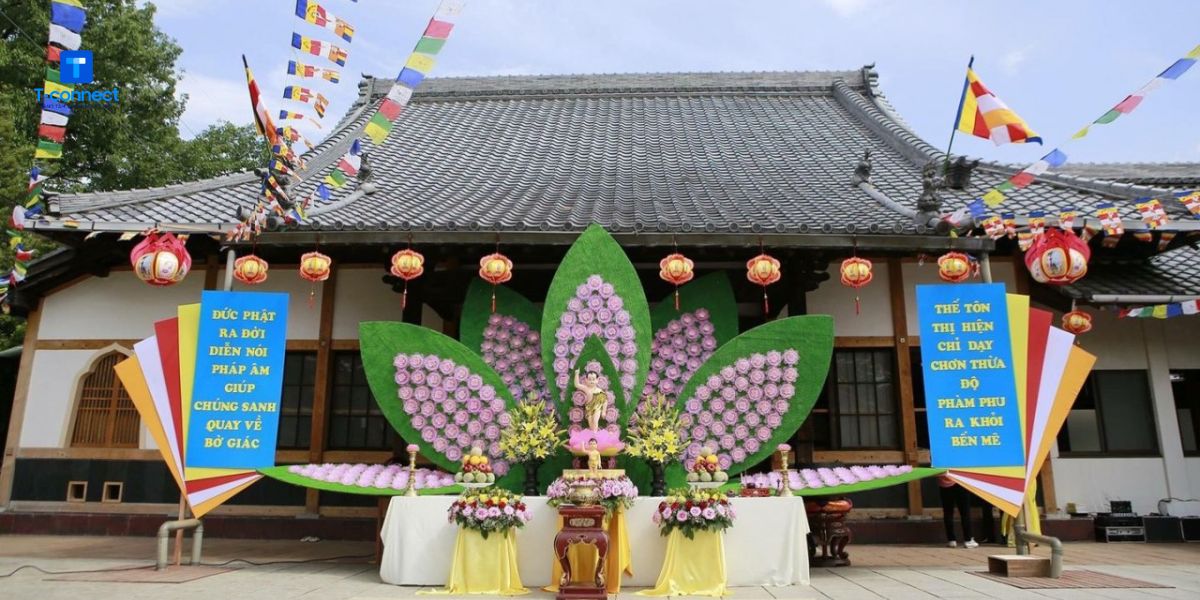
Are there Vietnamese temples in Japan?
Many people still wonder whether there are Vietnamese temples in Japan. The answer is yes, and not just one but many Vietnamese temples have been built across Japan in the past decades.
The Vietnamese community in Japan currently has more than 450.000 people, making it one of the largest foreign communities here. The need for spiritual life and maintaining cultural identity has promoted the establishment of Vietnamese temples in Japan. These temples are not only places of worship and rituals according to Vietnamese Buddhist traditions, but also meeting places and cultural exchanges for the Vietnamese community.
Vietnamese temples in Japan are often built in traditional Vietnamese architecture with adjustments to suit Japan's climate and geographical conditions. Although their scale may be more modest than those in Vietnam, these temples still carry the cultural and spiritual characteristics of their homeland.
Top 9 Vietnamese temples in Japan
Below are 9 typical Vietnamese temples in Japan that you should know, especially when living, working or traveling in the land of the rising sun.
Nisshinkutsu Temple – Vietnamese Temple in Tokyo
- Japanese name: Tohru
- Address: 〒105-0011 Tōkyō-to, Minato-ku, 2 Chome-11-1 Shibakōen (204)
Located in the heart of bustling Tokyo, Nisshinkutsu Temple is one of the oldest and most famous Vietnamese temples in Tokyo. Nisshinkutsu Temple is presided over by Venerable Yoshimizu Daichi - a Japanese monk who is especially gifted and devoted to the Vietnamese community. He became acquainted with Vietnamese Buddhism through his interactions and studies with the Vietnamese Buddhist community, especially with the spiritual guidance of Venerable Thich Tri Quang.
Despite its modest size due to its location in a crowded urban area, Nisshinkutsu Temple still retains Vietnamese Buddhist architecture with a solemn main hall to worship Buddha, ancestor worship rooms and community living areas.
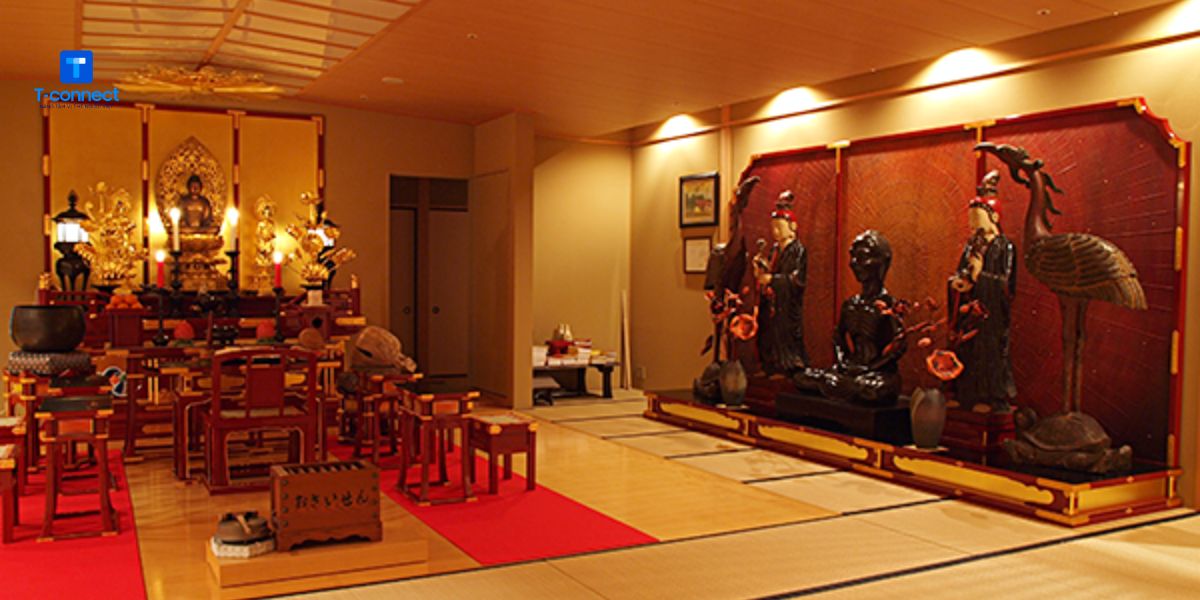
Nam Hoa Temple – Vietnamese Temple in Saitama
- Japanese name: Tohru
- Address: 1019-2 Osogawa, Koshigaya, Saitama 343-0802
Nam Hoa Temple is located in Saitama Prefecture, established in 2006 on a campus of over 300 square meters. The founder and current abbot is Venerable Thich Nu Thong Thang - a nun who is always dedicated to maintaining spiritual life and preserving Vietnamese Buddhist culture in the heart of Japan.
The name Nam Hoa has a profound meaning: “Nam” symbolizes Vietnam, while “Hoa” evokes the national name of Japan. Every year, the temple organizes many major spiritual events such as Buddha’s Birthday, Vu Lan, New Year and Lunar New Year. Each event usually attracts more than 100 participants, creating a warm, cohesive and meaningful space for the Vietnamese community here.
Dai An Pagoda – Vietnamese Pagoda in Saitama
- Japanese name: Tohru
- Address: 〒367-0224 668-2 Takayanagi, Kodamacho, Honjo-shi, Saitama Japan
Dai An Pagoda, located on the mountaintop bordering Saitama and Gunma prefectures, is one of the Vietnamese pagodas in Saitama that holds special significance for the Vietnamese Buddhist community. At the end of 2017, by chance, nun Thich Tam Tri - currently the President of the Vietnamese Buddhist Association in Japan - had the opportunity to visit a Japanese pagoda that no longer had a successor. Realizing this was a precious opportunity, the Vietnamese Buddhist Association took over the pagoda and renamed it Dai An Pagoda - expressing the deep gratitude and affection of Vietnamese people in a foreign land.
Dai An Pagoda is not only a place for spiritual activities but also acts as a common home for the Vietnamese community in Japan. Every year, the pagoda organizes important cultural and spiritual events such as New Year, Lunar New Year, Buddha's Birthday, Vu Lan Festival and many other community-building activities.
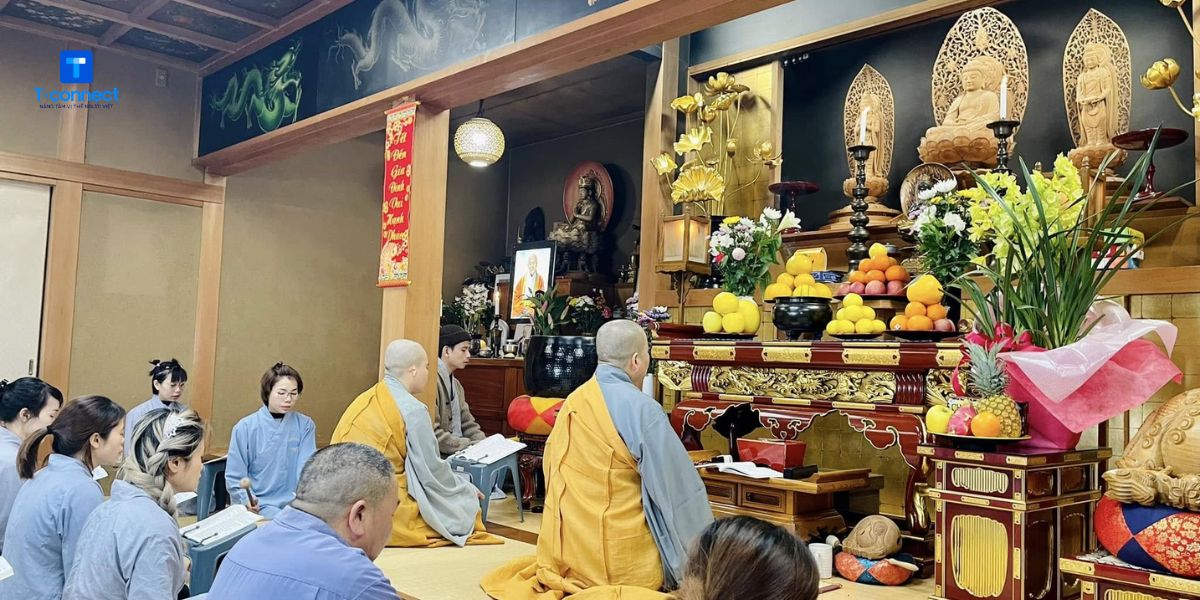
Vietnamese Temple in Kanagawa
- Temple name: Vietnamese Temple
- Address: 4889-1 Hanbara, Aikawa, Aiko District, Kanagawa 243-0307
The Vietnamese Temple in Kanagawa was established in 2010 by the late Venerable Thich Minh Tuyen, who laid the foundation for the Buddhist life of the Vietnamese community here. After the Venerable passed away in 2018, the management and operation of the temple was continued by Venerable Thich Nhuan An and Venerable Thich Nu Gioi Bao.
Every year, the pagoda organizes important holidays such as New Year, Lunar New Year, Buddha's Birthday, Vu Lan Festival, etc., attracting a large number of Vietnamese people in the area and neighboring provinces to attend. Not only religious ceremonies, the pagoda also expands educational and community activities with introductory classes on Buddhism, Zen, Yoga; and organizes Vietnamese and Japanese language classes to help Vietnamese people integrate better into local society.
Dai Nam Temple in Hyogo
- Temple name: Dai Nam Temple
- Address: 157-1, Shigocho, Himeji, Hyogo 671-0246
Dai Nam Pagoda is one of the typical Vietnamese pagodas in Japan, located in Hyogo Prefecture. The pagoda was established in 2013 thanks to the dedication of Venerable Thich Nhuan Pho - a monk studying abroad at Ryukoku University - and the joint efforts of the Vietnamese Buddhist community. On a land area of 1.400m², Dai Nam Pagoda was born with the desire to preserve Vietnamese beliefs and culture in the heart of Japan. Currently, the pagoda is presided over by Venerable Thich Tuong Nghiem and continues to develop strongly.
The temple organizes many annual events such as Lunar New Year, New Year, Buddha's Birthday, Vu Lan Festival and Mid-Autumn Festival. Not only is it a place for religious activities, this Vietnamese temple in Japan also supports Vietnamese people in their lives, work, legal advice, job referrals and accommodation. The temple also cooperates with other Japanese temples such as Cuu Tang Temple and Vinh Minh Temple to expand study and cultural activities and festivals for the Vietnamese community throughout Japan.
Hamamatsu Shinjin Temple in Shizuoka
- Temple name: Tinh Tan Temple
- Address: 〒432-8006 6044-1-2 Ōkubochō, Nishi-ku, Hamamatsu-shi, Shizuoka-ken, Japan
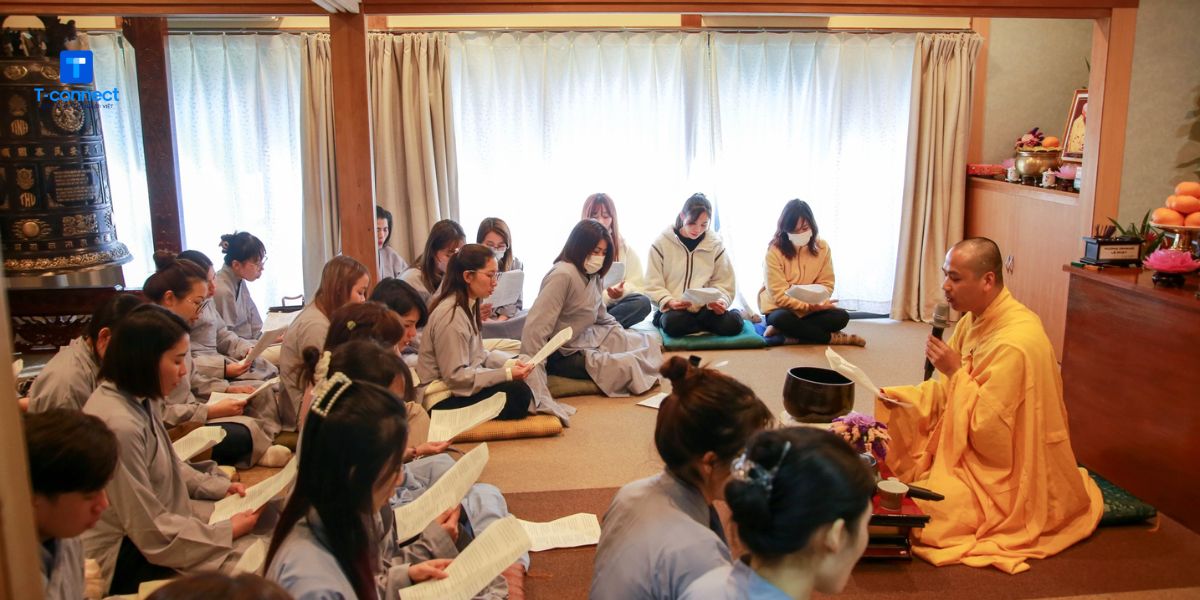
Located in Hamamatsu City, Shizuoka Prefecture, this Vietnamese temple in Japan was established in 2018 thanks to the financial and labor contributions of the local Vietnamese community and throughout Japan. Tinh Tan Temple was established with the mission of preserving traditional spiritual and cultural values and becoming a spiritual home for people living abroad.
The pagoda regularly organizes activities imbued with cultural and religious identity such as Buddha's Birthday, Vu Lan Festival, Lunar New Year, New Year and Mid-Autumn Festival. In particular, every first Sunday of the month, the pagoda organizes a retreat for the Buddhist community.
Phuoc Quang Pagoda in Osaka
- Temple name: Phuoc Quang Temple
- Address: 7 Chome-5-10 Yasunakacho, Yao, Osaka 581-0085\
Located in Yao City, Osaka Prefecture, Phuoc Quang Pagoda is presided over by monk Thich Quang Niem and is a familiar spiritual place for the Vietnamese community in Osaka. Every first Sunday of the month, the pagoda organizes meditation courses for Buddhists to have the opportunity to calm their minds, practice goodness and seek peace. A special feature of the pagoda is the Buddha statue brought from Vietnam, contributing to creating a sacred space close to the homeland.
Not only does it have religious significance, this Vietnamese temple in Japan also acts as a community center. Around the temple area, there are many Vietnamese food stores and restaurants, creating a space full of Vietnamese culture right in the heart of Osaka.
Hoa Lac Pagoda in Kobe
- Japanese name: Tohru
- Address: 8 Chome-2-14 Higashishiriikechō, Nagata-ku, Kobe-shi, Hyōgo-ken 653-0022
Located in the Kansai region, Hoa Lac Pagoda is one of the typical Vietnamese pagodas in Japan with the mission of connecting and supporting the Vietnamese community living, studying and working in the land of the rising sun. The pagoda was established in 2011 and has a close connection with Dai Nam Pagoda - another Vietnamese pagoda with the same goal of serving the community.
Not only a place for spiritual practice, Hoa Lac Pagoda is also active in activities to support the lives of Vietnamese people. The pagoda provides counseling for those who have difficulties in life, study, work or need temporary accommodation. In addition, the pagoda is also a spiritual support and shares useful advice for those who need help in Japan.
Aichi Phuoc Hue Temple in Nagoya
- Temple name: Phuoc Hue Pagoda
- Address: Jizaemonnishi-3192 Sobuecho Shinmyozu, Inazawa, Aichi 495-0035
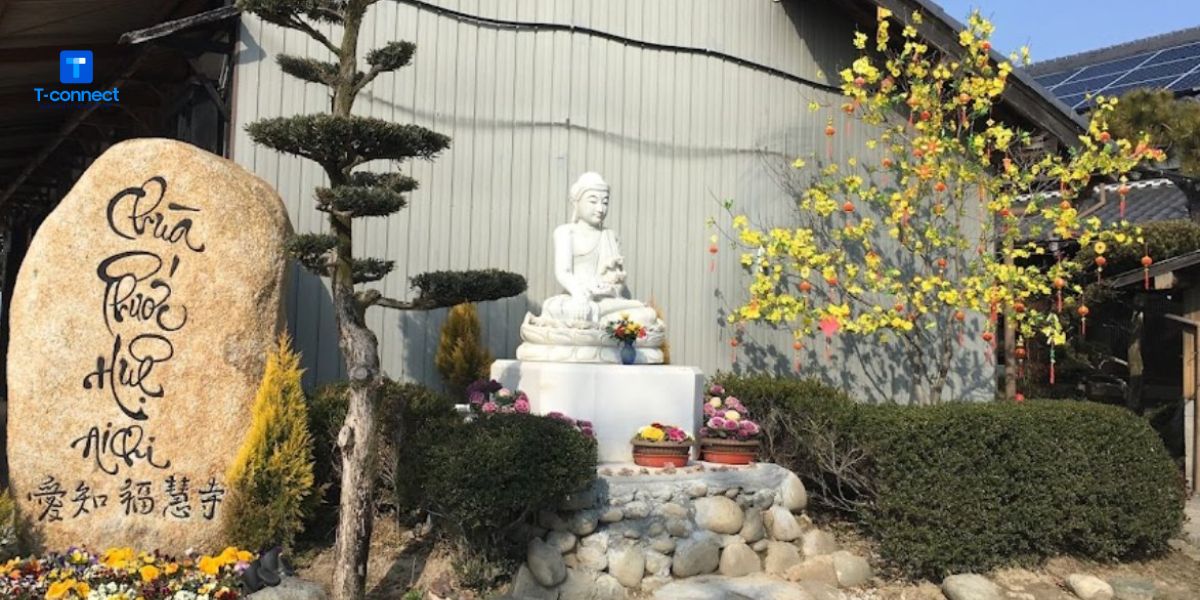
Phuoc Hue Aichi Temple, established in April 4, is a Vietnamese temple in Japan with a great mission to support the overseas Vietnamese community. The temple was advised and assisted by Venerable Takaoka Shucho, abbot of Duc Lam Temple (Tokurin-ji) in its early days of operation. Phuoc Hue Temple is currently run by nun Thich Nhu Tam, continuing to maintain spiritual and Buddhist cultural activities for the local Vietnamese community. The name “Phuoc Hue Aichi” carries a meaningful message, expressing the desire to build a spiritual refuge for those who are away from home, helping them find peace of mind.
The pagoda is not only a place for Vietnamese people to seek spirituality, but also a place to connect the community, where Buddhists study and practice together according to the Buddha's teachings. The pagoda hopes to create a space of solidarity and mutual support in all circumstances.
The significance of Vietnamese temples to the Vietnamese community in Japan
Vietnamese temples in Japan are a solid spiritual support for Vietnamese people living far from home. Here, they find peace of mind, reduce homesickness and the pressure of life in a foreign land. Temples also play an important role in preserving and promoting national cultural identity. Through activities such as teaching Vietnamese, organizing traditional festivals, and classes on Vietnamese culture and history, temples help the younger generation understand and be proud of their roots. Especially for children born and raised in Japan, temples are the only place where they can fully experience Vietnamese culture.
In addition, Vietnamese temples in Japan are also community centers, connecting Vietnamese people in a foreign country. Here, they meet, share life experiences, and support each other in work and life. Many friendships and even love relationships have blossomed from activities at the temple.
In a modern country like Japan, the presence of Vietnamese temples in Japan is a testament to the cultural and spiritual connection of Vietnamese people living abroad. Whether it is a Vietnamese temple in Tokyo, a Vietnamese temple in Saitama or small temples in Nagoya, Kobe, all contribute to preserving national identity and supporting the spirit of Vietnamese people living abroad. If you are living in Japan, do not hesitate to visit a Vietnamese temple near you - to find peace, connection and roots.

T-connect & DCOM signed a cooperation agreement to enhance digital experiences for the Vietnamese user community in Japan.
On November 17, 2025, T-connect & DCOM officially signed a [...]
ANSWERS TO FREQUENTLY ASKED QUESTIONS WHEN PAYING FOR MY T-CONNECT WITH DCOMPAY
T-Connect officially cooperates with DCOM, launching DCOMPay payment method [...]
T-CONNECT CUP 2025 FOOTBALL TOURNAMENT REGULATIONS – CELEBRATION OF T-CONNECT'S 6TH ANNIVERSARY
The T-connect Cup 2025 football tournament is one of the sporting events [...]
Should I stay in Japan or return to Vietnam? 5 perspectives to help you make the right choice
After many years of studying and working in Japan, many people [...]
Which apps should Vietnamese people in Japan download? 15 essential apps when in Japan
Living, studying or working in Japan always comes with many [...]
5 tips to ship goods from Vietnam to Japan cheaply and safely
The demand for shipping goods from Vietnam to Japan is increasing, especially [...]
What do you need to prepare when converting your Japanese driver's license to Vietnam's? 7 important documents
While living and studying in Japan, many Vietnamese people have [...]
How does Japan handle waste? 5 waste treatment technologies in Japan that surprise the world
Japan is known as a country with a waste management system [...]