
 Home
Home About
About Product
 News
News  Media channels
 Guide
GuideYou are wondering prepaid and postpaid sim What are they, what are the differences, which one should you choose when living, studying or traveling in Japan? In the context of increasing demand for phone usage, especially for the Vietnamese community in Japan, understanding the advantages and disadvantages of each type of SIM will help you save costs and make your life more convenient. This article will explain in detail, compare the two types of SIM, and at the same time provide experience in choosing the right SIM for each subject, helping you easily make a decision.
What is prepaid and postpaid sim?
To understand what prepaid and postpaid SIM cards are, we need to understand the nature and how each type of SIM card works in the Japanese market.
Prepaid SIM
Prepaid SIM is a type of SIM that requires users to top up before using the service. With prepaid SIM in Japan, you need to buy a top-up card or top up online before you can make calls, send messages or use internet data. The amount you top up will be deducted gradually each time you use the service. When you run out of money, you need to top up to continue using it.
Advantage:
- No contract required, quick procedure.
- Good cost control, top up as much as you use.
- Flexible, suitable for people who are only in Japan for a short time.
Disadvantages:
- Data prices are usually higher than postpaid SIMs.
- Limited time of use, if not recharged it will be locked.
- Some services require a long-term landline number (e.g. opening a bank account, applying for a credit card), which prepaid SIMs may not be able to provide.
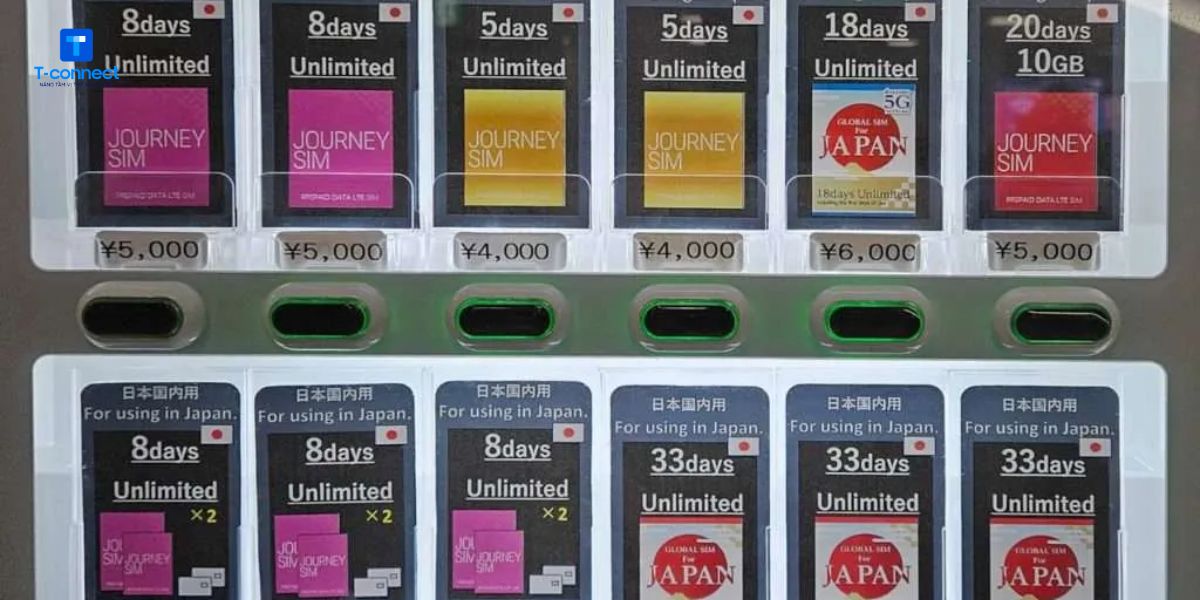
Postpaid SIM
Postpaid SIMs work the opposite way – you use the service first and pay later. With a postpaid SIM, the network provider provides the service during the month and issues a bill at the end of the cycle. Users can pay by credit card, bank transfer or other methods accepted by the network provider.
Advantage:
- Cheaper rates per GB of data or calling minute.
- Enjoy many promotions and diverse packages.
- Suitable for long-term use, convenient when needing to register for public services.
- No need to worry about service interruption if you forget to top up.
Disadvantages:
- The registration procedure is complicated and requires a residence card (在留カード) and a bank account in Japan.
- Contract terms are usually 12–24 months, and early cancellation will incur a penalty.
- Must pay in full at the end of the month, not as flexible as prepaid SIM.
Compare prepaid and postpaid SIM cards in Japan
To help you visualize the difference, the table below compares the two types of SIM cards in detail according to important criteria.
| Criteria | Prepaid SIM | Postpaid SIM |
| Registration procedure | Simpler, can be purchased at convenience stores or online | Complicated, requires complete paperwork, long-term visa, fixed address |
| Ease of use | – Flexible, use as much as you top up – Need to top up periodically, may interrupt service | Automatic renewal, no worries about running out of money in the middle, service interruption |
| Flexibility | Can be discontinued at any time | Binding contract, difficult to cancel |
| Cost & Fees | Cost control, but unit price may be higher, less promotions | Diverse packages, often with better deals |
| Suitable for whom? | Travelers, short-term students, people who want to control costs | Long term residents, heavy users |
Experience in choosing prepaid or postpaid SIM in Japan
Once you understand what prepaid and postpaid SIMs are, you need to know which one is right for you. Here are some specific tips for each group.
Đối với du học sinh
International students often have medium to long-term stays in Japan. When understanding what prepaid and postpaid SIM cards are, international students should consider:
Prepaid SIM cards are suitable for the first few months when visa procedures and residence are not yet stable. After having a long-term visa and bank account, switching to a postpaid SIM card will save costs and be more convenient in the long run.
International students should choose a package with a lot of data because they often need to use the internet to study, contact family and participate in social activities.
For tourists
This is the group of people who are most interested in what prepaid and postpaid SIM cards are. Short-term travelers should definitely choose prepaid SIM cards because:
- Simple procedure, can be purchased at the airport or convenience store.
- No long-term commitment and optimal cost control.
- Many carriers offer special packages for travelers with terms ranging from 7-30 days.
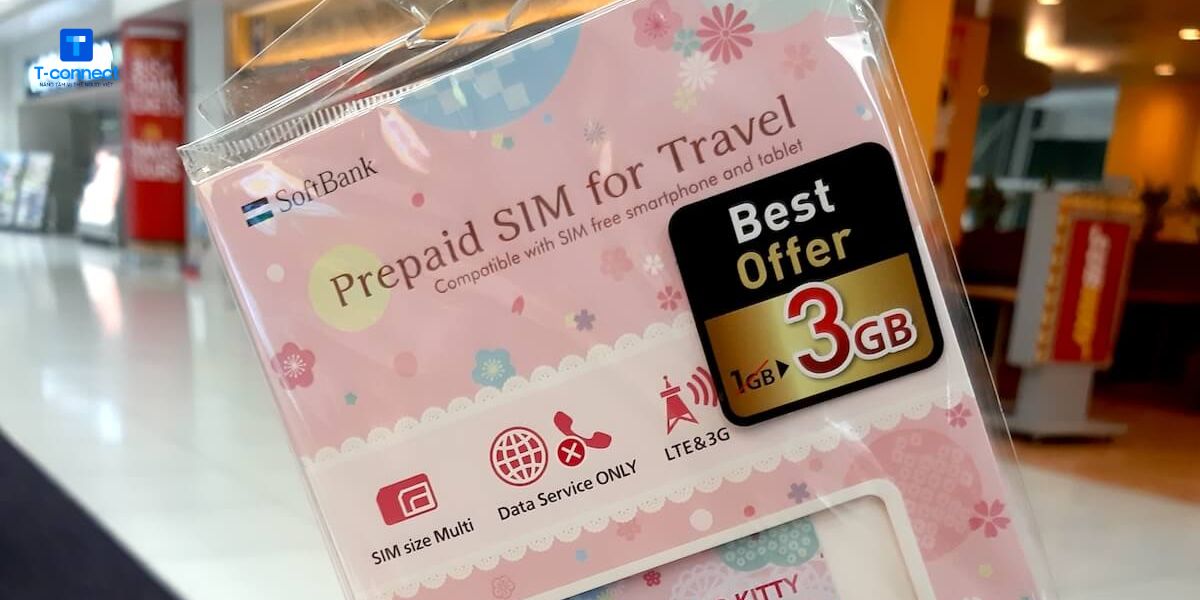
For workers
Workers with long-term visas should consider postpaid SIM cards after settling down in Japan. However, in the early stages when all the necessary documents are not yet available, prepaid SIM cards are still a reasonable choice.
For those who have just come to Japan to work short-term
If you are only staying in Japan for a few months (e.g. on a business trip or short-term internship), a prepaid SIM card is a good choice. You don't need to worry about long-term contracts, just use it for the duration of your stay.
Notes when registering for a SIM card in Japan
Once you understand what prepaid and postpaid SIMs are, you need to note the following important points:
- Prepare full documents: passport, residence card, legal residence address.
- Check the contract carefully: term, early cancellation fees, hidden fees.
- Choose the right package: avoid buying a package with too much data compared to your needs.
- With prepaid SIM, remember to check the expiration date to avoid service interruption.
Some popular carriers in Japan
When learning about prepaid and postpaid SIM cards, you are certainly also interested in the major carriers providing telecommunications services in Japan. These are highly reputable brands, with wide coverage and diverse packages, meeting many different needs.
Docomo
Docomo is Japan’s largest mobile network, known for its strong signal quality and wide coverage, even in remote mountainous areas or small islands. This is the top choice for those who want a stable connection, especially rural workers or those who travel long distances. However, Docomo’s package costs are often higher than other networks.
AU
AU belongs to KDDI Group, also one of the three "big guys" in the Japanese telecommunications industry. AU is highly appreciated for its stable service, diverse postpaid packages and many attractive incentives. Some of AU's programs are also linked to electricity and gas services, helping users save on monthly living expenses.
Softbank
SoftBank is chosen by many young people and the foreign community, including Vietnamese students and workers. The reason is that SoftBank has many flexible policies, diverse packages, and regularly launches promotional programs. SoftBank's signal is strong in urban areas, but sometimes limited in remote areas.
Prestigious sim card buying address for Vietnamese in Japan
For the Vietnamese community in Japan, the language barrier is a major difficulty when registering for a SIM card. This is the reason why many people trust and choose T-connect.
T-connect specializes in providing SIM cards, WiFi and telecommunication services exclusively for Vietnamese people in Japan. T-connect's strengths are 100% support in Vietnamese, simple procedures, transparent prices, and no worries about complicated obligations. Whether you need a prepaid or postpaid SIM card, T-connect has a suitable service package, helping you feel secure when studying, working and living in Japan.
Top Q&A
Can prepaid SIM use 5G?
Most prepaid SIMs in Japan support 5G, however speeds and coverage may be limited compared to postpaid SIMs.
Can I switch from prepaid to postpaid?
Yes, but you need to fully meet the requirements of the postpaid sim and go through the new registration procedure.
Question: Which SIM is cheaper in the long run?
Postpaid SIMs often have better rates for long-term use, but prepaid SIMs allow for better cost control.
If I cancel my postpaid SIM contract early, will I be penalized?
Typically, carriers in Japan sign contracts for 12–24 months. If you terminate your contract early, you may be subject to a cancellation fee ranging from ¥5.000–¥10.000. Some newer carriers, such as Rakuten Mobile, have reduced or eliminated this fee to compete, so you may want to consider this before signing up.
Through this article, you have clearly understood what prepaid and postpaid SIM cards are, as well as the advantages and disadvantages of each type of SIM card when used in Japan. Each type has its own advantages: prepaid SIM cards are flexible and suitable for the short term; postpaid SIM cards are stable, economical and suitable for the long term. Consider your needs, length of stay and costs to choose the most suitable SIM card package for you.
—
To make choosing a SIM card in Japan easier, you can refer to T-connect – a telecommunications brand dedicated to the Vietnamese community in Japan. T-connect provides both prepaid and postpaid SIM cards, supports consulting in Vietnamese, quick procedures, transparent prices. Whether you are an international student, tourist or long-term worker, T-connect always has the right solution, helping you feel secure connecting with family and friends anytime, anywhere.

T-connect & DCOM signed a cooperation agreement to enhance digital experiences for the Vietnamese user community in Japan.
On November 17, 2025, T-connect & DCOM officially signed a [...]
ANSWERS TO FREQUENTLY ASKED QUESTIONS WHEN PAYING FOR MY T-CONNECT WITH DCOMPAY
T-Connect officially cooperates with DCOM, launching DCOMPay payment method [...]
T-CONNECT CUP 2025 FOOTBALL TOURNAMENT REGULATIONS – CELEBRATION OF T-CONNECT'S 6TH ANNIVERSARY
The T-connect Cup 2025 football tournament is one of the sporting events [...]
Should I stay in Japan or return to Vietnam? 5 perspectives to help you make the right choice
After many years of studying and working in Japan, many people [...]
Which apps should Vietnamese people in Japan download? 15 essential apps when in Japan
Living, studying or working in Japan always comes with many [...]
5 tips to ship goods from Vietnam to Japan cheaply and safely
The demand for shipping goods from Vietnam to Japan is increasing, especially [...]
What do you need to prepare when converting your Japanese driver's license to Vietnam's? 7 important documents
While living and studying in Japan, many Vietnamese people have [...]
How does Japan handle waste? 5 waste treatment technologies in Japan that surprise the world
Japan is known as a country with a waste management system [...]