
 Home
Home About
About Product
 News
News  Media channels
 Guide
GuideWhen living, working or studying in Japan, you will hear a lot about resident tax in Japan. This is one of the mandatory taxes, applicable to both Japanese and foreigners residing in this country. However, many Vietnamese people when they first come to Japan are often confused, not knowing clearly how to calculate, how to pay as well as the deadline for paying taxes. Let's learn in detail about the resident tax, helping you fulfill your obligations accurately and avoid legal risks.

What is resident tax in Japan?
Resident tax in Japan (住民税 – Jūminzei) is a local tax that applies to all residents in Japan, including Japanese and foreigners. This tax is collected by prefectural and municipal governments to provide funds for maintaining essential public services such as education, health care, transportation, social welfare, and infrastructure.
The resident tax is not calculated based on current income but on the individual's income in the previous year. Therefore, people who have just come to Japan to work usually do not have to pay it in the first year, but from the second year onwards, if their income exceeds the prescribed level, they will have to start paying this tax.
The municipal tax is divided into two parts:
- Flat Tax (均等割 – Kintōwari): A fixed amount that all residents must pay, regardless of income, usually around 5.000 yen/year (depending on the locality).
- Income Tax (所得割 – Shotokuwari): Calculated based on your taxable income in the previous year, usually around 10% of total income after deducting legal deductions (family allowance, insurance, pension, etc.).
Who must pay resident tax in Japan?
Not everyone living in Japan has to pay taxes from day one. Resident tax regulations in Japan apply to the following cases:
- Foreigners or Japanese nationals with a permanent residence in Japan on January 1 of the tax year.
- People who have had income from work, business or other sources of income in Japan in the previous year.
- People who have been in Japan long enough to be issued a residence card and registered as temporary residents at the local government.
Some cases are exempted or reduced from paying resident tax in Japan, including:
- People with income below the prescribed level (depending on the locality, usually below 1 million yen/year).
- Students are supported with full scholarships or no income.
- Long-term disability.
- Special cases are considered by the government for exemption according to the actual situation.
Tax exemption or reduction requires application and proof with relevant documents, such as income certificate, student certificate.
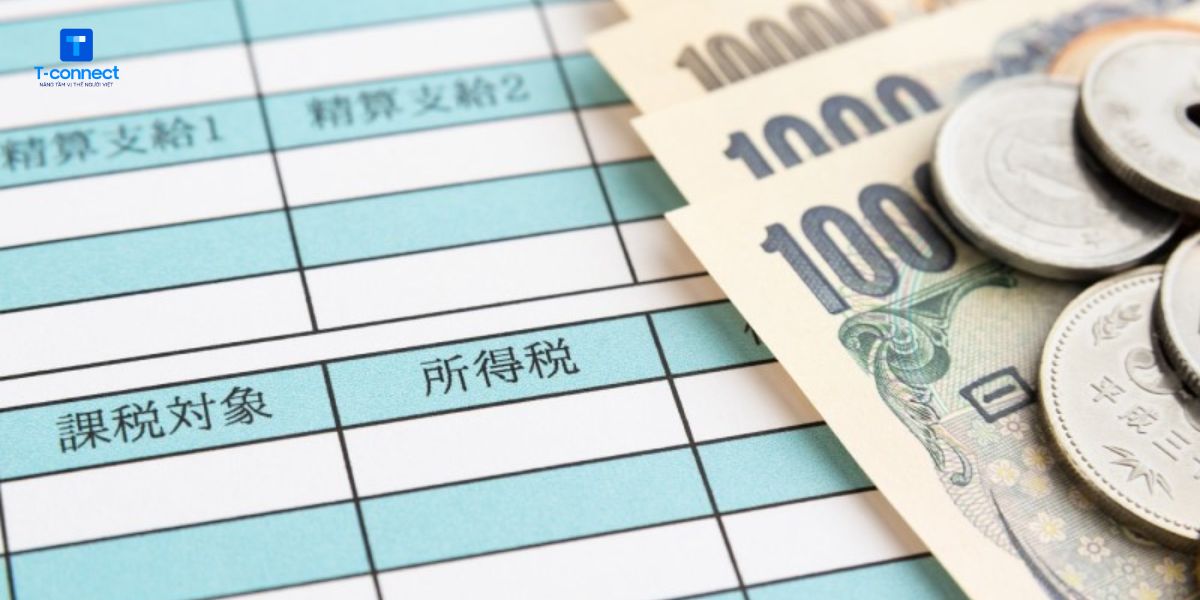
How to pay resident tax in Japan?
Resident tax in Japan is calculated entirely on the previous year's income. This means that in the first year of your stay in Japan, you usually do not have to pay this tax because you have not yet generated taxable income in Japan. From the second year onwards, the local government will base your total income from the previous year to determine the amount to pay.
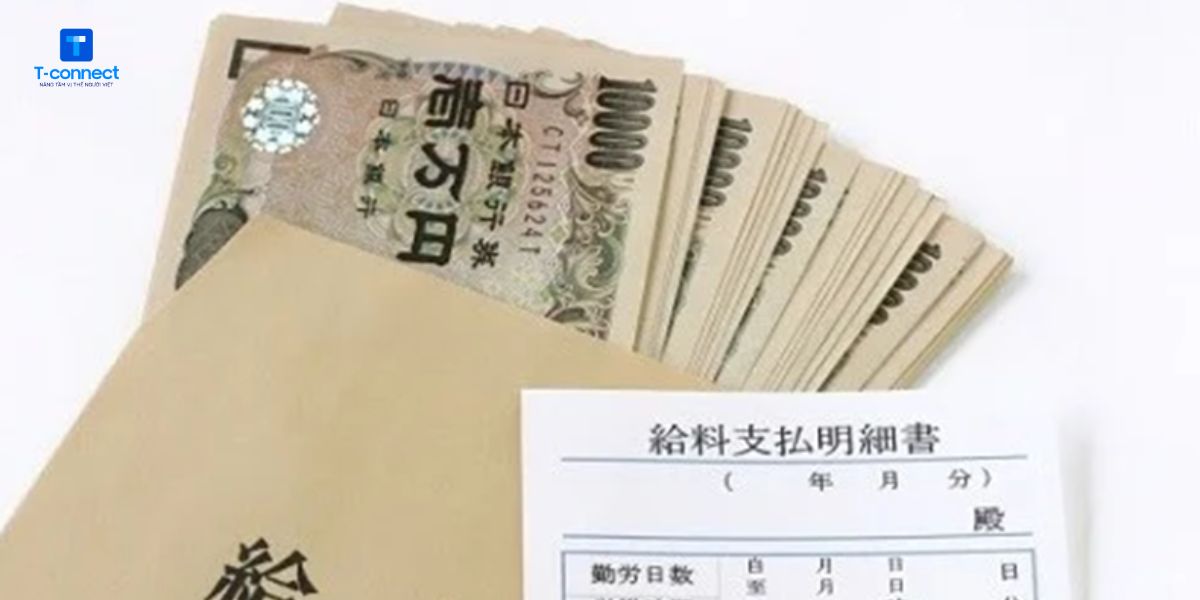
If you are working for a company, in most cases, your resident tax will be deducted directly from your monthly salary. This is a form of withholding at source, which saves you from having to pay the tax yourself.
If you are an international student working part-time (baito), or have quit your job and moved to a new company, paying taxes will be different. In that case, the tax office will calculate your total income for the year, then send you a tax payment notice (納付書 – Nōfusho) around June of the following year. The notice will clearly state the amount to be paid and the deadline for payment.
For example, your 2024 municipal tax is calculated based on your income in 2023, and from June 6 you will receive an official notice of the amount to be paid.
Time to pay municipal tax
Knowing when to pay your resident tax in Japan is key to avoiding unwanted penalties and interest.
Closing date
Resident tax is not collected as soon as you earn income, but is calculated and reported the following year. Usually, around June each year, the local government will send a notice of the amount of tax to be paid based on the previous year's income.
Depending on the form of tax payment, payment time is different:
- For people working at the company: The municipal tax will be deducted from the monthly salary by the company and transferred to the tax authority.
- For self-payers (such as students working part-time, freelancers or retired people): The tax amount will be divided into 4 payment periods, falling in June, August, October and January of the following year. The payer is responsible for bringing the notice to the bank, post office or convenience store to pay on time.
Penalties for not paying taxes on time
The consequences of failing to comply with the deadline for paying resident tax in Japan can have serious and long-term impacts on an individual's financial and legal situation.
When a taxpayer fails to pay his or her tax obligations on time, the system automatically applies a late payment interest rate called 延滞金 (ensaikin). This interest rate typically ranges from 2.4% to 8.7% per annum, depending on the length of the overdue period and local policies. It is worth noting that this interest rate is calculated on a daily basis from the date of overdue until the taxpayer completes full payment. With such a daily interest rate mechanism, the amount payable can increase significantly if the delay persists.
Additionally, in some serious cases, the authorities may:
- Deduct directly from bank account.
- Confiscation of part of salary or property.
- Affects visa extension or new visa application.
Top Q&A
Do students studying abroad in Japan have to pay resident tax?
If you have a registered address and have income (part-time work), you still have to pay resident tax in Japan. However, if your income is very low, you may be exempted.
I just came to Japan, do I have to pay resident tax in the first year?
Newcomers to Japan do not have to pay resident tax in Japan in the first year because the tax is calculated based on the previous year's income. You only start paying from the second year onwards.
Can I pay the municipal tax once for the whole year?
You can pay the entire year's resident tax in Japan in the first installment (June) instead of in four installments. This saves time and helps you avoid missing the deadline.
Does moving address affect resident tax?
When you move, your resident tax in Japan is transferred between local governments. You need to complete the procedures for changing your address at your ward/city to ensure you receive the tax notice on time.
Resident tax in Japan is one of the mandatory taxes and is closely related to the lives of all residents. Understanding the subjects, calculation methods, deadlines and regulations for paying taxes will help you avoid unnecessary risks and demonstrate your civic responsibility when living in Japan. If you are an international student, worker or long-term resident, always follow the announcements from local authorities to fulfill your obligations on time.
—
Besides supporting the Vietnamese community in Japan in communication and Internet issues, T-connect T-connect also regularly shares useful information about life in Japan, including knowledge related to Japanese resident tax. With cheap SIM services, portable wifi and Vietnamese language consultation, T-connect accompanies Vietnamese people to not only connect conveniently but also gain necessary knowledge for the process of studying, working and settling in Japan.

T-connect & DCOM signed a cooperation agreement to enhance digital experiences for the Vietnamese user community in Japan.
On November 17, 2025, T-connect & DCOM officially signed a [...]
ANSWERS TO FREQUENTLY ASKED QUESTIONS WHEN PAYING FOR MY T-CONNECT WITH DCOMPAY
T-Connect officially cooperates with DCOM, launching DCOMPay payment method [...]
T-CONNECT CUP 2025 FOOTBALL TOURNAMENT REGULATIONS – CELEBRATION OF T-CONNECT'S 6TH ANNIVERSARY
The T-connect Cup 2025 football tournament is one of the sporting events [...]
Should I stay in Japan or return to Vietnam? 5 perspectives to help you make the right choice
After many years of studying and working in Japan, many people [...]
Which apps should Vietnamese people in Japan download? 15 essential apps when in Japan
Living, studying or working in Japan always comes with many [...]
5 tips to ship goods from Vietnam to Japan cheaply and safely
The demand for shipping goods from Vietnam to Japan is increasing, especially [...]
What do you need to prepare when converting your Japanese driver's license to Vietnam's? 7 important documents
While living and studying in Japan, many Vietnamese people have [...]
How does Japan handle waste? 5 waste treatment technologies in Japan that surprise the world
Japan is known as a country with a waste management system [...]