
 Home
 About
 Product
 News
 Media channels
 Guide
Mid-Autumn Festival is not only a familiar holiday in Vietnam but also celebrated in many Asian countries, including Japan. Japanese Mooncakes each with its own unique features, reflecting the culture and sophisticated cuisine of the land of cherry blossoms. Discover how the Japanese celebrate the Mid-Autumn Festival and learn how to make Japanese mooncakes at home!
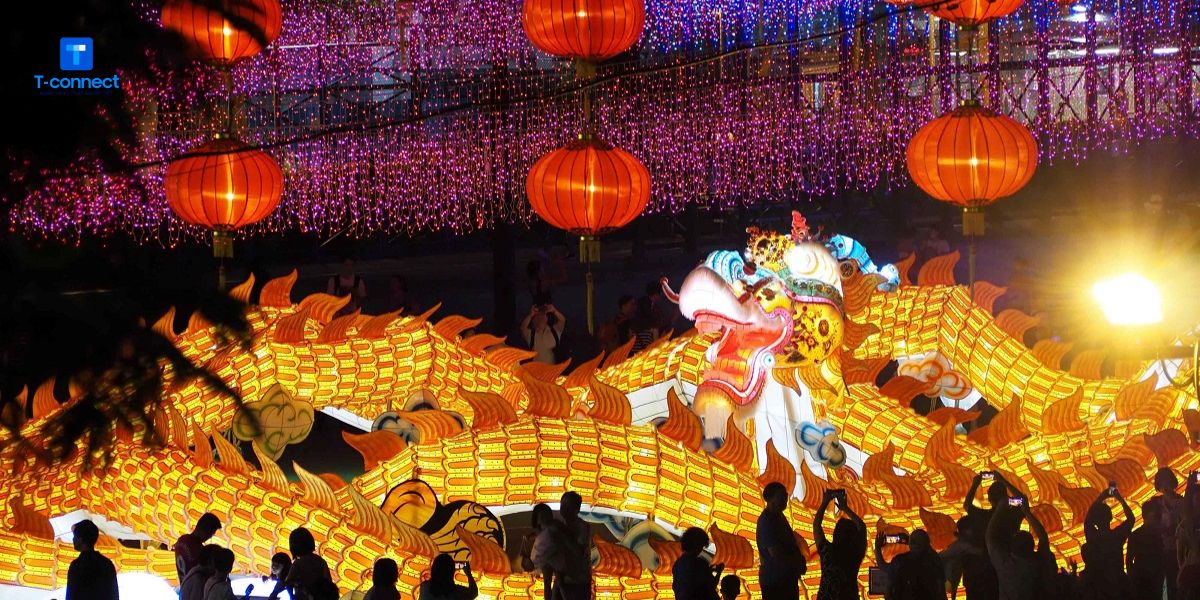
Does Japan have Mid-Autumn Festival?
It can be said that Japan has its own version of the Mid-Autumn Festival, called “Tsukimi” (月見) or “Otsukimi” (お月見), which means “moon viewing”. The official name of the Mid-Autumn Festival in Japanese is “Chūshū no Meigetsu” (中秋の名月), which means “bright moon in mid-autumn”. This is one of the oldest and most important traditional festivals of the Japanese people, usually held on the 15th day of the 8th lunar month.
Unlike Vietnam and other Asian countries, the Mid-Autumn Festival in Japan does not focus much on children carrying lanterns or giving gifts, but focuses on enjoying the beauty of the full moon. Japanese people often organize moon-viewing sessions, set up altars with special dishes to offer to the gods and pray for a bountiful harvest.
The Japanese moon festival originated from China during the Heian period (794-1185), but gradually developed into a unique Japanese cultural tradition. In the Japanese mid-autumn festival, there is also a phrase “Tsuki wo miru” (月を見る) – meaning “moon viewing”, expressing respect for the beauty of nature.
What do Japanese people eat on Mid-Autumn Festival?
Unlike traditional moon cakes in Vietnam, Japanese people have their own special dishes to welcome the full moon night. Below are popular dishes during the Mid-Autumn Festival in Japan.
Japanese Mooncakes: Tsukimi Dango
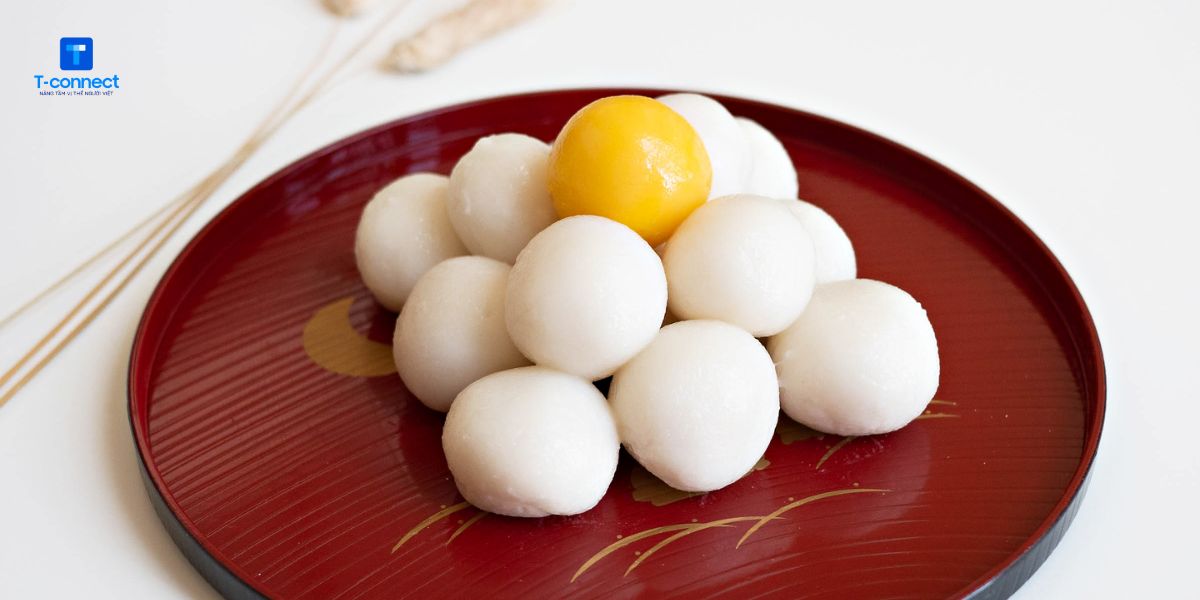
Mooncakes are called “Tsukimi Dango” (月見団子) in Japanese and are traditional, simple but meaningful. They are made from rice flour, are small, round, and white and are often stacked on a plate. Tsukimi Dango are often stacked in a tower of 15 cakes or in a pyramid shape with 5-3-2-1 layers, symbolizing the full moon.
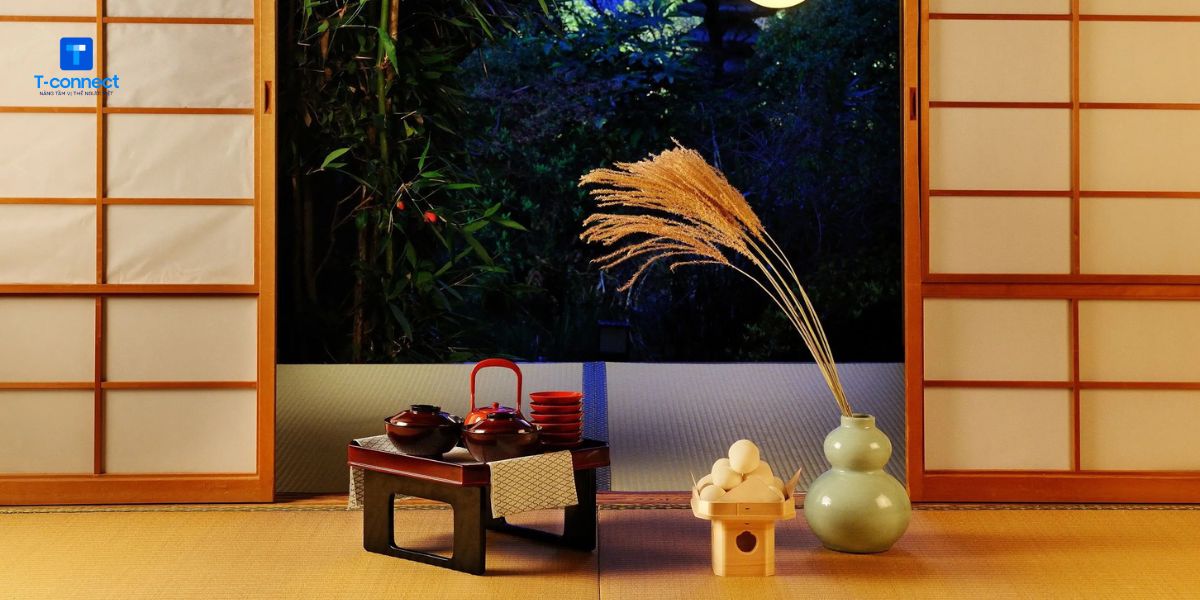
Unlike Vietnamese and Chinese mooncakes with rich fillings, Japanese mooncakes are simpler with a light sweetness from rice flour. The Japanese believe that offering Tsukimi Dango on the altar will bring luck and health to the family.
For Vietnamese people living in Japan, Tsukimi Dango is an easy-to-make dish and a suitable substitute for traditional moon cakes when ingredients are difficult to find.
Imo Yokan Sweet Potato Candy
Another traditional food that is indispensable during the Mid-Autumn Festival in Japan is Imo Yokan (芋羊羹) – a type of candy made from sweet potatoes. Sweet potatoes are harvested in the fall, so they are very suitable as an offering during the Mid-Autumn Festival.
Imo Yokan has a thick, chewy texture and the natural sweetness of sweet potatoes. This dish is not only delicious but also symbolizes a wish for a bountiful harvest. The Japanese believe that enjoying sweet potato dishes during the Mid-Autumn Festival will bring abundance and prosperity.
Tsukimi Soba Raw Egg Soba Noodles
“Tsukimi Soba” (月見そば) is a special buckwheat noodle dish often eaten during the Mid-Autumn Festival in Japan. The characteristic feature of this dish is the raw egg placed on top of the hot noodles, symbolizing the full moon.
When eaten, the egg yolk melts into the broth, creating a special rich flavor. In addition to Tsukimi Soba, the Japanese also have “Tsukimi Udon” – a similar version but using udon noodles instead of soba noodles. These dishes are not only delicious but also have deep symbolic meaning in Japanese culinary culture.

How to make moon cakes in Japan
If you are living in Japan and want to make Japanese mooncakes yourself, Tsukimi Dango is the simplest and most familiar choice. Here is how to make mooncakes in Japan with easy-to-find ingredients and a simple recipe.
Prepare materials
To prepare traditional Japanese mooncakes, you will need the following ingredients:
- 200g glutinous rice flour (mochiko)
- 200ml warm water
- 2 tablespoon sugar
- 1/4 teaspoon salt
- Tapioca starch or rice flour to coat the outside (to avoid sticking)
These ingredients can be easily purchased at Japanese supermarkets such as Aeon, Donki, or stores specializing in Asian products.
In addition to the traditional recipe, many Japanese people now create other fillings for Tsukimi Dango such as red bean (anko), green tea (matcha) or black sesame. Depending on your preference, you can add additional ingredients to create color and flavor for the cake.
Steps to make Japanese mooncakes
Step 1: Put the glutinous rice flour in a large bowl, add sugar and salt, mix well. Slowly add warm water and knead until a smooth, non-sticky dough forms.
Step 2: Roll the dough into small balls, about 2–3cm in size. To get an even shape, weigh each ball of dough.
Step 3: Boil a pot of water, drop each dumpling in. When the dumpling floats to the surface, continue to boil for another 2-3 minutes until cooked.
Step 4: Remove the cake, soak it immediately in cold water to keep it flexible, then remove it and drain.
Step 5: Arrange the cakes on a tray, in a pyramid shape, and serve with syrup or red beans.
Notes when making Japanese moon cakes
When learning about how to make moon cakes in Japan, you will realize that the process of making cakes is not too complicated but requires meticulousness and patience. To have a regular and beautifully presented cake plate, you should pay attention to the following points:
- Dough viscosity: The dough needs to be kneaded well to have a moderate elasticity, not too hard or too soft. If the dough is too dry, you can add a little water; if too wet, add a little flour.
- Water temperature: Using warm water (not too hot) to mix the dough will help the dough to be easier to knead and the cake will have better elasticity.
- Cooking time: Do not boil the cake for too long because it will make the cake fall apart. When the cake floats to the surface of the water and becomes transparent, that is when the cake is done.
- Preserve:Tsukimi Dango should be eaten on the same day it is made. If storing, place in an airtight container and keep in the refrigerator for no more than 2 days.
- Present: Traditionally, the cakes are stacked in a tower of 15 pieces or in a pyramid of 5-3-2-1 pieces, symbolizing the full moon.
Do it yourself Japanese moon cake Not only is it a fun activity, but it is also a way to preserve traditional beauty while living far from home. With simple ingredients and short preparation time, Tsukimi Dango is a great choice for the whole family to gather on a full moon night.
If you are living in Japan and need a reliable telecommunication service, T-connect is the perfect choice for you! With a 100% Vietnamese team, we are always ready to support and bring attractive promotions, including free shipping nationwide.
T-connect offers flexible mobile and internet packages, making it easy for you to stay connected with family and friends back home. We are committed to providing dedicated and professional service, so that you always feel close and comfortable, even when you are far away. Come to T-connect to experience meaningful connection in your life!

Get a high-paying part-time job in Japan with these 5 useful tips
If you are struggling to find a high-paying part-time job at [...]
T-connect & DCOM signed a cooperation agreement to enhance digital experiences for the Vietnamese user community in Japan.
On November 17, 2025, T-connect & DCOM officially signed a [...]
ANSWERS TO FREQUENTLY ASKED QUESTIONS WHEN PAYING FOR MY T-CONNECT WITH DCOMPAY
T-Connect officially cooperates with DCOM, launching DCOMPay payment method [...]
T-CONNECT CUP 2025 FOOTBALL TOURNAMENT REGULATIONS – CELEBRATION OF T-CONNECT'S 6TH ANNIVERSARY
The T-connect Cup 2025 football tournament is one of the sporting events [...]
Should I stay in Japan or return to Vietnam? 5 perspectives to help you make the right choice
After many years of studying and working in Japan, many people [...]
Which apps should Vietnamese people in Japan download? 15 essential apps when in Japan
Living, studying or working in Japan always comes with many [...]
5 tips to ship goods from Vietnam to Japan cheaply and safely
The demand for shipping goods from Vietnam to Japan is increasing, especially [...]
What do you need to prepare when converting your Japanese driver's license to Vietnam's? 7 important documents
While living and studying in Japan, many Vietnamese people have [...]