
 Home
 About
 Product
 News
 Media channels
 Guide
Medical examination in Japan can be a rather new and sometimes confusing experience for Vietnamese people, especially those who are not fluent in Japanese. From choosing the right medical facility, making an appointment in Japan, to the reception and payment process – everything has its own procedures. The following article will guide you in detail from A to Z on how to go to the doctor in Japan, along with important notes to help you feel more confident when you need medical care.

Where to go for medical treatment in Japan?
In Japan, the medical system is divided into many different types of facilities, each with its own characteristics to suit each medical need. Choosing the right medical facility in Japan will help you save a significant amount of time and money.
Clinic
A clinic is the most common place to go in Japan for common health problems. They are usually run by a specialist or general practitioner.
Strength:
- Short waiting time, simple procedure
- Lower cost than big hospitals
- Closer relationship with treating physician
- Easy to schedule and access
Weakness:
- Lack of modern medical equipment for complex cases
- Limitations on specialized services
- Usually no English or Vietnamese speaking staff
Special clinics are suitable for people who are suffering from common illnesses such as colds, sore throats, or need regular check-ups. They are also a good choice for patients who are already aware of their health problems and only need a prescription or simple consultation. If you are new to Japan and do not speak Japanese well, you may have difficulty communicating in small clinics.
Hospital
Hospitals are larger medical facilities, fully equipped with modern equipment and have many different specialties to handle complex cases when examining patients in Japan.
Strength:
- Full range of specialties and modern equipment
- Ability to treat complex diseases
- Some major hospitals have English interpretation services.
- A wide range of tests and treatments can be performed on site.
Weakness:
- Long waiting time, sometimes have to make an appointment many days in advance
- Costs more than clinic
- The procedure is more complicated, especially for foreigners.
- Usually requires a referral from a local doctor

Hospitals are suitable for serious health conditions or those requiring specialized diagnosis and treatment. If you have a serious illness, require surgery, hospitalization, or need to see a specialist, a hospital is the best choice. Larger hospitals in cities often have English-speaking staff and many support services for foreigners, making communication and treatment easier for Vietnamese people living in Japan.
Medical Center
Community health centers typically focus on preventive services, vaccinations, and health consultations. They are the ideal place to access basic medical services when you go to the doctor in Japan.
Strength:
- Low cost or free for some services
- Focus on prevention and health advice
- Multilingual documentation is often available
- Simple procedures
Weakness:
- No specialized treatment provided
- Usually only serves basic health check-ups
- Limited operating hours
Community health centers are especially good for people who need preventive services such as vaccinations, regular checkups, or nutritional advice. They are also a good place for newcomers to Japan who want to learn more about the local medical system and the services available in their area. Many community health centers also hold free health seminars for the international community.
How to go to the doctor in Japan – Detailed procedure
The medical examination process in Japan is different from that in Vietnam. Understanding each step will help you feel more confident when you need to use medical services in this country.
Step 1: Find the right medical facility
The first thing to do when you need to see a doctor in Japan is to find a medical facility that suits your needs. There are several ways to search:
- Use apps and websites like “JNTO Medical Institution Guide” or “Japan Hospital Guide”
- Consulting with Vietnamese communities in Japan
- Contact the Vietnamese embassy for referral.
- Check local government websites, which often have lists of medical facilities that support foreigners.
You should choose a medical facility with expertise appropriate to your health problem and, if possible, prioritize places that provide English or Vietnamese support.
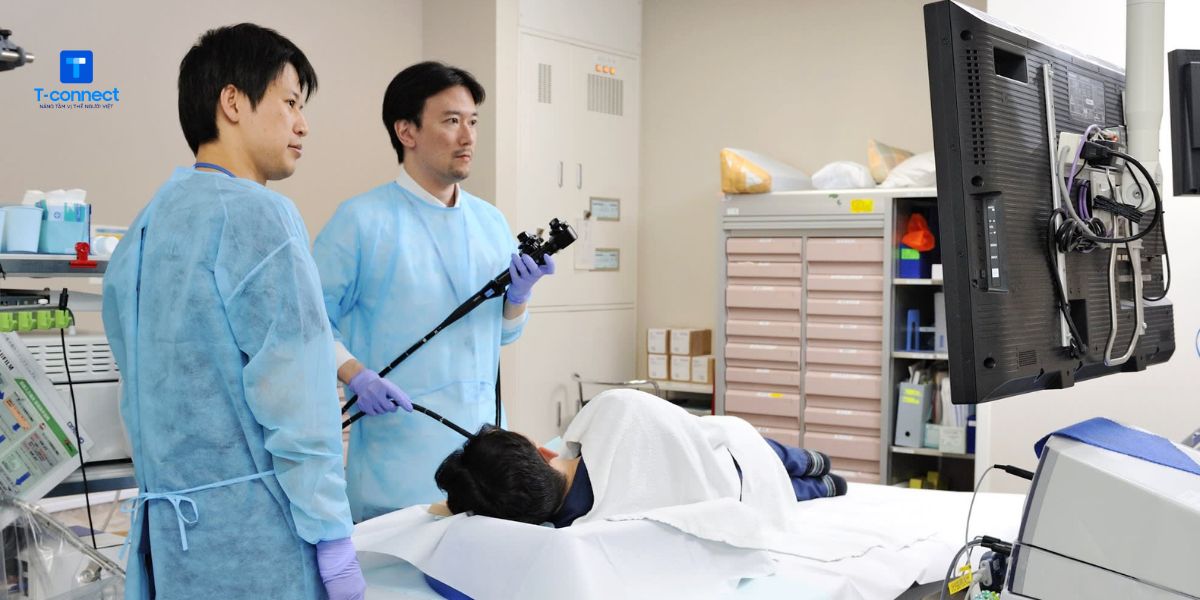
Step 2: Make an appointment
Unlike in Vietnam, most medical facilities in Japan require an appointment before going to see a doctor in Japan. Common appointment methods include:
- Direct phone call (most popular)
- Make an appointment online through the medical facility's website
- Use medical appointment scheduling apps
- Ask a Japanese person or interpreter service to help you make an appointment.
When making an appointment for a medical examination in Japan, you need to prepare information such as: name, age, symptoms, desired time of examination and type of insurance you are using.
Step 3: Registration procedure at the reception desk
When you arrive at your medical facility in Japan, you will need to go to the reception desk to register. The procedures usually include:
- Fill out the personal information form (some places have an English version available)
- Show health insurance card
- Show identification (residence card or passport)
- Describe the symptoms (can use available cards or medical image dictionary)
For first-time visitors to the facility, you will be given a patient card, please bring it with you to every visit.
Step 4: Medical examination and prescription
After completing the registration process, your name will be called to enter the examination room. The doctor will ask about your symptoms and medical history, then conduct a basic clinical examination. If necessary, you will be assigned to do tests.
After your examination, you will receive your results, some tests may be available immediately, others may take some time. Your doctor will make a diagnosis and prescribe medication and treatment instructions.
Step 5: Pay and pick up medicine at the pharmacy
The final step in the medical examination process in Japan is to pay for the examination and pick up the medicine. Take your prescription to a pharmacy (薬局 – Yakkyoku) near the hospital to buy it. You can also pay and pick up the medicine at the hospital if there is an in-house pharmacy.
How to make an appointment to see a doctor in Japan
Making an appointment to see a doctor in Japan is an important step that cannot be skipped. Here are some details on how to make an appointment effectively:
- By phone: Prepare basic Japanese phrases like “Yoyaku o shitai desu” (I want to make an appointment). If you have difficulty, ask a Japanese person or use an interpreter service.
- Online: Many large hospitals and modern clinics offer online appointment booking services through their official websites or mobile applications.
- Through company or school: If you are working or studying in Japan, the human resources department or international student support office can help.
- Scheduling app: There are many apps that support appointment booking such as “MedicalNote” or “LINE Doctor” with multilingual interface.
When making an appointment for a medical examination in Japan, you should prepare the following information:
- Accurate description of symptoms
- When can you come for a check-up?
- Information about health insurance
- Medical history (if any)
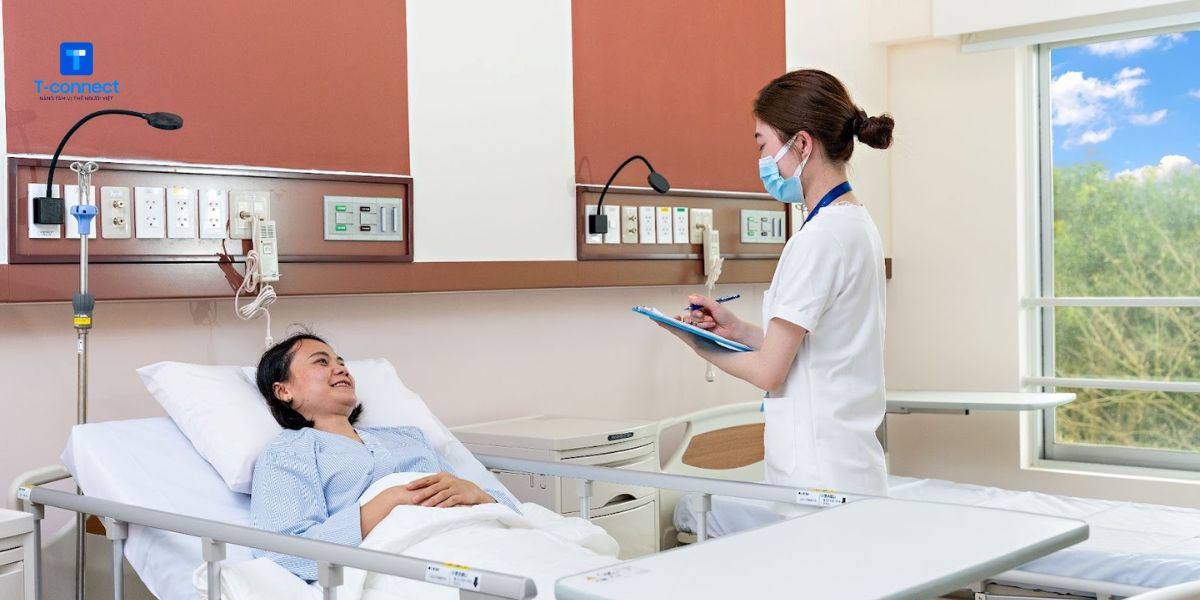
What to prepare for medical examination in Japan
When going to see a doctor in Japan, preparing all the necessary documents and information will help the examination process go more smoothly.
Giấy tờ cần thiết
Important documents you should bring when seeing a doctor in Japan:
- Health insurance card: Japan has different types of insurance such as National Health Insurance (国民健康保険 – Kokumin Kenkō Hoken) or Employment Health Insurance (健康保険 – Kenkō Hoken).
- Residence Card (在留カード – Zairyū kādo): To verify identity and residence status.
- Patient card (診察券 – Shinsatsu-ken): If you have been examined at that medical facility before.
- Referral letter: If you are transferring from another medical facility.
- Health Handbook: Especially important for pregnant women (母子手帳 – Boshi Techō) or chronic patients.
In addition, you should prepare a list of medications you are taking, information about your medical history and current symptoms to help your doctor make a more accurate diagnosis.
Từ vựng đi khám bệnh ở Nhật
When you go to the doctor in Japan, mastering some basic Japanese medical vocabulary will help you communicate more effectively with medical staff. Here are some essential words:
Health facilities:
- Hospital: 病院 (Byōin)
- Clinic: Shinryōjo
- Pharmacy: 薬局 (Yakkyoku)
- Emergency room: Kyūkyū-shitsu
Specialties:
- Internal medicine: Naika
- Surgery: Geka
- Obstetrics Department: 産婦人科 (Sanfujinka)
- Dentistry: 歯科 (Shika)
- Dermatology: 皮膚科 (Hifuka)
- Ophthalmology: Ophthalmology (Ganka)
- ENT: 耳鼻咽喉科 (Jibiinkōka)
Symptom:
- Pain: Itai (Itai)
- Fever: Netsu
- Ho: 咳 (Seki)
- Nausea: 吐き気 (Hakike)
- Dizziness: Memai (Memai)
- Tired: 疲れ (Tsukare)
- Headache: Zutsū
- Stomach ache: Stomach ache (Fukutsū)
Medical examination costs in Japan and payment methods
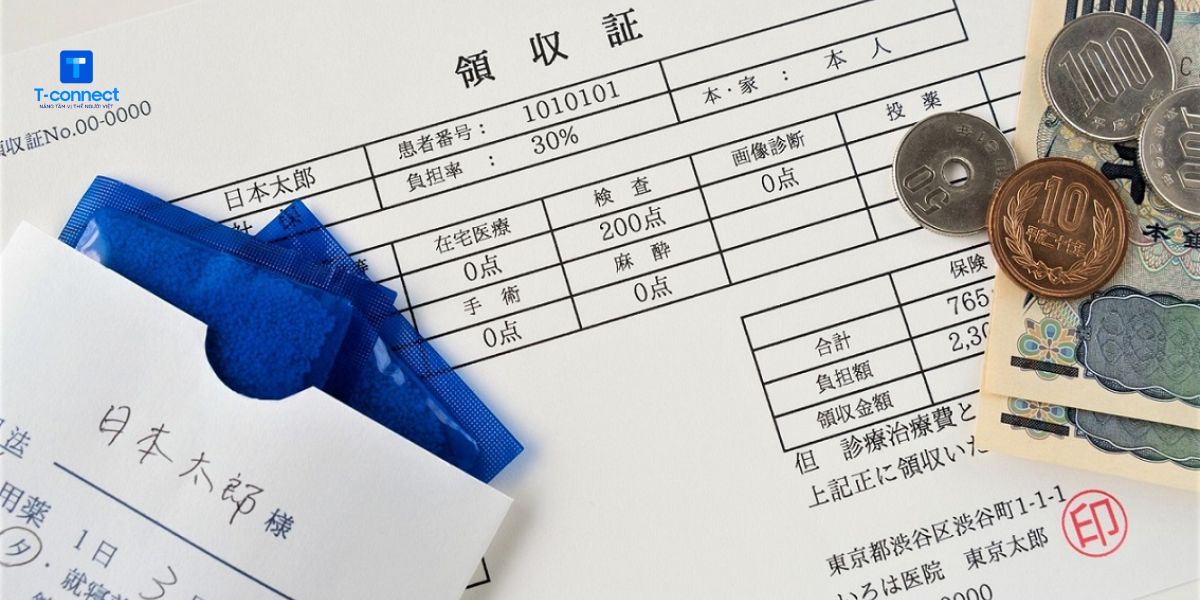
The cost of medical examination in Japan depends on the type of examination, medical facility and whether you have insurance or not:
- If you have national health insurance: you only have to pay 30% of the total cost.
- If you don't have insurance: you have to pay in full, which can be very expensive.
For example:
- Basic examination at the clinic: about 2.000 - 5.000 yen.
- Specialist examination or testing: 5.000 – 20.000 yen or more.
The popular payment method is cash, but many places accept credit cards and IC cards.
Things to note when going to see a doctor in Japan
To make your medical experience in Japan go smoothly, there are a few things you should keep in mind:
- Be on time: The Japanese place a high value on punctuality. You should arrive 15-30 minutes early to complete the registration process.
- Mask wearing rules: In Japan, wearing a mask when you have a cold or infectious disease is common practice, especially in medical facilities.
- Interpretation services: If you are not fluent in Japanese, find out about interpretation services at the medical facility in advance or bring someone who can communicate.
- Hours of Operation: Most clinics close at noon (12:00-14:00) and are closed on weekends. Major hospitals usually have 24/7 emergency services.
- Prescription drugs: In Japan, prescription drugs and non-prescription drugs are clearly distinguished. Strong drugs require a prescription from a doctor.
- Emergency Support: Memorize the emergency number (119) and how to call for help in basic Japanese in case of emergency.
Seeing a doctor in Japan is not too complicated if you understand the process, know how to make an appointment in Japan and carefully prepare the necessary documents. Whether you are a long-term resident or have just arrived in Japan, understanding how to see a doctor in Japan will help you feel more secure when you have health problems. Don't forget to learn some vocabulary for seeing a doctor in Japan in advance to make communication easier, and always bring your insurance card to save costs.
Hopefully this article has provided you with useful knowledge to help you feel more confident during your upcoming medical visits in Japan!
If you are living in Japan and need a reliable telecommunication service, T-connect is the ideal choice for you! With a 100% Vietnamese team, we are always ready to support you and bring attractive promotions, including free shipping nationwide.
T-connect offers flexible mobile and internet packages, making it easy for you to stay in touch with family and friends back home. We are committed to providing dedicated and professional service, making you feel closer and more comfortable, even when you are far away. Come to T-connect to experience meaningful connection in your life!

T-connect & DCOM signed a cooperation agreement to enhance digital experiences for the Vietnamese user community in Japan.
On November 17, 2025, T-connect & DCOM officially signed a [...]
ANSWERS TO FREQUENTLY ASKED QUESTIONS WHEN PAYING FOR MY T-CONNECT WITH DCOMPAY
T-Connect officially cooperates with DCOM, launching DCOMPay payment method [...]
T-CONNECT CUP 2025 FOOTBALL TOURNAMENT REGULATIONS – CELEBRATION OF T-CONNECT'S 6TH ANNIVERSARY
The T-connect Cup 2025 football tournament is one of the sporting events [...]
Should I stay in Japan or return to Vietnam? 5 perspectives to help you make the right choice
After many years of studying and working in Japan, many people [...]
Which apps should Vietnamese people in Japan download? 15 essential apps when in Japan
Living, studying or working in Japan always comes with many [...]
5 tips to ship goods from Vietnam to Japan cheaply and safely
The demand for shipping goods from Vietnam to Japan is increasing, especially [...]
What do you need to prepare when converting your Japanese driver's license to Vietnam's? 7 important documents
While living and studying in Japan, many Vietnamese people have [...]
How does Japan handle waste? 5 waste treatment technologies in Japan that surprise the world
Japan is known as a country with a waste management system [...]