
 Home
Home About
About Product
 News
News  Media channels
 Guide
GuideDifferent from the interview style in Vietnam or Western countries, How to answer job interview questions in Japan requires neatness, politeness and a fairly strict process. If you are struggling to know how to answer job interviews in Japan in a standard, effective and culturally correct way, this article will help you do that.

Overview of the job interview process in Japan
A job interview in Japan is not simply a conversation to select candidates. It is a professional, rigorous process imbued with Japanese culture, where attitude and behavior are valued as highly as professional skills. To increase your chances of being hired, you need to understand each step in the recruitment process of Japanese companies.
Step 1: Prepare your application
Before being invited for an interview, you need to submit two basic types of documents:
- 履歴書 (Rirekisho): Standard Japanese resume, with attached portrait photo.
- 職務経歴書 (Shokumukeirekisho): Work experience summary, for experienced candidates.
Note: Your resume should be concise, clean, and use polite Japanese and correct grammar. This is your first impression with the employer.
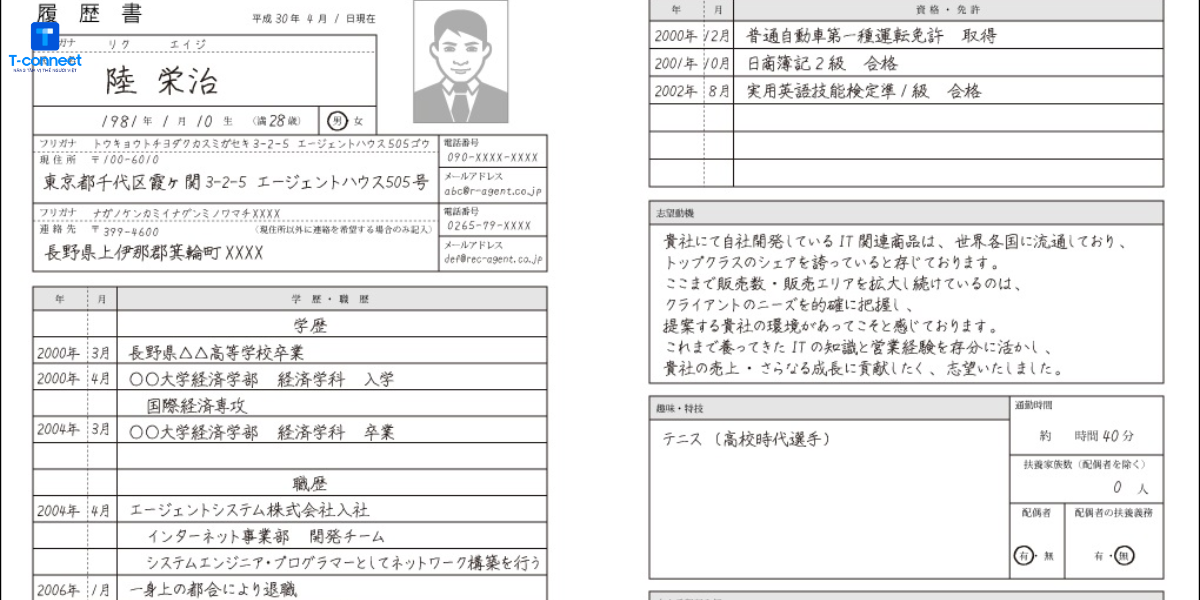
Step 2: Screening of applications
After submitting your application, the employer will conduct a screening process (shorui senkou) to select candidates who meet the minimum requirements of the job. The rejection rate at this stage can be very high, especially if the candidate does not clearly state the reason for applying or if the application is unprofessional.
Step 3: Round 1 interview (一次面接)
The first round of interviews is usually conducted by the HR department or the hiring manager. Their goals are to:
- Preliminary assessment of attitude, communication skills, and Japanese language proficiency
- Confirm information in profile
- Understand candidate motivation and orientation
This interview can take place in person at the company or online via Zoom, depending on the location and size of the business.
Step 4: Interview round 2 (二次面接) or final round (最終面接)
If you pass the first round, you will move on to the second or final round of interviews. The interviewer at this time is usually a senior manager or director. They will focus on the following factors:
- Cultural fit
- Candidate stability and loyalty
- Ability to handle real situations and work in teams
- Technical knowledge (for positions requiring technical skills)
Some large Japanese companies may have up to 3-4 rounds of interviews, along with ability tests (Japanese language test, logic test, technical test...).
Step 5: Receive results (内定) and sign official contract
If you are 内定 (naitei) – meaning “selected”, the company will send you a notification of the results by email or phone. You will then:
- Invited to sign official labor contract
- Attend orientation if it is a large company
- Get information about work date, uniform, documents to prepare
Common types of questions asked in interviews in Japan
To be able to answer job interviews in Japan confidently and effectively, you cannot ignore practicing the common types of questions that Japanese employers often use. Below is a list of the most common types of questions, with examples and suggested answers appropriate to Japanese corporate culture:
- Introduce yourself: Assess communication skills and presentation skills.
→ Example:「Please introduce yourself.」(Please introduce yourself.) - Reason for applying: Check motivation and fit with the company.
→ For example:「なぜ弊社を志望したのですか?」(Why did you choose our company?) - Strengths – Weaknesses: Personality assessment and self-perception.
→ Example:「Tell me about your strengths and weaknesses.」(Tell me about your strengths and weaknesses.) - Work experience: Verifying skills and practical experience.
→ For example:「これまでにどんな仕事をしてきましたか?」(What job have you ever done?) - Handling the situation: Check your reaction when facing difficulties and conflicts.
→ For example: 「トラブルが起きたとき、どう対応しましたか?」(When you encountered trouble, how did you handle it?) - Future Orientation: Identify long-term goals and the ability to stick with them.
→ Example:「What kind of person do you want to be in 5 years?」(What kind of person do you want to be in 5 years?) - Work schedule / start time: Check the ability to respond to working hours.
→ Example:「When can you start?」(When can you start?)
→ Example:「Can you work overtime?」(Can you work overtime?) - Reverse question: Check the level of interest in the job and company environment.
→ Example:「Do you have any questions for us?」(Do you have any questions for us?)

7 ways to answer common job interview questions in Japan
Answering Japanese interview questions correctly not only helps you demonstrate your abilities, but also shows that you understand and respect Japanese business culture. Below are 7 ways to answer job interviews in Japan that you should practice thoroughly if you want to pass the first round of recruitment.
How to answer questions about introducing yourself – Introduction
Typical questions:
「自己紹介をお願いします。」
How to answer:
Brief introduction of 30–60 seconds. Include:
- Full name, place of origin
- Outstanding education or work history
- A strength that fits the job
- End with a sentence expressing your desire to cooperate: "Thank you very much."
For example:「〇〇と申します。ベトナムのホーチミン出身で、経済大学を卒業しました。学生時代に日本語を学びながら、飲食店での接客アルバイトを2年間経験しました。お客様対応やチームワークを大切にして働いてきました。御社でさらにスキルアップしたいと考えております。よろしくお願いいたします。」
How to answer the question "why do you apply?"
Typical questions:
「なぜこの会社を選びましたか?」
「志望動機を教えてください。」
How to answer:
- State the company's attractiveness (environment, products, vision)
- State personal reasons (personal development orientation)
- Connecting individual capabilities with company needs
For example:「「日本とベトナムをつなぐビジネスに興味があり、御社がその分野で活躍されていると知って応募しました。前職では貿易業務を担当していたため、その経験を活かして御社に貢献できると考えております。」
How to answer strengths and weaknesses questions
Typical questions:
「あなたの長所と短所は何ですか?」
How to answer:
- Strengths: Choose points that are relevant to the job (e.g., hard-working, good at communicating, responsible)
- Weaknesses: state the shortcomings but include solutions
For example:「私の長所は、真面目でコツコツと仕事を続けるところです。短所は、少し慎重すぎるところですが、最近は優先順位を意識して効率よく行動するように心がけています。」
How to answer questions about work experience
Typical questions:
「今までどんな仕事をしてきましたか?」
「どのような業務を担当していましたか?」
How to answer:
- Describe old jobs in order: content - role - results
- Highlight skills learned and connect to new position
For example:「レストランで2年間ホールスタッフとして働きました。注文を取ったり、お客様の対応、清掃などを担当していました。忙しい時間帯でも笑顔で接客することを心がけました。」
How to answer situational questions (reactions at work)
Typical questions:
「困ったとき、どう対応しましたか?」
「チームで意見が合わなかったら、どうしますか?」
How to answer:
Using the STAR method:
- S (Situation): Specific situation
- T (Task): Mission
- A (Action): Action
- R (Result): Result
For example:「以前、注文ミスでお客様が怒ってしまったことがありました。私はすぐに謝罪し、上司に報告して迅速に対応しました。その結果、お客様にもご納得いただき、最後は笑顔で帰っていただけました。」
How to answer questions about future orientation
Typical questions:
"What do you want to happen in 5 years?"
「キャリアプランを教えてください。」
How to answer:
- State clear direction (team leader, deeper expertise…)
- Expressing desire for long-term commitment
- Avoid saying “don't know yet” or “will quit when a better opportunity comes along”
For example:「5年後にはチームリーダーとしてメンバーをサポートできる存在になりたいです。そのために今から経験を積んで、リーダーシップも磨いていきたいです。」
How to answer the question “Do you have any questions?”
Typical questions:
「Would you like to ask questions?」
How to answer:
Take the opportunity to ask smart questions that show interest in the job:
- 「研修制度について教えていただけますか?」
- 「御社で活躍している社員の共通点はありますか?」
- 「外国人社員のキャリアアップについて、どのようなサポートがありますか?」
Never answer “No questions,” this shows passivity.
Things to note when going for a job interview in Japan
Job interviews in Japan, whether at large companies, small and medium-sized enterprises, or simply working part-time at a convenience store, require neatness, decency, and an absolutely serious attitude. Here are some important notes you must remember if you want to make a good impression and increase your chances of passing the first round:
- Arrive on time (or 5–10 minutes early): The Japanese value time. Being late even by 1 minute can get you eliminated immediately.
- Dress neatly, politely and discreetly: You should wear shirts, long pants (men), or simple and modest shirts (women). Avoid wearing T-shirts, jeans, short skirts, or off-shoulder dresses, as they will be considered frivolous.
- No bright hair dye, no earrings/heavy makeupEspecially when interviewing for convenience stores, chains like 7-Eleven, Lawson, and FamilyMart are very strict with the appearance of customer service staff.
- Always bow before sitting down and after finishing the interview.:Bowing is an indispensable part of Japanese social etiquette. Before sitting down, say "失礼します", and after the interview, bow with "本日はありがとうございました."
- Turn off your phone before entering the interview room.:It is considered rude and distracting to have your phone ring or vibrate during an interview.
- Prepare answers to basic questions in Japanese: Don't fall into a state of mumbling when asked about the reason for applying or the desired shift. This note is also an important experience in interviewing at a convenience store in Japan, because in a convenience store interview, the manager often asks quick and direct questions.
- Do not interrupt the interviewer and always use polite honorifics (です/ます):Polite Japanese communication is not only a plus, but also a basic requirement in any working environment in Japan.
- Bring paper files, pens, and notebooks if needed.: Even if you have submitted your application online, you should bring an additional printed copy to show professionalism and in case the interviewer does not have a hard copy available.
- Keep a slight smile and polite eyes, do not bow too low or stare: Eye contact is part of trust in Japan, so practice keeping a friendly but humble expression.
- After the interview, if there is LINE or email contact, send a brief thank you message: This is a small gesture but shows respect, especially if you are interviewing at a combini or small shop where the immediate manager will easily remember you.

A job interview in Japan is not just a simple assessment of your abilities, but also a process in which the employer observes your demeanor, attitude, and suitability for the corporate culture. Remember, as long as you answer honestly, prepare seriously, and show a willingness to learn, even if your Japanese is not perfect, you can still leave a good impression and pass the first interview round. Don't forget to save this article from T-connect to practice before the interview, or share with friends who are also preparing to apply for a job in Japan!

T-connect & DCOM signed a cooperation agreement to enhance digital experiences for the Vietnamese user community in Japan.
On November 17, 2025, T-connect & DCOM officially signed a [...]
ANSWERS TO FREQUENTLY ASKED QUESTIONS WHEN PAYING FOR MY T-CONNECT WITH DCOMPAY
T-Connect officially cooperates with DCOM, launching DCOMPay payment method [...]
T-CONNECT CUP 2025 FOOTBALL TOURNAMENT REGULATIONS – CELEBRATION OF T-CONNECT'S 6TH ANNIVERSARY
The T-connect Cup 2025 football tournament is one of the sporting events [...]
Should I stay in Japan or return to Vietnam? 5 perspectives to help you make the right choice
After many years of studying and working in Japan, many people [...]
Which apps should Vietnamese people in Japan download? 15 essential apps when in Japan
Living, studying or working in Japan always comes with many [...]
5 tips to ship goods from Vietnam to Japan cheaply and safely
The demand for shipping goods from Vietnam to Japan is increasing, especially [...]
What do you need to prepare when converting your Japanese driver's license to Vietnam's? 7 important documents
While living and studying in Japan, many Vietnamese people have [...]
How does Japan handle waste? 5 waste treatment technologies in Japan that surprise the world
Japan is known as a country with a waste management system [...]