
 Home
Home About
About Product
 News
News  Media channels
 Guide
GuideYou are considering “Should I settle in Japan?”? If you are looking for ways to settle in Japan and the practical experience of Vietnamese people, the article below will help you make a reasonable decision with the most complete and specific information.
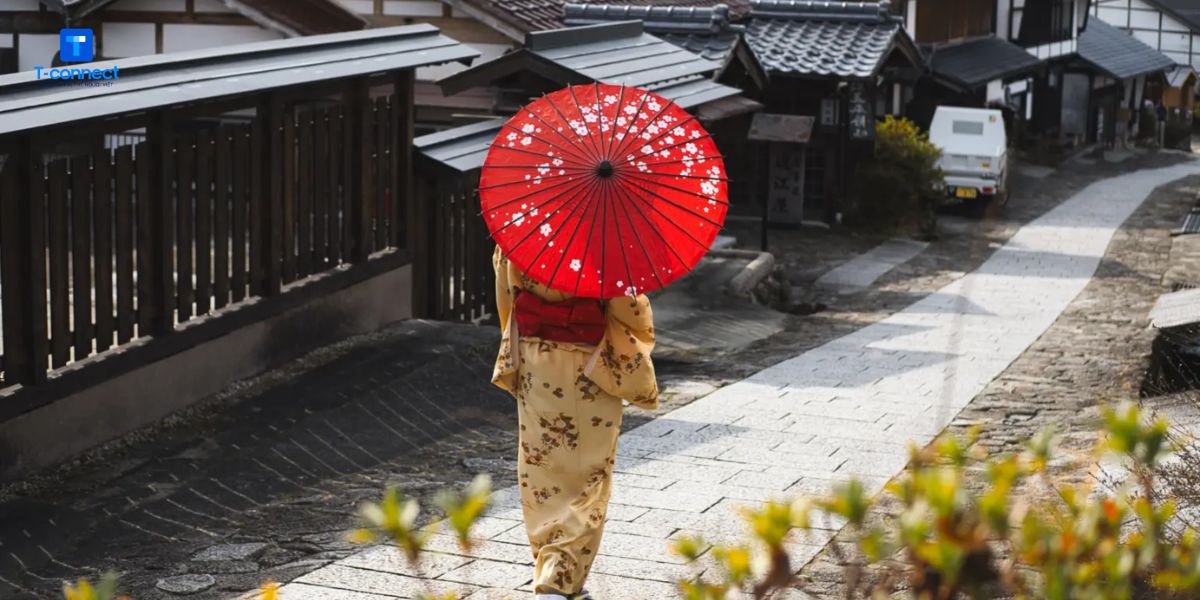
What is settling in Japan? Should I settle in Japan?
Settling in Japan is the process by which a foreigner is granted long-term or permanent residence in Japan, including two main forms: applying for a permanent visa (永住権) and acquiring Japanese nationality (帰化).
Whether or not to settle in Japan depends on many personal factors such as life goals, financial situation, cultural adaptability and future plans. Japan is one of the most developed countries in the world with a high-quality healthcare and education system and a safe living environment. However, life here also requires patience, high adaptability and the cost of living is not cheap.
According to statistics from the Japanese Immigration Bureau in 2023, the number of Vietnamese people granted permanent residency increased by 15% compared to the previous year, showing that the trend of settling in Japan is becoming more and more popular among the Vietnamese community.
Advantages and disadvantages of settling in Japan
To answer the question of whether to settle in Japan, we need to carefully consider the following advantages and disadvantages:
| Advantages | Disadvantages |
| High quality healthcare system, universal health insurance | High cost of living, especially housing |
| Safe living environment, low crime rate | Language and cultural barriers |
| Advanced education system, free up to grade 3 | High work pressure, strict work culture |
| Diverse job opportunities, stable salary | Frequent natural disasters (earthquakes, storms) |
| Public transport is developed and on time. | Aging society, fierce job competition |
| Good social welfare policy | Complicated administrative procedures, lots of paperwork |
Ways to settle in Japan
There are currently two main ways to settle in Japan that Vietnamese people can choose from, each with different requirements and benefits.
Permanent Residency
Applying for a permanent resident visa (永住権) is one of the most popular ways to settle in Japan. With a permanent resident visa, you can live and work in Japan indefinitely without having to renew your visa. However, you still retain your Vietnamese nationality.
To qualify for permanent residency, you must have lived in Japan continuously for at least five years on a long-term visa (such as an engineer visa or a student visa that has been converted to a working visa). You must also demonstrate a stable income, obey the law, have no criminal record, and pay taxes.
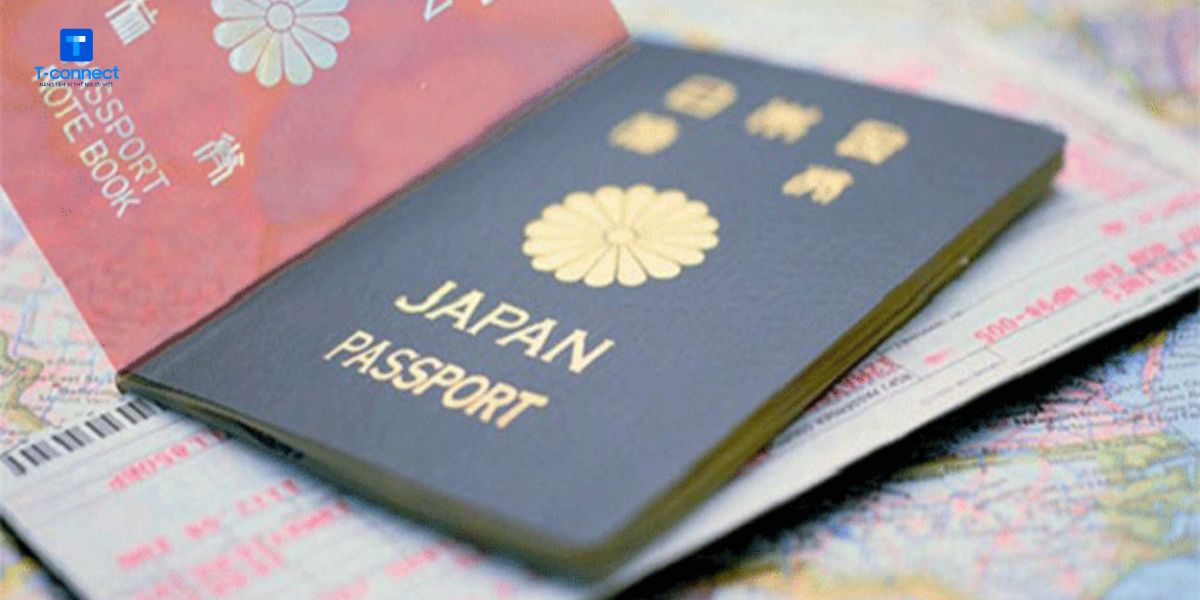
Advantages of permanent visa:
- Freedom to change jobs and professions
- No corporate sponsor required
- Can be absent from Japan for longer periods (up to 5 years)
- Easy to borrow money from bank, buy house
Obtain Japanese citizenship
Obtaining Japanese nationality (帰化) is a way to settle in Japan completely, you will become a Japanese citizen with full rights and obligations like a native.
To obtain citizenship, in addition to the criteria of living time (usually 5–10 years), you must also prove your ability to speak Japanese, respect for history, traditions, and compliance with Japanese laws. The process often takes time and requires the support of legal services or lawyers.
When acquiring Japanese nationality, citizens will have basic rights such as:
- Have the right to vote and run for office
- Enjoy full social welfare policies
- Travel with Japanese passport (visa-free for many countries)
- Children automatically have Japanese nationality if born in Japan.
Prepare documents for settlement in Japan
Preparing documents is the most important step in the process of implementing settlement methods in Japan. Each type of settlement has different document requirements.
Permanent residency application
To prepare permanent residency application in Japan, you need:
- Original and copy of residence card from entering Japan to present.
- 4x3cm ID photo taken within 3 months.
- Proof of income and tax return.
- Proof of income of the guarantor in Japan.
- Educational certificates, degrees, employment contracts or business licenses if self-employed.
- Certificate of no criminal record or declaration of no violation of the law.
- Financial and housing statements if you have assets in Japan.
Permanent residency applications must be submitted to the Immigration Department where you are residing. A mandatory condition is that you have a sponsor with a stable income and sufficient financial capacity. The application review period usually lasts from 6 to 8 months, and may be longer depending on the case. A few applications are expedited within 3–4 months, but this is quite rare. Therefore, you should prepare your application completely and accurately from the beginning to avoid having to supplement it many times.
Naturalization application
The application for naturalization requires higher requirements, including:
- Handwritten application for naturalization in Japanese or English.
- Application for naturalization.
- 5x5cm ID photo taken within 3 months.
- Detailed personal history, work and length of stay in Japan.
- Certificate of Japanese Language Proficiency.
- All documents proving income and assets
- Certificate of no tax debt
- Criminal record certificate from countries of residence
Applications for Japanese nationality are submitted directly to the Ministry of Justice. The processing time is usually quite long, on average about 1 year from the date of application. In some special cases, this process can last up to 2 years. Therefore, you need to be patient and carefully prepare the required documents to avoid delays.
Regulations on immigration time in Japan
Once you have been granted permanent residency in Japan, you can live and work permanently without any time restrictions like regular visas. However, it is important to note that permanent residency must be renewed periodically, usually every 7 years. Permanent residents also enjoy many of the same rights as Japanese citizens, and in case of law violations, they will not be deported like temporary residents.
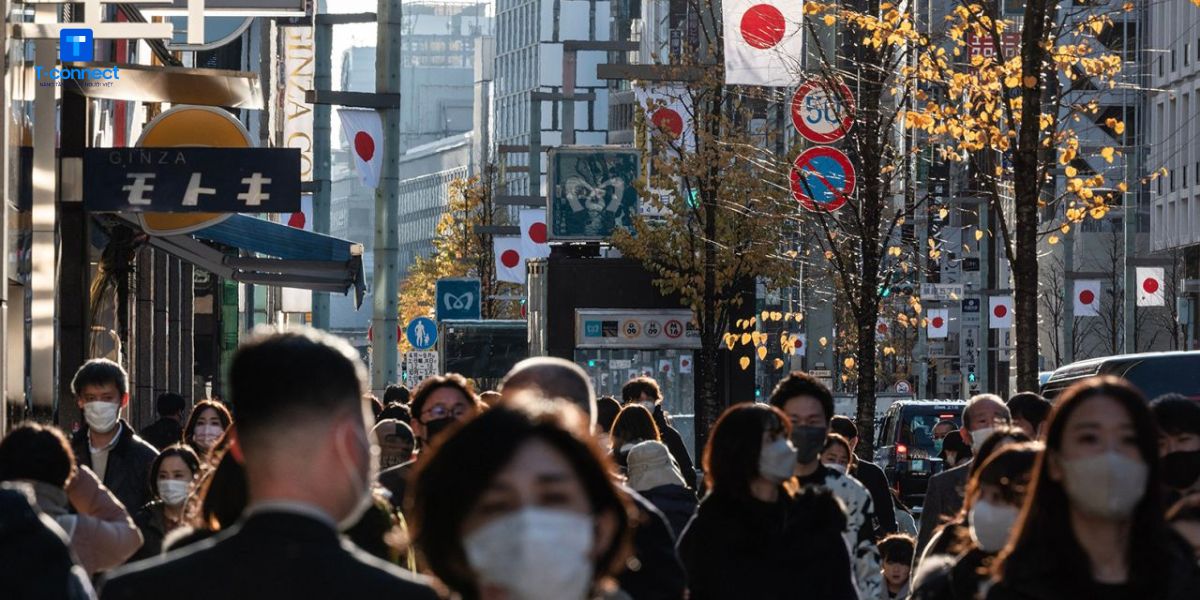
Answers to frequently asked questions about settling in Japan
How long does it take to apply for a permanent visa in Japan?
Normally, you need to live and work legally in Japan for at least 10 years (including at least 5 years of stable income) before you can apply for permanent residence. For some special cases such as Japanese spouses or highly skilled workers, the time can be shortened.
Is it possible to settle down through studying abroad?
Yes, but not directly. You need to convert your student visa to a work visa, then work and accumulate enough residence time before you can apply for permanent residence or citizenship.
Can I bring my family to Japan when I settle down?
If you have a permanent visa or Japanese nationality, you can sponsor your spouse and children to come to Japan as a family and enjoy full benefits.
Should I get Japanese citizenship or is permanent residency enough?
Depending on your purpose and personal circumstances. Naturalization gives you full rights as a Japanese citizen, but you have to give up your Vietnamese nationality. Meanwhile, permanent residence allows you to stay long-term without changing your nationality.
Can people with permanent visas be deported?
Unless they commit serious crimes, permanent residents are generally not subject to deportation like temporary visa holders. This is also one of the great benefits of settling permanently in Japan.
With the above information, you can decide for yourself whether to settle in Japan or not, based on your financial situation, language ability and long-term goals. Ways to settle in Japan such as permanent residence or naturalization require time, careful preparation and compliance with local laws. If you have a long-term development orientation in Japan, investing in the settlement process is completely worth it.
When you are considering whether to settle in Japan, choosing the right telecommunications service is essential. T-connect is a brand that provides SIM cards, mobile services and stable internet exclusively for Vietnamese people in Japan. With a high-speed 4G SIM package, reasonable fees and Vietnamese language support, T-connect helps you always stay connected securely to complete your application, contact a lawyer, submit documents online or discuss settlement-related work. Choose T-connect to make your settlement journey in Japan more convenient every day.

T-connect & DCOM signed a cooperation agreement to enhance digital experiences for the Vietnamese user community in Japan.
On November 17, 2025, T-connect & DCOM officially signed a [...]
ANSWERS TO FREQUENTLY ASKED QUESTIONS WHEN PAYING FOR MY T-CONNECT WITH DCOMPAY
T-Connect officially cooperates with DCOM, launching DCOMPay payment method [...]
T-CONNECT CUP 2025 FOOTBALL TOURNAMENT REGULATIONS – CELEBRATION OF T-CONNECT'S 6TH ANNIVERSARY
The T-connect Cup 2025 football tournament is one of the sporting events [...]
Should I stay in Japan or return to Vietnam? 5 perspectives to help you make the right choice
After many years of studying and working in Japan, many people [...]
Which apps should Vietnamese people in Japan download? 15 essential apps when in Japan
Living, studying or working in Japan always comes with many [...]
5 tips to ship goods from Vietnam to Japan cheaply and safely
The demand for shipping goods from Vietnam to Japan is increasing, especially [...]
What do you need to prepare when converting your Japanese driver's license to Vietnam's? 7 important documents
While living and studying in Japan, many Vietnamese people have [...]
How does Japan handle waste? 5 waste treatment technologies in Japan that surprise the world
Japan is known as a country with a waste management system [...]