
 Home
Home About
About Product
 News
News  Media channels
 Guide
GuideObon Festival in Japan is one of the most important traditional holidays, preserved by the Japanese people for hundreds of years. This is the time for descendants to remember their ancestors, show gratitude to the deceased, and is also an occasion for family reunions. If Vietnam has Thanh Minh Festival or the death anniversary of ancestors, then in Japan, Obon has a similar spiritual meaning, associated with many unique customs and rich cultural identity.
Origin and history of Obon festival
To understand the Obon festival in Japan, we need to go back more than 500 years in history. The Obon festival began in the 7th century when Buddhism was introduced to Japan. According to Buddhist legend, the Obon festival originated from the story of Mokuren, a disciple of Buddha, who saved his mother from the hungry hell by making offerings to monks.
The name “Obon” is shortened from “Urabon-e” (盂蘭盆会), which comes from the Sanskrit word “Ullambana” which means “hanging upside down”, describing the suffering of souls in hell. Over time, the Obon festival in Japan has blended with indigenous Shinto beliefs, creating a unique festival with a strong Japanese cultural identity.
In Japanese history, the Obon festival was originally only held by the royal family and the aristocracy, but gradually became popular among the people during the Kamakura period (1185-1333). By the Edo period (1603-1868), the Obon festival in Japan had become an indispensable part of the spiritual life of the people, with many unique customs and rituals formed and passed down through the generations.
Obon festival time in Japan
Obon in Japan usually takes place in the 7th or 8th lunar month, however the specific time varies depending on the region. There are two main milestones:
- Shichigatsu Bon (July Obon): takes place around July 15th on the Gregorian calendar, popular in Tokyo and the Eastern regions.
- Hachigatsu Bon (August Obon): takes place around August 13–16, more common throughout Japan, especially in the West.
This period is called “Obon yasumi” (Obon holiday), when most companies, schools and government offices are closed. It is one of the three longest holidays of the year in Japan, along with Golden Week (April-May) and New Year. During this time, millions of Japanese people from big cities return to their hometowns to celebrate Obon in Japan with their families, creating the largest population movement of the year.

Traditional Rituals and Customs During Obon
Obon in Japan is not just a holiday, but also includes many traditional rituals with deep spiritual meaning. Each family and each region may have different ways of performing, but all revolve around welcoming the ancestors' souls back and seeing them off after the ceremony ends.
Obon Fire Offering Ceremony
One of the most sacred rituals during the Obon festival in Japan is the fire offering ceremony, which includes “mukae-bi” (welcoming fire) and “okuri-bi” (sending fire).
The mukae-bi ceremony is held on the evening of the 13th, when families light small fires at the entrance of their homes or at cemeteries to guide the spirits of their ancestors. The fires are usually made of dry bamboo branches or special wood, creating a soft glow in the dark.
The okuri-bi ceremony takes place on the evening of the 16th, marking the end of Obon in Japan. Families light bonfires to send their ancestors back to the afterlife. The most famous okuri-bi ceremony is “Daimonji” in Kyoto, where huge bonfires are lit on the mountains surrounding the city, forming Chinese characters and drawings that can be seen from far away.
The meaning of the fire offering ceremony during the Obon festival in Japan is not only to guide the soul, but also to express the deep affection of descendants for their ancestors, respect and gratitude for the deceased.
Bon Odori Dance
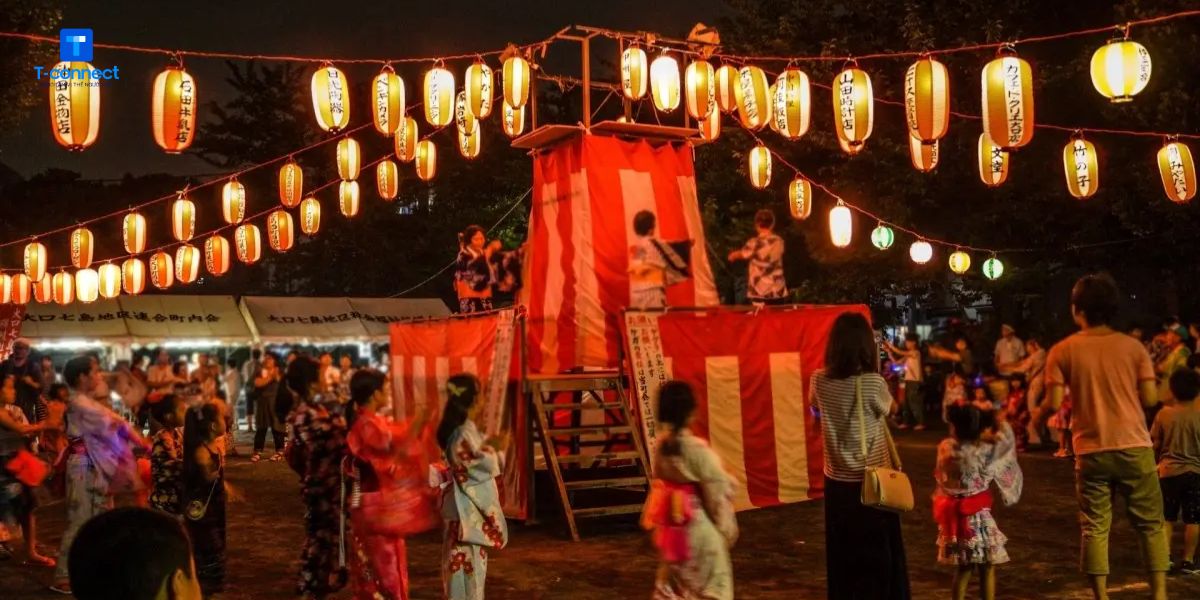
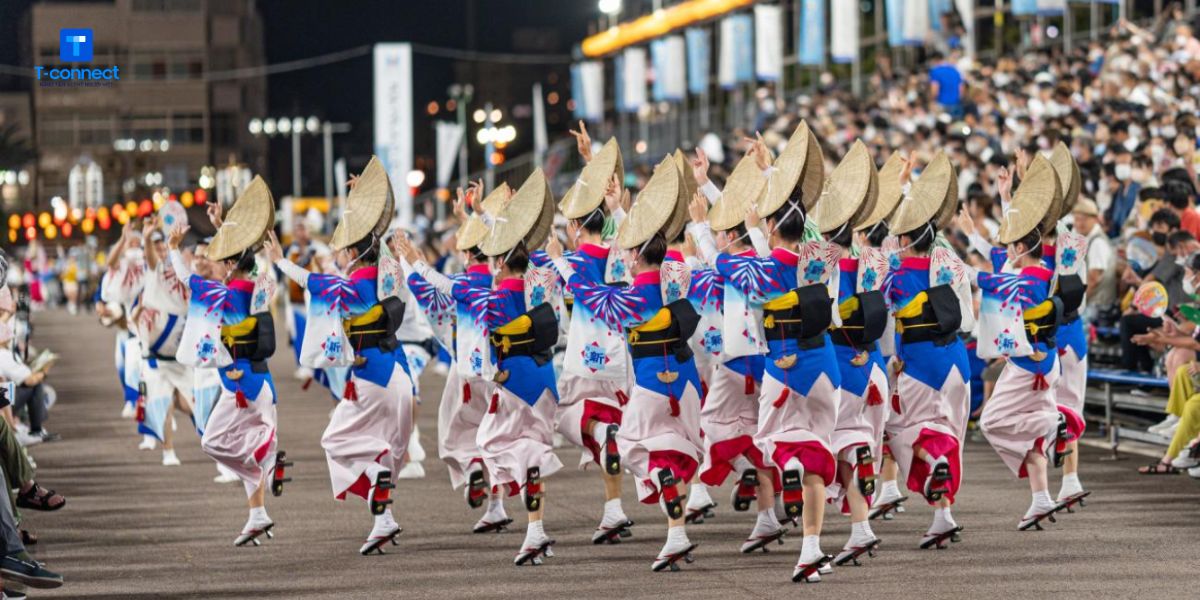
When mentioning Obon festival in Japan, we cannot ignore Bon Odori dance. This is a long-standing form of community activity, where people gather in temple grounds, squares or parks, dancing while immersing themselves in the bustling sound of drums and flutes.
Bon Odori is not only a spiritual ritual but also an occasion to unite the community. People from old to young, from urban to rural areas, all put on Yukata and join in the dance, showing respect to their ancestors and praying for a bountiful harvest.
Lantern Releasing Ceremony – Toro Nagashi
Toro Nagashi is one of the most moving rituals of Obon in Japan, usually performed on the last night of the festival. It involves releasing paper lanterns into rivers, seas or lakes, symbolically sending the souls of ancestors back to the afterlife.
The lanterns used in Toro Nagashi are usually made from traditional washi paper and are shaped like small boats or lanterns. Each lantern has a small candle inside, creating a soft, shimmering light on the water. Many families also write their names and wishes on the lanterns before releasing them.
Traditional Yukata
During the Obon festival in Japan, wearing the traditional Yukata is a popular custom, especially among young people. Yukata is a summer kimono made of light cotton, with bright patterns and vibrant colors, very suitable for the festival atmosphere.
Yukata during the Obon festival in Japan often have typical summer motifs such as cherry blossoms, firecrackers, dragonflies, or festival-related images such as lanterns and fireworks. Popular colors include dark blue, purple, burgundy, and soft pastel colors.
Cuisine during Obon holiday
Food is also an important part of the Obon festival in Japan. On this occasion, people often prepare traditional dishes to offer and enjoy with their families.
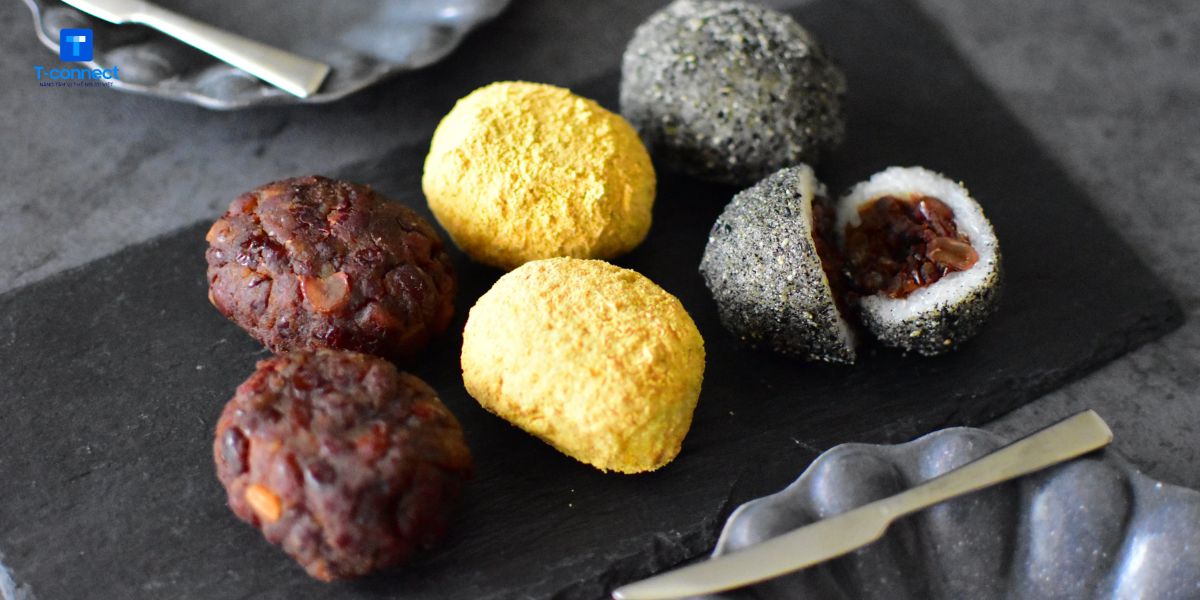
Ohagi is one of the most typical dishes of Obon in Japan, made from rice and glutinous rice, covered with mashed red beans. The red color of the beans is believed to ward off evil spirits and protect the spirits of ancestors. In addition, people also prepare foods such as dango (stick-baked cakes), mochi (rice cakes), and wagashi (traditional sweets) to offer to the altar.
During family meals during Obon in Japan, vegetarian dishes (shojin ryori) are often preferred, in keeping with the Buddhist nature of the festival. Dishes such as vegetable tempura, nimono (potted vegetables), gomadofu (sesame tofu), and various meatless miso soups are carefully prepared.
These dishes are not only symbolic but also contribute to creating a warm, connected atmosphere.
The meaning of Obon festival in Japanese life today
In modern Japanese society, Obon in Japan still retains its important position and deep meaning, although there are certain changes to suit the contemporary lifestyle. For many young Japanese living and working in big cities, Obon in Japan is a rare occasion to return to their hometown, meet their families and participate in traditional activities. This helps maintain the connection with their roots, transmitting cultural values from one generation to the next.
In the context of globalization and modernization, Obon in Japan also plays the role of a “mobile cultural identity”, helping the Japanese maintain their national identity. Many Japanese communities abroad also celebrate Obon in their own way, expressing the desire to preserve traditions even when far away from home.
Similarities between Obon festival in Japan and ancestral memorial ceremonies in Vietnam
When comparing, we can easily see that the Obon festival in Japan has many similarities with the ancestral memorial ceremonies in Vietnam. The Vietnamese have death anniversaries, Thanh Minh Festival, or the 15th day of the 7th lunar month - Vu Lan Festival, all of which have the meaning of showing gratitude to ancestors and remembering the deceased.
Both cultures value filial piety, family ties, and gratitude to grandparents and parents. The difference is that in Japan, Obon is also associated with collective rituals, forming a cultural festival, while in Vietnam, the rituals are usually held within the family.
Obon in Japan is not only a traditional holiday, but also an important part of the spiritual life of the people. Through rituals such as lighting fires, dancing Bon Odori, releasing lanterns or wearing Yukata, the Japanese express their gratitude to their ancestors and strengthen the community. This is also an opportunity for tourists to experience one of the most unique festivals in the land of cherry blossoms.
For the Vietnamese community living in Japan, integrating into the local cultural life is extremely important. T-connect, a brand specializing in providing telecommunications services for Vietnamese people in Japan such as SIM cards and cheap WiFi, not only helps you easily connect with family and friends, but also provides useful information about culture and life, including traditional holidays such as Obon in Japan. With a Vietnamese support team, T-connect always accompanies Vietnamese people to feel closer and more attached to life in Japan.

T-connect & DCOM signed a cooperation agreement to enhance digital experiences for the Vietnamese user community in Japan.
On November 17, 2025, T-connect & DCOM officially signed a [...]
ANSWERS TO FREQUENTLY ASKED QUESTIONS WHEN PAYING FOR MY T-CONNECT WITH DCOMPAY
T-Connect officially cooperates with DCOM, launching DCOMPay payment method [...]
T-CONNECT CUP 2025 FOOTBALL TOURNAMENT REGULATIONS – CELEBRATION OF T-CONNECT'S 6TH ANNIVERSARY
The T-connect Cup 2025 football tournament is one of the sporting events [...]
Should I stay in Japan or return to Vietnam? 5 perspectives to help you make the right choice
After many years of studying and working in Japan, many people [...]
Which apps should Vietnamese people in Japan download? 15 essential apps when in Japan
Living, studying or working in Japan always comes with many [...]
5 tips to ship goods from Vietnam to Japan cheaply and safely
The demand for shipping goods from Vietnam to Japan is increasing, especially [...]
What do you need to prepare when converting your Japanese driver's license to Vietnam's? 7 important documents
While living and studying in Japan, many Vietnamese people have [...]
How does Japan handle waste? 5 waste treatment technologies in Japan that surprise the world
Japan is known as a country with a waste management system [...]