
 Home
 About
 Product
 News
 Media channels
 Guide
Tet is an important holiday not only in Vietnam but also in many Asian countries, including Japan. If you are living, working or have the opportunity to travel in the land of cherry blossoms during the first part of the year, you will surely be curious to know What do Japanese people usually do on New Year's Day?. Let's explore in detail the customs, rituals and traditional activities that Japanese people often do during Lunar New Year!
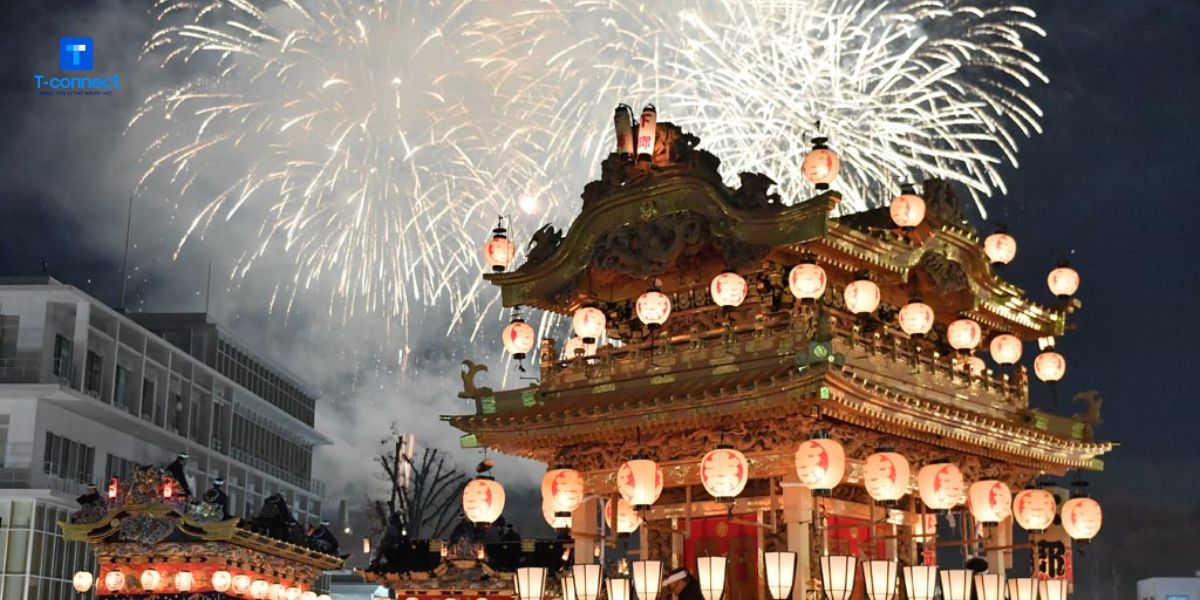
When is the official Japanese New Year?
Unlike the Lunar New Year in other East Asian countries, the current Japanese New Year (Oshogatsu) is based on the Gregorian calendar, starting on January 1 and lasting until January 1 every year. This is the longest official holiday of the year for the Japanese.
Before 1873, the Japanese also celebrated New Year according to the Lunar calendar like China, Vietnam and Korea. However, after the Meiji Restoration, Japan switched to the Gregorian calendar and celebrated New Year on January 1st as it is today. Although times have changed, many traditional customs are still preserved and practiced by the Japanese during the Lunar New Year.
The New Year period in Japan officially runs from January 1 to January 1, but preparations begin as early as late December. December 3 is an important day with many special ceremonies, and the New Year holiday usually lasts until January 1 or longer depending on the family and region.
What do Japanese people usually do on New Year's Day?
Lunar New Year in Japan is a special time with many traditional activities that are deeply cultural. Let's learn in detail what Japanese people usually do on New Year's Day to better understand the customs of this country.
House cleaning for new year
One of the most important customs that Japanese people often do on New Year's Day is Osoji - the ritual of cleaning the house to welcome the new year. Osoji is not simply a normal cleaning but also has a deep spiritual meaning. Japanese people believe that a thorough cleaning will help to drive away bad luck from the old year, at the same time creating a clean space to welcome the lucky god Toshigami-sama to visit in the new year.
This activity usually involves all family members. They will clean every corner of the house together, from the ceiling, windows, floors to the smallest objects. This is not only a physical cleaning but also an opportunity to purify the soul, remove the worries of the old year and be ready to welcome the new year with a fresh spirit.
Home decoration
After cleaning, Japanese people will decorate their houses with many traditional items that bring good luck. This is also one of the things Japanese people often do on New Year's Day to create a festive atmosphere and welcome the new year.
Kadomatsu is one of the most popular decorations, placed on both sides of the door from late December to January 12. Kadomatsu are usually made from pine, bamboo and plum branches, symbolizing strong vitality, resilience and purity. The Japanese believe that this is where the gods visit and bless the family in the new year.
Shimekazari is a decorative ring made of straw and rope, usually hung on the door. It is considered the boundary between the spirit world and the human world, helping to ward off evil spirits and attract good luck.
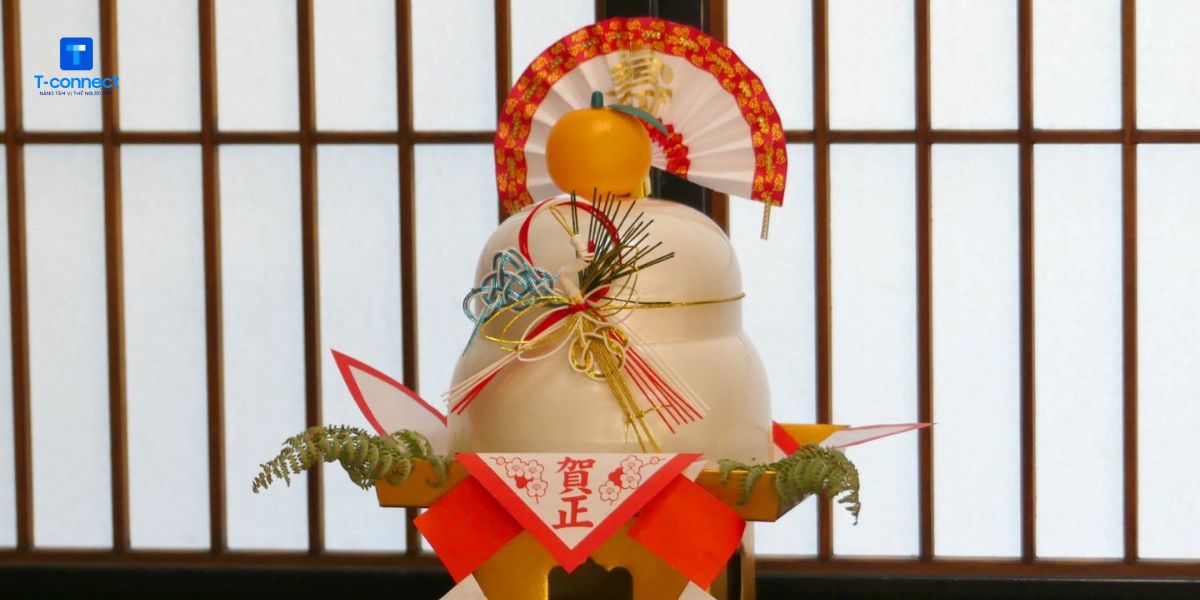
Kagami mochi (mirror mochi) are two round mochi cakes stacked on top of each other and placed on the family altar. A mandarin orange (daidai) is usually placed on top, symbolizing the continuity of generations in the family. This is an indispensable item on Japanese New Year's Day.
Going to temple at the beginning of the year
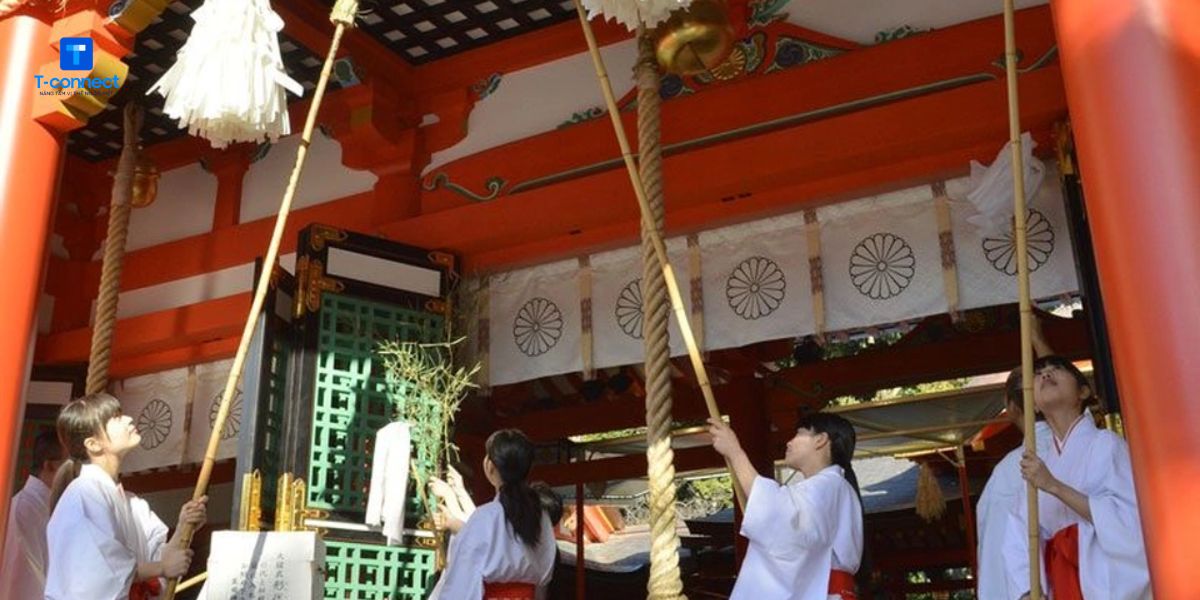
Hatsumode – visiting a shrine or temple at the beginning of the year is one of the most important customs that Japanese people often do on New Year's Day. This activity usually takes place during the first three days of the new year, especially on the first day of the new year.
During this time, millions of Japanese people flock to Shinto shrines (jinja) or Buddhist temples (otera) to pray for good luck, health and peace in the new year. Famous shrines such as Meiji Shrine in Tokyo, Fushimi Inari Shrine in Kyoto or Sensoji Temple in Asakusa often welcome millions of visitors during this time.
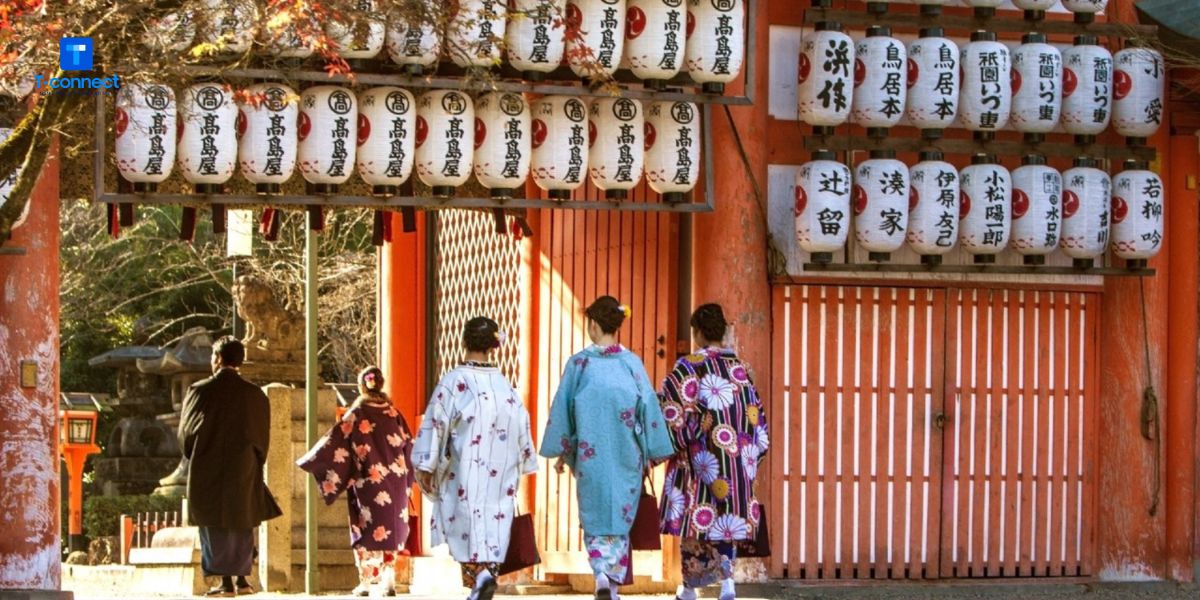
At shrines and temples, Japanese people perform rituals such as: purifying themselves by washing their hands and rinsing their mouths at the temizuya (purification basin), throwing money into the offering box, bowing twice, clapping twice, praying, and bowing again. They also often buy new omamori (lucky charms) and return the previous year's charms to be burned in a special ceremony.
Many people also use omikuji – fortune-telling papers that predict their fortune for the new year. If they get a good result, they take it home; if not, they tie it up at a shrine to ward off bad luck.
Write New Year greeting cards
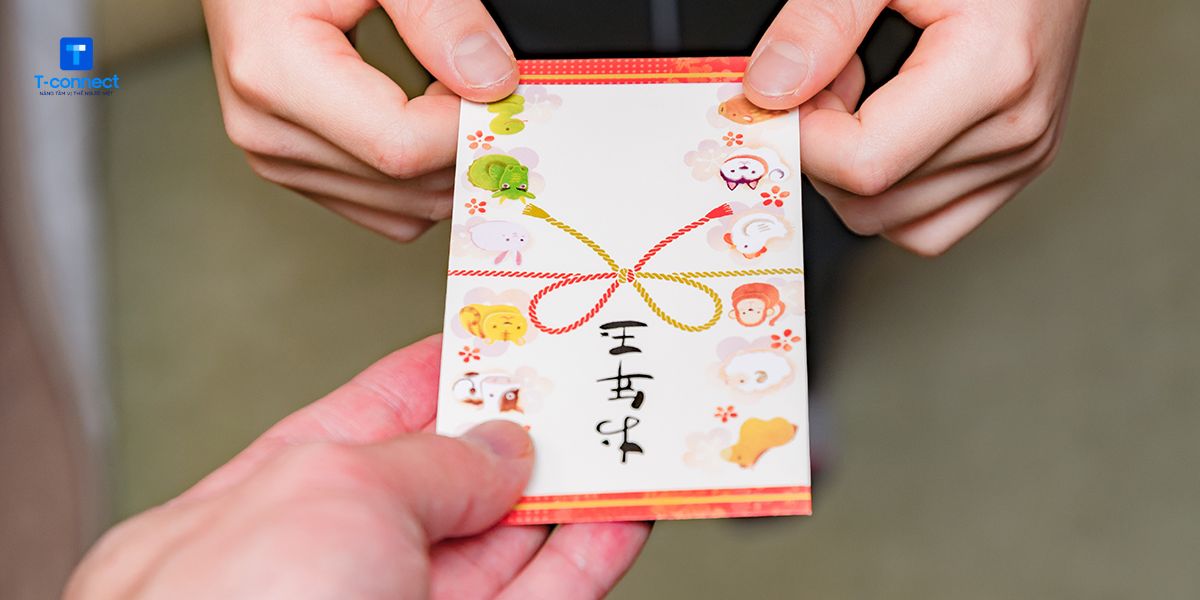
Another lovely tradition is sending New Year’s greeting cards, called Nengajo (年賀状). Japanese New Year’s greeting cards are often designed with the zodiac animal representing the new year, along with traditional motifs such as the rising sun, cranes, plum trees, and bamboo – symbols of luck and prosperity. These cards also often have a serial number to enter a special lottery in January.
Japanese people usually start writing New Year's cards in early December and send them out to ensure that the recipients receive them on January 12. The Japanese post office even has a special service to ensure that all New Year's cards are delivered on the first day of the year.
New Year's Eve
Otoshidama is the custom of giving lucky money to children on Tet holiday in Japan, similar to the lucky money custom in Vietnam. This is one of the activities that Japanese people often do on Tet holiday to bring joy and luck to children.
Lucky money is usually given in specially designed red envelopes called “pochi-bukuro”. These envelopes are often decorated with images related to the new year’s zodiac animal or other Japanese lucky symbols.
Attend the New Year's Eve Bell Ringing Festival – Joya no Kane
Joya no Kane is a bell-ringing ceremony on New Year's Eve, one of the special customs that Japanese people often do on New Year's Day. This ceremony takes place on the night of December 31, when temples across Japan ring their bells 12 times in unison.
The number 108 in Buddhism represents 108 human afflictions or desires. Each bell ring is believed to dispel one affliction, helping people purify their souls and enter the new year with a pure spirit. The first bell rings at around 11pm on December 31st and the last bell rings at the exact moment of New Year's Eve.
Play traditional games
During the New Year, Japanese people often spend time playing traditional games with their families. This is a way to strengthen family ties and create a happy atmosphere in the first days of the year.
- Hanetsuki: using a wooden racket (hagoita) to hit a small ball made of seeds and feathers. If the player lets the ball fall to the ground, they will have their face painted with ink.
- Takoage: flying colorful kites shaped like characters from Japanese legends and history in the sky creates a brilliant scene at the beginning of the new year.
- Karuta: a traditional card game related to classical Japanese poetry and literature, educational for children.
- Sugoroku: a board game similar to Ludo.
Traditional Japanese food for New Year
Japanese New Year cuisine carries many layers of meaning of luck, prosperity and respect for family. So what are the traditional Japanese dishes during the New Year?
Osechi Ryori – New Year's Eve Tray
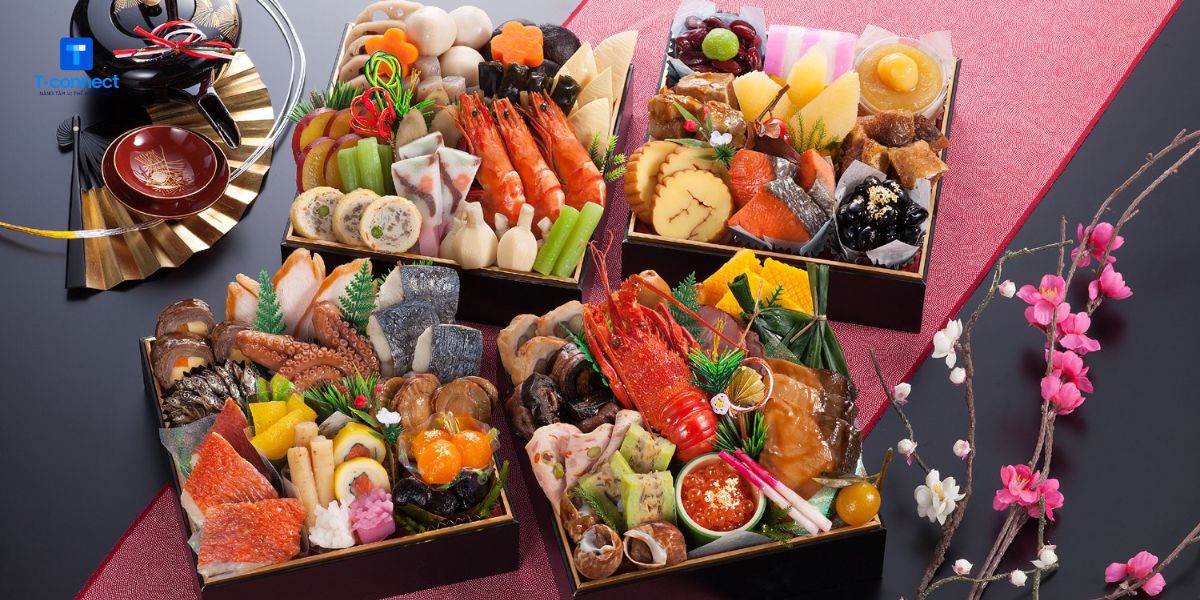
Osechi Ryori is a traditional Japanese New Year dish, elaborately prepared and served in beautiful multi-tiered wooden boxes called jubako. Each dish in Osechi has a special meaning, wishing for good luck, health and prosperity in the new year.
- Kuromame (sweet black beans) symbolize health and hard work.
- Kazunoko (herring roe) symbolizes the wish to have many children.
- Datemaki (a sweet rolled egg) symbolizes learning and culture.
- Tazukuri (small salmon with sesame) symbolizes a bountiful harvest.
- Kurikinton (mashed sweet potatoes with chestnuts) symbolizes wealth and prosperity.
- Namasu (pickled carrot and daikon salad) symbolizes good luck in Japanese culture.
- Kamaboko (steamed fish cake) represents the rising sun – the symbol of Japan.
Ozoni sticky rice cake
Ozoni is a traditional mochi soup enjoyed on the morning of the first day of the new year in Japan. The main ingredient of Ozoni is mochi (rice cakes), cooked in dashi soup (broth) with vegetables and sometimes meat or seafood.
Eating Ozoni on the morning of the first day of the Lunar New Year is believed to bring health and luck for the whole year. The chewy and sticky mochi symbolizes perseverance and strength to overcome difficulties in the new year.
Toshikoshi Soba Longevity Noodles
Toshikoshi Soba is a buckwheat noodle dish enjoyed on New Year’s Eve (December 31). The name “Toshikoshi” means “passing the year,” symbolizing breaking away from the hardships of the old year and entering the new year with new hope.
The long soba noodles symbolize longevity and a long life, while their thinness and fragility remind one of the fragility of life and the importance of cutting ties with an unfortunate past.
Mochi Cake
Mochi is an indispensable part of the Japanese New Year, made from special glutinous rice (mochigome) pounded into a chewy mass. Kagami mochi (mirror mochi) is a special form of New Year mochi, consisting of two round mochi cakes stacked on top of each other and placed on the family altar or in a place of honor in the home. A daidai orange is often placed on top, symbolizing the continuity of generations. Kagami mochi is placed from late December to January 12, when the family performs the kagami biraki (breaking the kagami mochi) ritual and enjoys it together.
Meaningful New Year wishes in Japanese
If you want to immerse yourself in the Tet atmosphere of the cherry blossom country, don't forget to learn a few Japanese New Year greetings below to send to friends and colleagues:
- 明けましておめでとうございます (Akemashite omedetou gozaimasu) – Happy New Year!
- I hope to continue receiving your support in the new year! (Kotoshi mo yoroshiku onegaishimasu) – I hope to continue receiving your support in the new year!
- I wish you a healthy and happy new year (Kenkou de shiawase na ichinen ni narimasu youni) – I wish you a healthy and happy new year!
Sending New Year's greetings in Japanese not only shows politeness but also helps you integrate into Japanese culture more easily.
Japanese New Year is not as noisy and bustling as Vietnamese New Year, but it carries within it depth, sophistication and many valuable traditional cultural values. Through this article, you must have a clearer view of what Japanese people usually do on New Year's Day, as well as know how to use New Year's greetings in Japanese properly. Hope you will have a meaningful New Year in Japan and full of cultural experiences!
If you are living in Japan and looking for a reliable telecommunication service, T-connect is the ideal choice for you! Our 100% Vietnamese team is always ready to support and bring attractive promotions, including free shipping nationwide.
T-connect offers a variety of flexible mobile and internet packages, making it easy for you to stay in touch with family and friends back home. We are committed to providing professional and dedicated service, making you feel close and comfortable, no matter how far away. Come to T-connect to discover meaningful connections in your life!

Get a high-paying part-time job in Japan with these 5 useful tips
If you are struggling to find a high-paying part-time job at [...]
T-connect & DCOM signed a cooperation agreement to enhance digital experiences for the Vietnamese user community in Japan.
On November 17, 2025, T-connect & DCOM officially signed a [...]
ANSWERS TO FREQUENTLY ASKED QUESTIONS WHEN PAYING FOR MY T-CONNECT WITH DCOMPAY
T-Connect officially cooperates with DCOM, launching DCOMPay payment method [...]
T-CONNECT CUP 2025 FOOTBALL TOURNAMENT REGULATIONS – CELEBRATION OF T-CONNECT'S 6TH ANNIVERSARY
The T-connect Cup 2025 football tournament is one of the sporting events [...]
Should I stay in Japan or return to Vietnam? 5 perspectives to help you make the right choice
After many years of studying and working in Japan, many people [...]
Which apps should Vietnamese people in Japan download? 15 essential apps when in Japan
Living, studying or working in Japan always comes with many [...]
5 tips to ship goods from Vietnam to Japan cheaply and safely
The demand for shipping goods from Vietnam to Japan is increasing, especially [...]
What do you need to prepare when converting your Japanese driver's license to Vietnam's? 7 important documents
While living and studying in Japan, many Vietnamese people have [...]