 Home
 About
 Product
 News
 Media channels
 Guide
Shinkansen train – the pride of Japan’s transportation industry – is not only famous for its outstanding speed but also a symbol of precision, convenience and civilization. If you are preparing for your first journey by Shinkansen bullet train, this article is an indispensable guide to help you understand everything from how to buy tickets, how to check Shinkansen train prices, to effective cost-saving tips.
What is Shinkansen? Highlights of Shinkansen bullet train
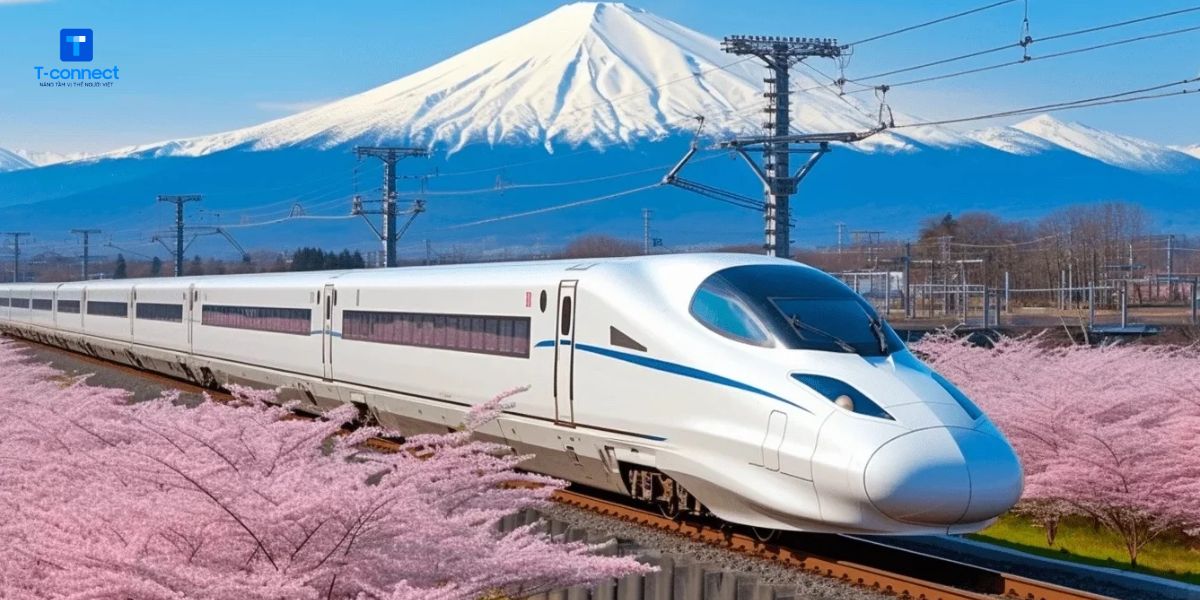
The Shinkansen, or “bullet train,” is Japan’s world-famous high-speed train system operated by the Japan Railways Group (JR Group). Launched in 1964, the shinkansen has become a symbol of technological advancement and transport efficiency. The system connects major cities from Hokkaido to Kyushu, making it a popular choice for both locals and tourists.
Highlights of the Shinkansen "bullet train" include:
- Superior speed: Shinkansen trains can reach speeds of up to 300 – 320 km/h, helping to shorten travel time between major cities to the maximum. Even when running at high speeds, passengers hardly feel any vibrations thanks to the separate rail system and modern shock absorption technology.
- Absolute precision time: The Shinkansen is famous for its near-perfect accuracy, with time deviations measured in seconds. According to statistics, the Shinkansen is only delayed by about 1 minute per year on average – an extremely impressive number for such a complex operating system.
- Safe: To date, there have been no serious accidents involving the Shinkansen that have resulted in fatalities since it began operating. The train is equipped with multiple warning systems, emergency brakes, and earthquake-proof technology, ensuring maximum safety for passengers.
- Flexible connectivity: Shinkansen connects most major regions in Japan, from Tokyo to Hokkaido in the north, to Kyushu in the south. In addition, the train is well integrated with local train and subway systems, creating an extremely convenient transportation network.
Types of Shinkansen trains
The Shinkansen system has many different types of trains, each serving specific travel needs. Understanding the characteristics of each type of train will help you choose the most suitable one for your trip.
Nozomi Ship
The Nozomi is the fastest shinkansen on the Tokaido and Sanyo lines. It only stops at major stations such as Tokyo, Nagoya, Kyoto and Osaka, saving you the most travel time. However, Nozomi shinkansen tickets are usually more expensive and are not included in the JR Pass.
Hikari Ship
The Hikari is a good balance between speed and number of stops. This shinkansen stops at more stations than the Nozomi but fewer than the Kodama, making it a good choice for those who want to save time and have more choice of destinations.
Kodama Ship
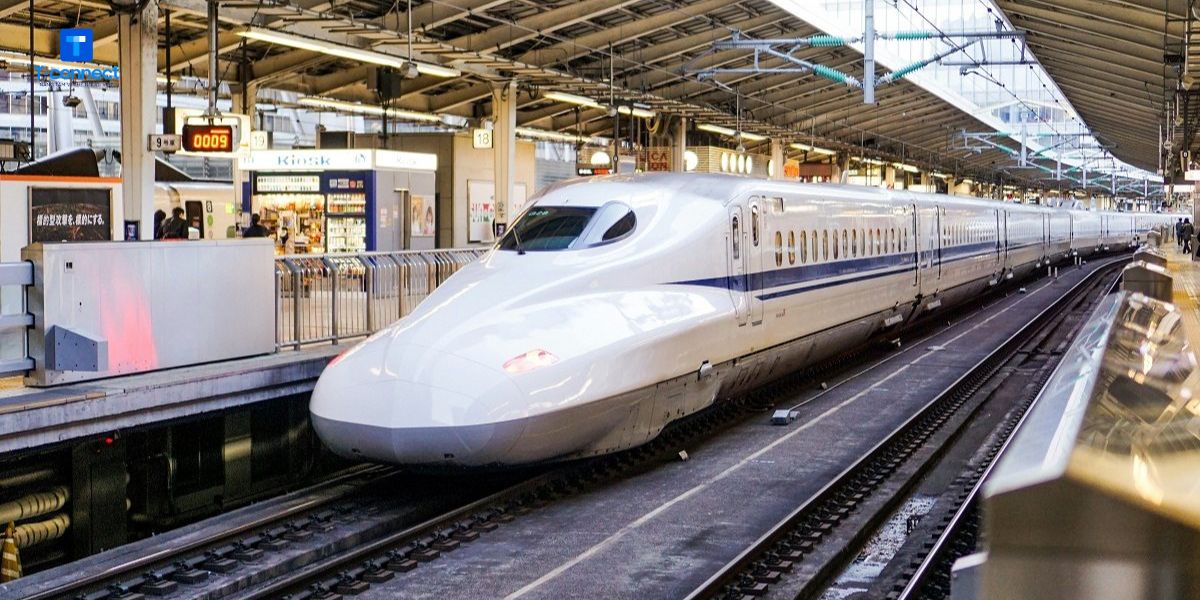
The Kodama is a shinkansen that stops at all stations along the line. Although the travel time is longer, the Kodama shinkansen ticket is cheaper and is suitable for those who want to visit many small cities along the route.
Sakura Train
The Sakura train operates on the Sanyo and Kyushu Shinkansen lines. It is a modern, high-speed shinkansen that connects cities from Osaka to Kagoshima. The Sakura train has a unique design and is imbued with Japanese culture.
Kagayaki ship
The Kagayaki train is a premium service on the Hokuriku Shinkansen line, connecting Tokyo with Kanazawa. This type of shinkansen stops at only a few major stations, providing a fast and comfortable travel experience.
Types of seats when traveling by Shinkansen train
When purchasing Shinkansen tickets, passengers can choose from a variety of seat types, depending on their needs, budget, and travel time. Understanding each seat type will help you have a comfortable experience and optimize costs during your journey.
- Free seat: The most economical option on the Shinkansen. With this ticket, you don't need to make a reservation, just arrive early, line up, and choose any empty seat in the reserved non-reserved car (usually cars 1 to 3 depending on the route).
- Pre-booked seats: Reserved seats are a popular ticket type and are recommended if you have a specific train schedule in mind. With this ticket, you are assigned a fixed seat in a reserved seat car. This type of ticket is suitable for tourists, especially foreigners using the JR Pass, as the JR Pass only applies to reserved seats (not applicable to the Nozomi train).
- Green Car: The Green Car is a luxury cabin on the Shinkansen, with standards equivalent to business class on an airplane. The seats here are spacious, have deep recline, large distance between rows, comfortable legroom, are quiet and have few people.
- Gran Class: This is the most luxurious seat on some Shinkansen lines (such as the Tohoku and Hokuriku Shinkansen). With only 18 seats in a car, Gran Class offers a premium experience with private space and first-class seating. However, Shinkansen fares for Gran Class seats can be 2-3 times higher than regular seats.
Guide to buying Shinkansen train tickets
To travel by bullet train, you need a Shinkansen ticket that matches your itinerary. Here are the common ways to buy tickets:
Buy tickets at the automatic ticket machine
Vending machines are the quickest way to buy Shinkansen tickets. They are available at all major train stations and support multiple languages including English. Simply select your destination, time and seat type, then pay by cash or card.
Buy tickets at JR ticket counter
JR Ticket Counters are the best option if you need direct assistance from staff. Here, you can ask for detailed information about the Shinkansen schedule, fares, and special offers. Staff can also help you check Shinkansen fares and advise on suitable routes.
Book tickets online
Booking Shinkansen tickets online is becoming more and more popular. You can visit JR’s official website or mobile applications to book tickets. The advantage of booking online is that you can do it before you arrive in Japan and avoid the situation of sold-out tickets during peak times.
Book tickets via JR Pass
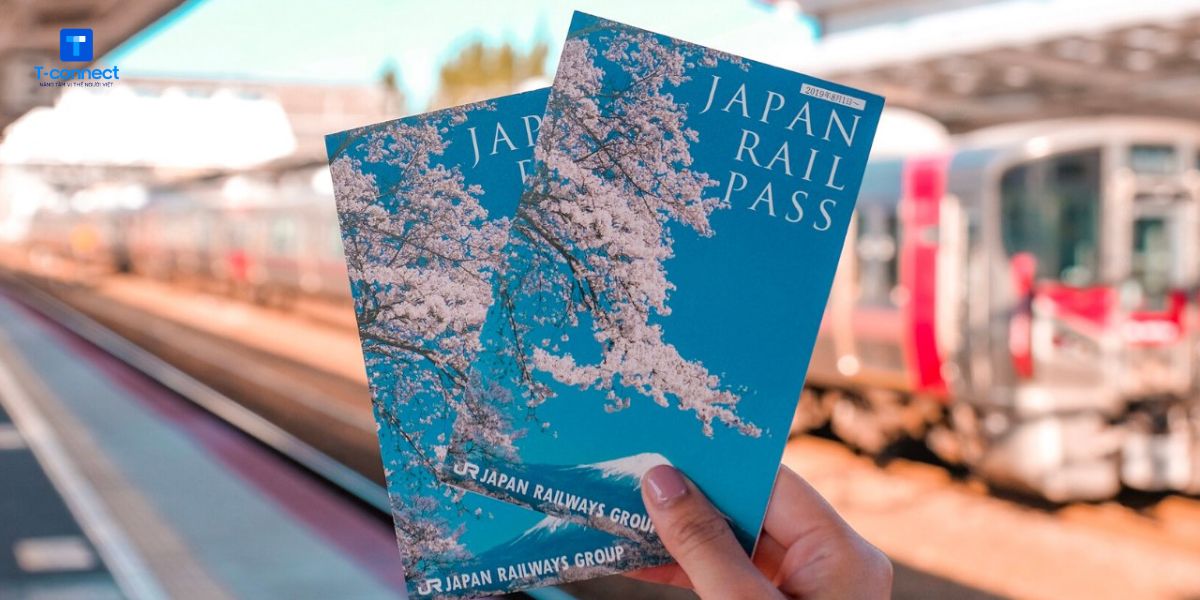
The JR Pass is the best option for travelers who want to travel a lot by shinkansen. With the JR Pass, you can travel unlimitedly on most shinkansen lines (except Nozomi and Mizuho). Checking shinkansen fares with the JR Pass will help you save a lot of money.
How to check Shinkansen train prices and tips to save money
When planning a trip, checking Shinkansen train prices is essential to be financially proactive. There are many different ways to check Shinkansen train prices so you can compare and choose the best option. Some tools to help you check Shinkansen train prices accurately include:
- Website: The official websites of JR East, JR Central and JR West provide accurate and up-to-date shinkansen train search tools. You just need to enter your departure point, destination point and time to see the schedule and fares. These websites also show all seat types and their respective prices.
- Mobile apps: Hyperdia, Navitime or Google Maps also support effective shinkansen train tracking. These apps not only show fares but also calculate travel time, number of transfers and alternatives.
To save money when traveling by shinkansen, you can apply some of the following tips:
- Booking your tickets in advance gives you a better chance of getting a discount. Many Shinkansen lines offer discounts if you book 1-2 weeks in advance.
- Choosing the Kodama train instead of the Nozomi can save 10-15% on costs, although the travel time will be slightly longer.
- Traveling on weekdays instead of weekends will get you cheaper Shinkansen tickets. Avoid major holidays like Golden Week or Obon when ticket prices are higher.
- Use the JR Pass if you plan to travel multiple times. Checking Shinkansen fares with the JR Pass shows that you can make your money back in just 2-3 long trips.
The most worth-experiencing Shinkansen train lines
Japan has many famous shinkansen lines, each offering a different experience of scenery and culture. Here are the shinkansen lines most loved by tourists.
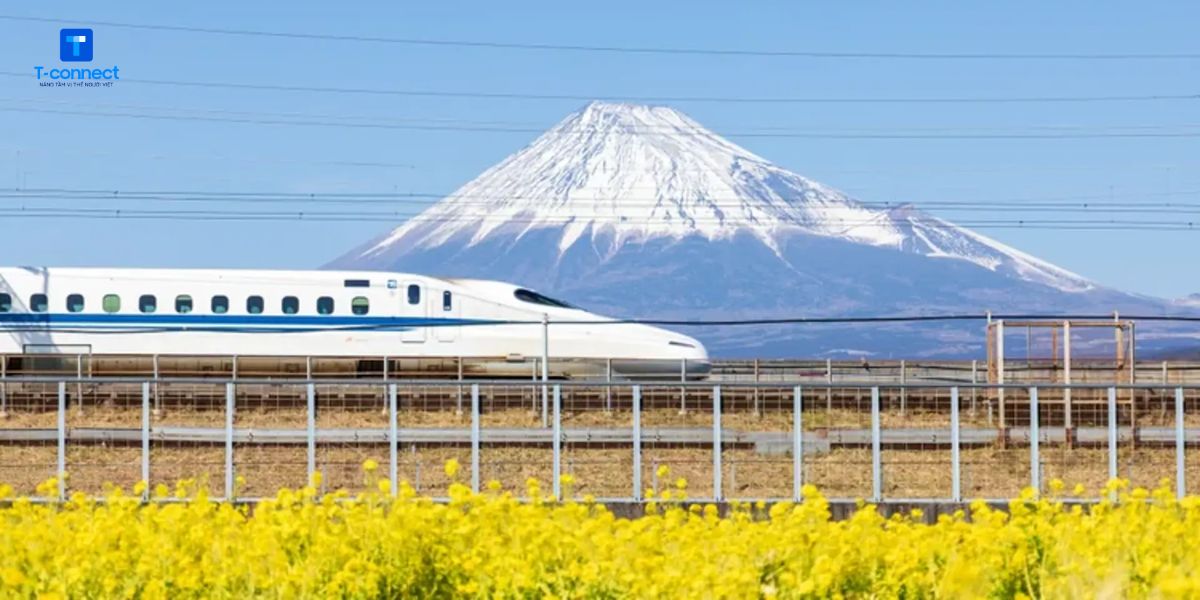
Tokaido Shinkansen (Tokyo – Osaka)
The Tokaido Shinkansen Line is the first and most famous shinkansen line, connecting two of Japan's largest cities. This line has a high frequency of trains, with trains running every 3-5 minutes during rush hour.
The special feature of this line is that you can see Mount Fuji in good weather. The speed of the shinkansen on this line can reach 320 km/h, helping to shorten the time from Tokyo to Osaka to only 2 hours and 30 minutes.
Sanyo Shinkansen (Osaka – Fukuoka)
The Sanyo Shinkansen line extends from Osaka to Fukuoka, passing through many important cities such as Kobe, Himeji, Okayama and Hiroshima. This line offers the opportunity to explore the Kansai and Chugoku regions of Japan.
On this line, the shinkansen runs at high speed through diverse landscapes from modern cities to peaceful countryside. The shinkansen fare on this line is quite reasonable compared to the distance traveled.
Kyushu Shinkansen (Fukuoka – Kagoshima)
The Kyushu Shinkansen Line is the only shinkansen line on the island of Kyushu, connecting Fukuoka with Kagoshima. This line is famous for its unique train design and the beautiful natural scenery of southern Japan.
The shinkansen on this line has interiors decorated in traditional Japanese style, providing a unique cultural experience. Checking the shinkansen fare on this line shows that the fare is quite affordable, suitable for travelers on a limited budget.
The shinkansen is not only a means of transportation but also a unique cultural experience when traveling to Japan. With its outstanding shinkansen speed, professional service and absolute safety system, the shinkansen deserves to be the top choice for every trip.
T-connect is a unit specializing in providing convenient and economical telecommunications services exclusively for the Vietnamese community in Japan. With more than 80.000 active subscribers, T-Connect always strives to bring optimal connection solutions, best serving the communication needs and lives of Vietnamese people living far from home.

T-connect & DCOM signed a cooperation agreement to enhance digital experiences for the Vietnamese user community in Japan.
On November 17, 2025, T-connect & DCOM officially signed a [...]
ANSWERS TO FREQUENTLY ASKED QUESTIONS WHEN PAYING FOR MY T-CONNECT WITH DCOMPAY
T-Connect officially cooperates with DCOM, launching DCOMPay payment method [...]
T-CONNECT CUP 2025 FOOTBALL TOURNAMENT REGULATIONS – CELEBRATION OF T-CONNECT'S 6TH ANNIVERSARY
The T-connect Cup 2025 football tournament is one of the sporting events [...]
Should I stay in Japan or return to Vietnam? 5 perspectives to help you make the right choice
After many years of studying and working in Japan, many people [...]
Which apps should Vietnamese people in Japan download? 15 essential apps when in Japan
Living, studying or working in Japan always comes with many [...]
5 tips to ship goods from Vietnam to Japan cheaply and safely
The demand for shipping goods from Vietnam to Japan is increasing, especially [...]
What do you need to prepare when converting your Japanese driver's license to Vietnam's? 7 important documents
While living and studying in Japan, many Vietnamese people have [...]
How does Japan handle waste? 5 waste treatment technologies in Japan that surprise the world
Japan is known as a country with a waste management system [...]