
 Home
Home About
About Product
 News
News  Media channels
 Guide
GuideJapan's subway system is considered one of the most efficient public transport networks in the world. However, with its intricate network of trains, complex routes and strict rules, getting used to it can be a bit daunting. how to take the subway in japan can be a challenge for beginners. In this article, you will be given comprehensive instructions from how to buy subway tickets in Japan, subway fares in Japan, to how to take the subway in Japan in the most understandable and detailed way.
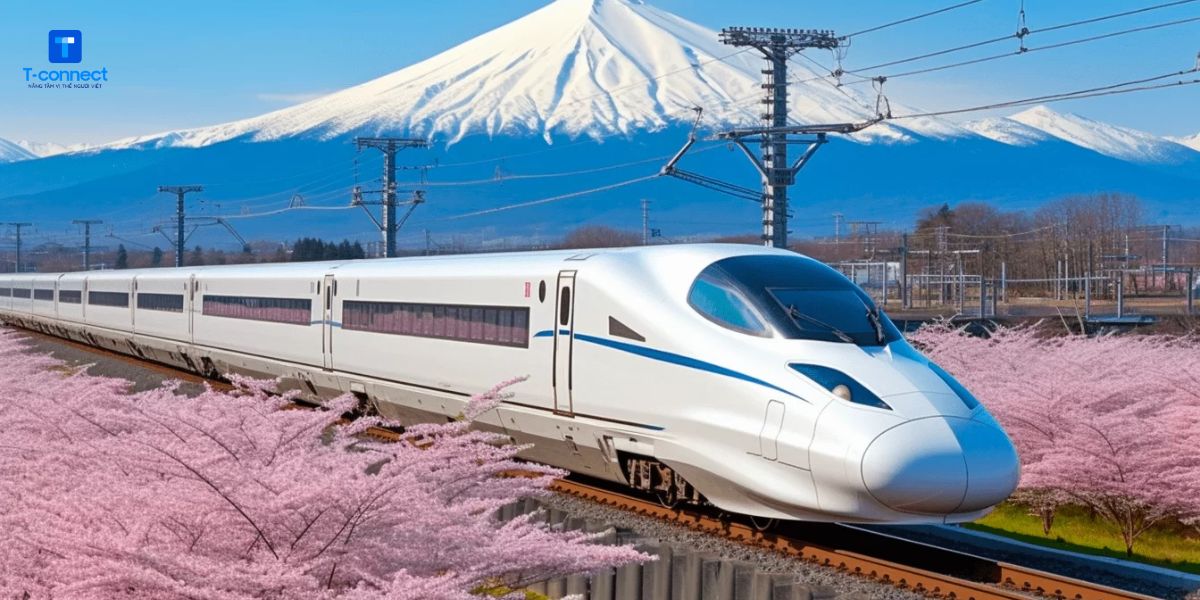
Introduction to Japanese Subways
The Japanese subway system is a source of pride for the Japanese people, characterized by punctuality, cleanliness and efficiency. Built in the 1920s, this system has now developed into a major transportation network serving millions of passengers every day.
The Japanese subway (地下鉄 – chikatetsu) is not only a means of transportation but also a cultural symbol of this country. Every day, millions of locals and international visitors use the subway to go to school, work and sightseeing. When you learn how to ride the subway in Japan, you will see that everything is organized scientifically and systematically. From signs, maps to announcements, there are English versions, making it easy for foreign visitors to use.
Types of subways
When learning how to ride the subway in Japan, it is important to understand the different types of trains. In Japan, subways are classified primarily based on speed and number of stops.
Regular train (Local – 普通電車)
This is the most basic and common type of train. It stops at all stations along the line, making it suitable for those who are in no hurry, need to make small stops, or are new to the train system.
- Advantages: easy to go, no worries about missing the station.
- Disadvantage: slower speed due to frequent stops.
If you are new to riding the subway in Japan, it is recommended to start with this type of train to get familiar with it first.
Rapid train (Rapid – 快速電車)
This type of train skips some small stations and only stops at medium and large stations. It is faster than regular trains, suitable for people who go to work or need to move between major areas.
- Advantages: saves time.
- Disadvantage: easy to miss the throttle if not careful.
When choosing a rapid train, you should look carefully at the LED board or display screen on the train to know which stations the train will stop at.
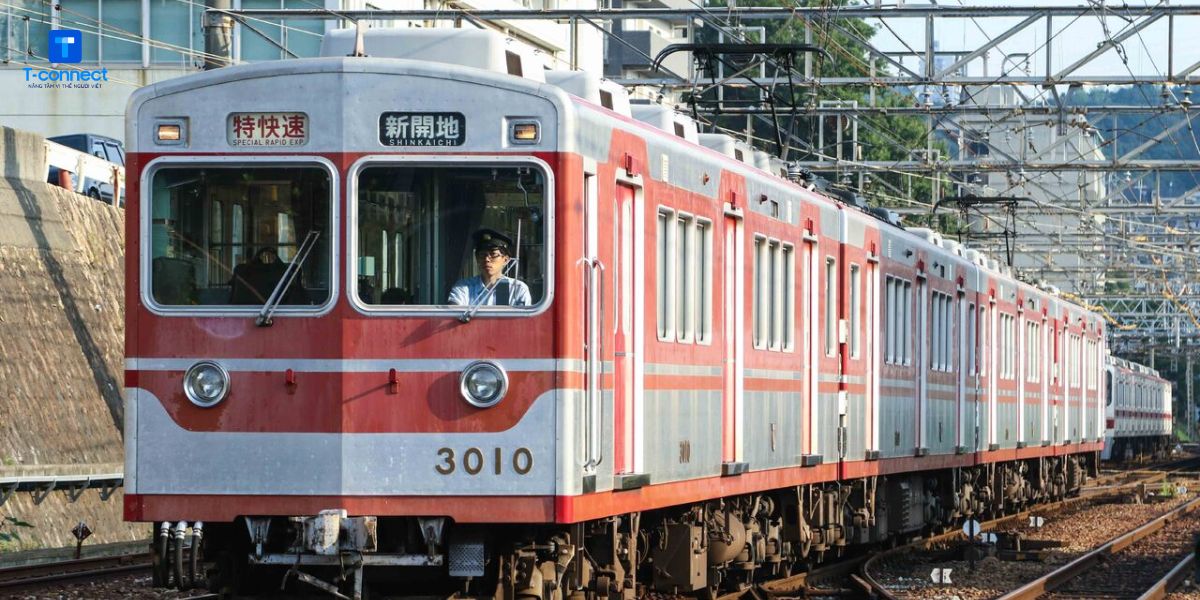
Express train (Express – 急行電車)
This is a faster train than the Rapid, skipping more stations. This line mainly serves people traveling long distances, from the suburbs to the city center or between major tourist destinations.
- Advantages: fast movement between major points.
- Disadvantages: not suitable if you need to go to small stations.
Limited Express
Premium trains, which stop at only a few major stations, usually require additional tickets or seat reservations (exceptions: some inner-city lines allow IC card travel at no extra cost).
- Pros: extremely fast, comfortable seats.
- Disadvantages: higher price, must know the stop in advance.
Limited Express is the ideal choice when you are traveling from Tokyo to Narita Airport or from Osaka to Kyoto if you want to save time.
Seat classes on the subway
In Japan, the train system is not only diverse in routes but also divided into seat classes to meet the needs of passengers. Depending on the type of train you choose, there will be different seat options, mainly consisting of two main classes:
Non-reserved seats
This is the most common type of seat, available on most trains such as Subway, Local trains, Express and many Limited Express lines. When using this type of seat, you do not need (and cannot) make a reservation. Train tickets are purchased as usual, and when boarding the train, you choose an available seat.
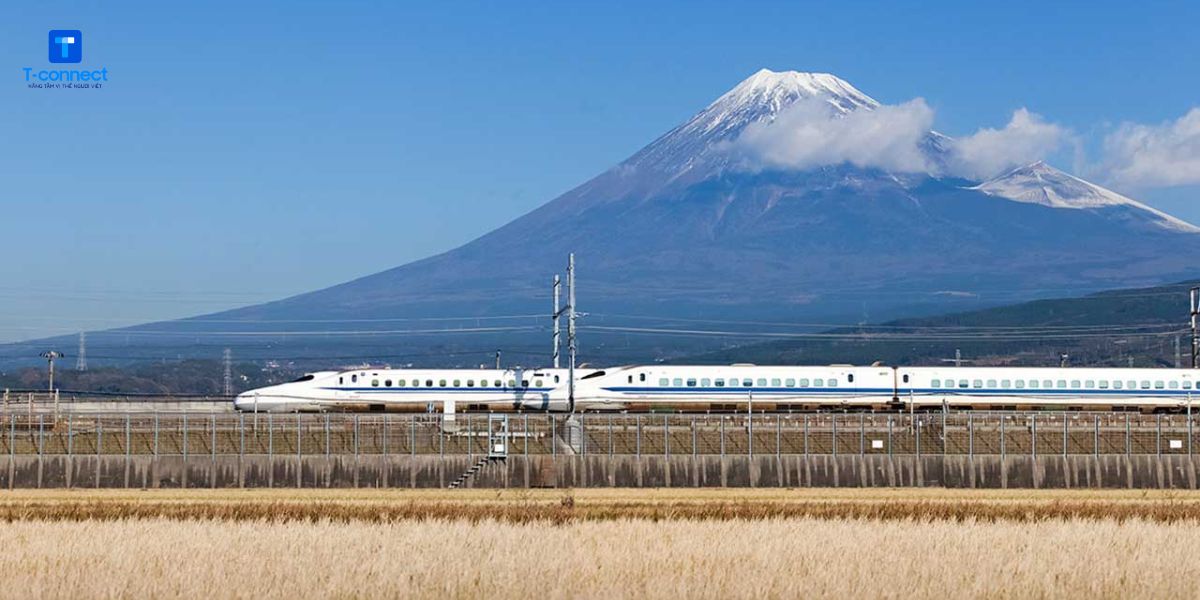
However, since there is no guarantee of a seat, during rush hour or on holidays, you may have to stand for the entire journey, even on long trips like the Shinkansen which lasts 2 to 3 hours. However, usually after a few stations, someone will get off and you can sit. This type of seat is suitable for those who are flexible with time, do not mind standing and want to save money.
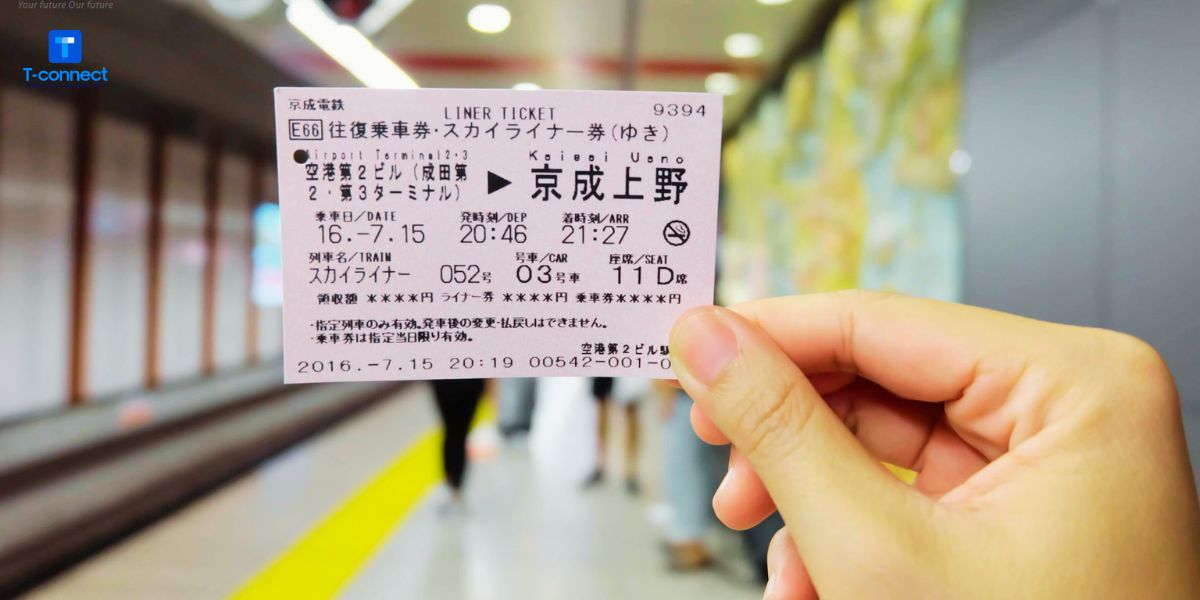
Reserved Seats – Shitei-seki (指定席)
This is the option for those who want to be assured of a fixed seat and avoid crowded trains. Reserved seats are commonly found on Shinkansen, long-distance trains, and some special Limited Express lines.
When choosing this type, you can book a seat via an automatic ticket machine, app or at the ticket counter at the station. A big advantage is that you can choose your seat as you like (near the window, near the aisle, near the first/last car...), making the journey more comfortable and proactive, especially when traveling with family, small children or carrying large luggage.
While the cost may be a little higher than an unreserved ticket, the peace of mind and convenience are worth it – especially on long journeys.
How many types of subway tickets are there?
When learning how to use the subway in Japan, it is important to understand the different types of tickets. The subway ticket system in Japan is quite diverse, suitable for many different travel needs:
- Single-trip ticket (片道切符 – Katamichi Kippu): Ticket used for a single trip, fare depends on distance traveled.
- Round-trip ticket (往復切符 – Ōfuku Kippu): Slightly more economical than buying two one-way tickets.
- Day Pass (一日乗車券 – Ichinichi Jōshaken): Allows unlimited rides in one day on lines operated by one company.
- Multi-day passes: There are different types depending on the region and operating company.
- IC Card (交通系ICカード): Like Suica, PASMO, ICOCA – pre-loaded smart card, most convenient for tourists.
- Japan Rail Pass (JR Pass): For tourists, allows unlimited travel on JR lines within a certain period of time.
Japan subway system
The subway system in Japan is operated by several different companies, each of which manages its own lines with distinctive colors and symbols.
In Tokyo, the two main companies that operate the subway are the Tokyo Metro (9 lines) and the Toei Subway (4 lines). Similarly, in Osaka there is the Osaka Metro and the JR lines. Kyoto, Nagoya, Fukuoka, Sapporo and Sendai also have their own subway systems.
Each train line is marked with a unique color and symbol, making it easy to navigate even if you don't speak Japanese. When you research how to ride the subway in Japan, you'll find that the signs, maps, and announcements are all intuitively designed, with information in both Japanese and English.
How to buy subway tickets in Japan
To understand how to take the subway in Japan, you first need to know how to buy subway tickets in Japan in the most accurate and convenient way. There are three common ways to buy tickets:
Buy tickets at the counter
At major stations, you can buy tickets directly at a staffed ticket counter. This is a good option if you need to ask for information or are unsure about your route. Japanese staff are usually very helpful, although there may be a language barrier.
To buy a ticket, you just need to tell the staff your destination, they will calculate the exact fare. If you want to buy special tickets such as day tickets or IC cards, you can also request here.
Buy tickets automatically
The most common way to buy subway tickets in Japan is to use the ticket vending machines found at every station. The ticket vending machines have multilingual interfaces, including English, making them easy to use.
The automatic ticket purchase process includes the following steps:
- Identify your destination and check fares on a map located on or near the ticket machine.
- Select the language displayed on the screen (usually there is an “English” button)
- Select the number of tickets and ticket type (one way, round trip or day ticket)
- Place money in the machine (machines accept both coins and bills, some machines also accept credit cards)
- Receive tickets and change (if any)
Use IC card
The most convenient way to travel by subway in Japan is to use an IC card such as Suica (JR East), PASMO (private companies in Tokyo), ICOCA (Osaka area), and others. These are pre-charged smart cards that allow you to simply swipe the card when entering and exiting stations without having to buy separate tickets for each trip.
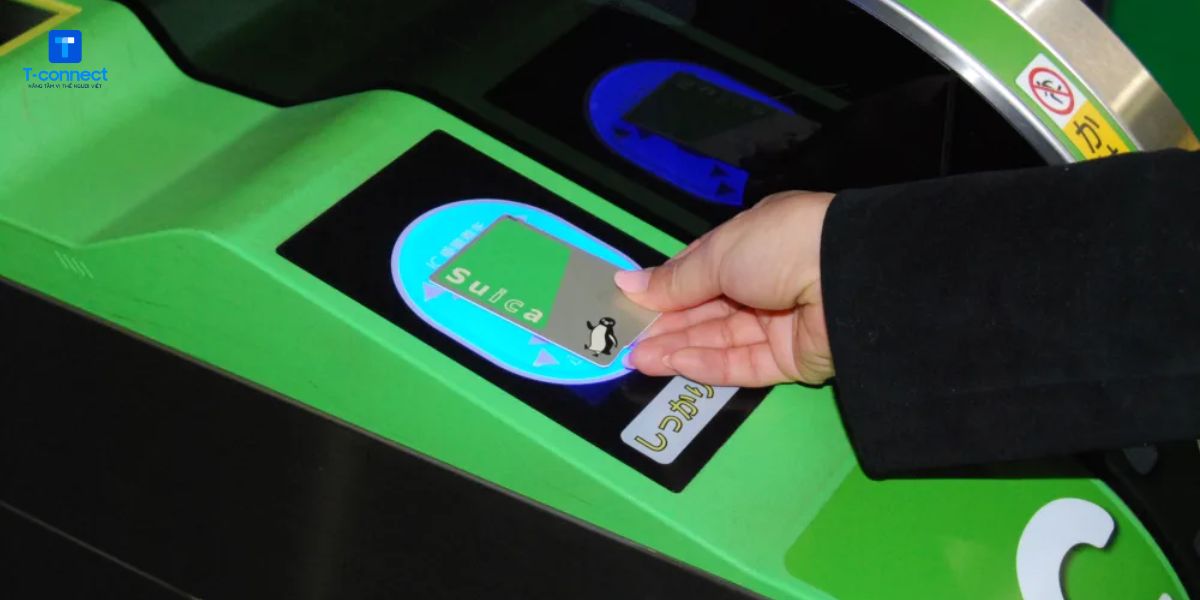
To use IC card:
- Purchase the card at a ticket vending machine or service counter (issue fee is about 500 yen)
- Top up the card (can be loaded from 1,000 to 20,000 yen)
- Swipe card when going through the ticket gate
IC cards are not only used for subways but also for buses, convenience stores and many other services, helping visitors save time and make it easier to learn how to take the subway in Japan.
Subway fares in Japan
Subway fares in Japan vary depending on the distance traveled and the company operating it. Generally, fares range from 170 yen (about 35.000 VND) for the shortest journey to 300-500 yen (about 60.000-100.000 VND) for longer journeys within the city.
In Tokyo, Tokyo Metro fares start at 170 yen for the first 6km and increase as the distance goes by. Similarly, in Osaka, Osaka Metro fares start at 180 yen.
If you plan to travel a lot in a day, a day pass can be more economical. For example, the Tokyo Metro Day Pass costs around 600 yen and allows unlimited travel on Tokyo Metro lines for 24 hours.
Detailed instructions on how to take the subway in Japan
Now that we have a good understanding of the subway system and ticket types, let's get into a step-by-step guide on how to take the subway in Japan.
Determine the train route
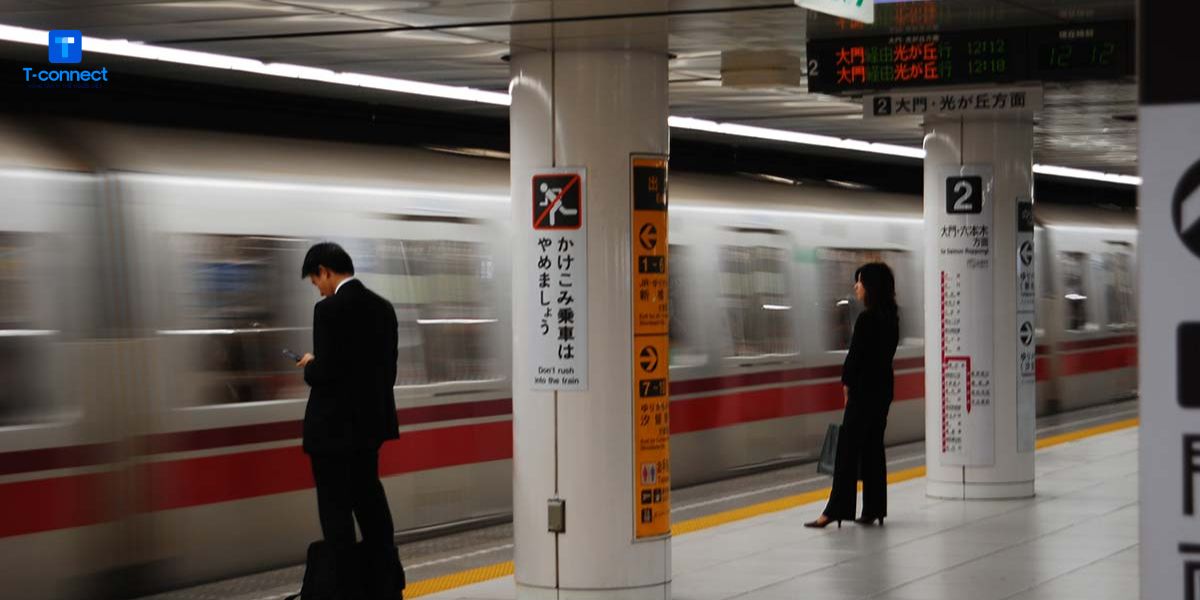
The first step in learning how to take the subway in Japan is to determine which train line to take. You can use the map at the station or phone applications such as Google Maps, Japan Transit Planner, Navitime, or Tokyo Subway Navigation. You can also ask the staff at the train station for the fastest help.
When determining the route, pay attention to the following issues:
- Name of departure station and destination station
- Color and train line number to take
- Direction of travel (usually identified by the name of the line's final station)
- Estimated travel time and number of transfers
Buy tickets or use IC card
Once you have determined your train route, you need to purchase the appropriate ticket or use an IC card as instructed in the section above on how to buy subway tickets in Japan.
If you are unsure about the fare, purchase the lowest priced ticket first, then adjust the fare at the “Fare Adjustment” machine near the exit gate before leaving the station.
Boarding/disembarking rules
Once you have your ticket or IC card, find your way to the platform. The signs are usually colored to match the train line and indicate the direction of travel (by the name of the final station). When you arrive at the platform, remember the following rules for getting on or off the train:
- Pay attention to the train door location markings on the platform.
- Line up neatly at these lines (Japanese people are very orderly when getting on and off the train)
- Wait for passengers to completely disembark before boarding.
- No jostling, especially during rush hour
Transfer, change train
One of the biggest challenges when learning how to ride the subway in Japan is transferring. Transfer stations are often very large and have many complicated passageways. To transfer effectively you will need to:
- Look for the “Transfer” or “乗換” (Norikae) sign and follow the instructions.
- Follow the coloured and numbered signs of the line you want to transfer to.
- In some cases, you may need to swipe a ticket or IC card when transferring between different operating companies.
- At major stations, it can take 5-10 minutes to walk to transfer lines.
Helpful Tip: Download major transit station maps like Shinjuku, Tokyo, Shibuya in advance to be better prepared.
Important notes to avoid getting lost when taking the subway in Japan
When learning how to ride the subway in Japan, there are some important notes to help you avoid getting lost and have a smooth travel experience:
- Note the operating hours: Most subway lines in Japan operate from around 5:00 a.m. to midnight. If you stay out too late, you may have to take a taxi home.
- Avoid rush hour: Rush hour (around 7:30-9:00 AM and 17:30-19:00 PM) is extremely crowded. If possible, adjust your schedule to avoid these times.
- Prepare offline maps: Mobile networks may not work in deep underground stations. Download apps and maps for offline use.
- Remember your exit numbers: Major stations have multiple exits, numbered from 1 to 20 or more. Knowing which exit you need to take in advance can save you a lot of time.
- Learning some basic Japanese words: Like “入口” (Iriguchi – entrance), “出口” (Deguchi – exit), “乗換” (Norikae – transfer) will be very helpful.
- Get familiar with JR and other company symbols: JR (Japan Railways) has a green pill symbol, Tokyo Metro has an M, Toei Subway has its own symbol.
- Have cash ready: Although credit cards are accepted at many modern ticket machines, it is always safer to have cash on hand.
The subway system in Japan is complex but organized scientifically and efficiently. With detailed instructions on how to take the subway in Japan, we hope you will feel more confident when using public transportation in the Land of the Rising Sun. Let's start exploring Japan from the colorful and civilized subway journeys!
>> Read more: How to find trains in Japan: Top 6 most convenient train search apps in Japan

T-connect & DCOM signed a cooperation agreement to enhance digital experiences for the Vietnamese user community in Japan.
On November 17, 2025, T-connect & DCOM officially signed a [...]
ANSWERS TO FREQUENTLY ASKED QUESTIONS WHEN PAYING FOR MY T-CONNECT WITH DCOMPAY
T-Connect officially cooperates with DCOM, launching DCOMPay payment method [...]
T-CONNECT CUP 2025 FOOTBALL TOURNAMENT REGULATIONS – CELEBRATION OF T-CONNECT'S 6TH ANNIVERSARY
The T-connect Cup 2025 football tournament is one of the sporting events [...]
Should I stay in Japan or return to Vietnam? 5 perspectives to help you make the right choice
After many years of studying and working in Japan, many people [...]
Which apps should Vietnamese people in Japan download? 15 essential apps when in Japan
Living, studying or working in Japan always comes with many [...]
5 tips to ship goods from Vietnam to Japan cheaply and safely
The demand for shipping goods from Vietnam to Japan is increasing, especially [...]
What do you need to prepare when converting your Japanese driver's license to Vietnam's? 7 important documents
While living and studying in Japan, many Vietnamese people have [...]
How does Japan handle waste? 5 waste treatment technologies in Japan that surprise the world
Japan is known as a country with a waste management system [...]